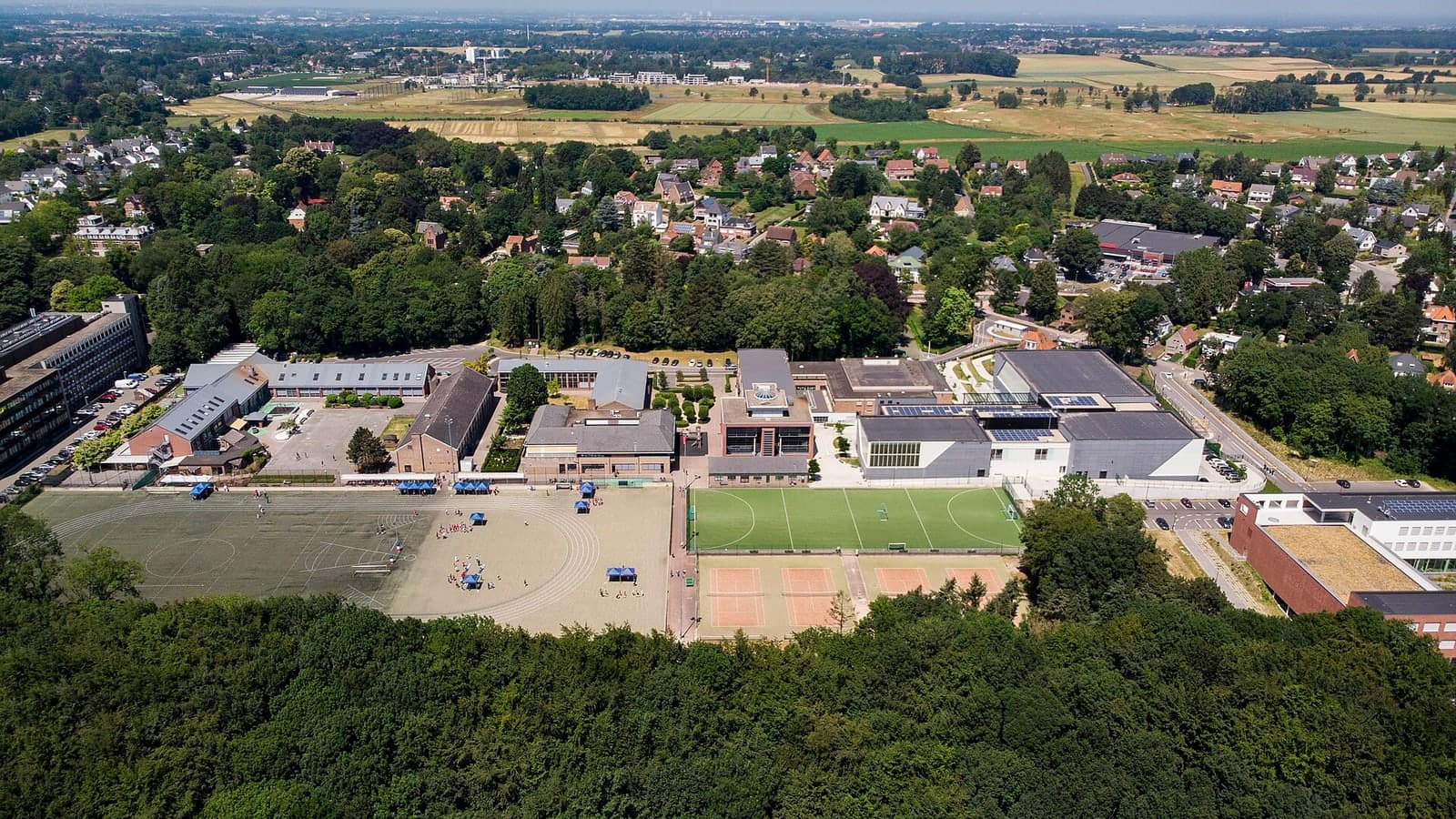
Can Gaston the school dog help pupils feel safer at an athenaeum in Namur?
Gaston, a trained mediation dog, is scheduled to begin his first full school year at the Athénée Royal de Jambes in Namur on 24 August, supporting a locally designed approach to pupil wellbeing, conflict management and social connection.
The initiative tests a highly visible but still lightly evidenced form of pupil support in a real Belgian secondary school. Its value will depend on voluntary participation, competent human supervision, animal welfare and whether the school can demonstrate benefits beyond anecdotal enthusiasm.
Gaston, a trained mediation dog, is scheduled to begin his first full school year at the in on Monday, 24 August, joining deputy head as pupils return to the French-speaking Belgian school. and reported that the young Bernedoodle would meet new first-year secondary pupils in the courtyard between 9am and 10am. No post-event account confirming how that first formal session unfolded was available at the time of publication.
For families in , the initiative is more than the arrival of an unusually appealing school mascot. Falque, who handles disciplinary matters and works with the school’s anti-bullying unit, intends Gaston to help pupils approach adults, settle during tense encounters and feel listened to without judgement. She told that some pupils already visit her office primarily to see the dog, creating opportunities for conversation that might otherwise never begin.
Gaston has attended the school informally since he was two months old, but this is his first complete rentrée in an official mediation role. Falque said she and the dog had completed training in canine-assisted therapy, including instruction on reading his behaviour and respecting his need for rest and space. He will remain on a lead inside the school. Pupils who are afraid of dogs or simply do not want contact will not be required to interact with him, according to the school’s account reported by .
That consent-based approach matters. A dog may make an office feel less institutional for one teenager while creating anxiety, distraction or an allergy concern for another. Falque described Gaston’s coat as hypoallergenic, but that commonly used label should not be read as a guarantee that no pupil can react to a dog. The school has not publicly detailed a written allergy protocol, insurance arrangements, the frequency of interventions or the criteria it will use to assess results.
The project sits naturally within a wider Wallonia-Brussels debate about pupil wellbeing. The government of the has identified mental health, school climate and closer cooperation among schools, psycho-medical-social centres and youth services as policy priorities. Its official framework also provides human school-mediation services for relational conflicts. Gaston should therefore be understood as a local complement to qualified staff and established services, not as a replacement for a psychologist, educator, mediator or anti-bullying procedure. No specific endorsement of the project by the French Community’s education authorities was found before publication, and EU institutions have no operational role in this school-level decision.
International research offers grounds for cautious interest rather than certainty. A 2024 systematic review in found only eight qualifying classroom studies, with work focused on wellbeing, emotional regulation and social skills. The review reported potentially positive effects but warned that differing populations, interventions and measurements made the evidence difficult to compare. Another systematic review of animal-assisted services for school-aged children likewise examined possible benefits while explicitly assessing substantial risks of bias in the underlying research.
This leaves two responsibilities with the : protecting pupils who welcome Gaston and those who do not, and protecting the dog himself. Falque says she has learned to recognise when he needs calm, rest or distance. Researchers studying classroom interventions similarly stress that animal welfare, limits on contact and appropriate supervision are integral to a responsible programme.
The most useful evidence will now come from daily practice. Parents and pupils can watch whether participation remains genuinely voluntary, whether Gaston helps staff make earlier contact with isolated or distressed teenagers, and whether the school records outcomes rather than relying only on warm impressions. Gaston’s first full term will show whether a friendly presence at the school gate can become a durable part of pupil support in —and where professional care must take over.
Impact
Regional — The project gives Namur families a local example of animal-assisted education while raising practical questions for French-speaking Belgian schools about consent, allergies, safeguarding, staff roles and evaluation.
Local — For families in Jambes and the wider Namur area, the programme offers a nearby example of animal-assisted pupil support in an ordinary school setting. Its day-to-day impact will depend on how the athenaeum handles consent, allergies, fear of dogs, safeguarding, staff responsibilities and Gaston’s welfare. The initiative may also provide a practical reference for other French-speaking Belgian schools considering a supervised animal, although the experience of one school cannot establish that the approach works elsewhere.
What it means for you
Pupils and parents at the Athénée Royal de Jambes should expect Gaston’s first full school year to begin on 24 August 2026. Contact is voluntary, so families with allergies, a fear of dogs or other concerns should ask the school how pupils can opt out and how separation will be maintained. Parents seeking clinical or anti-bullying support should not treat Gaston’s presence as a replacement for professional care or formal school procedures. No EU-level rule or institution is directly operating the programme.
Opposing perspectives
- Laurence Falque and the school-led wellbeing perspective
Deputy head Laurence Falque presents Gaston as a non-judgemental social bridge who can make pupils more willing to approach an adult, ease tense encounters and support the school’s anti-bullying work. In this framing, the dog complements the educational team and helps create contact before a problem escalates.
- Academic evidence-review perspective
Researchers reviewing animal-assisted education see promising signs for emotional regulation, stress and social behaviour, but caution that the small number of studies, varied methods and risks of bias do not justify broad claims of therapeutic effectiveness. They also place animal welfare and structured evaluation at the centre of responsible practice.
- Pupils who fear or cannot tolerate dogs
Children with a fear of dogs, sensory discomfort or allergy concerns may experience the same presence as stressful rather than reassuring. Their interests require genuinely voluntary contact, accessible dog-free space and clear procedures, even if most of the school community responds positively.
Who, where and what
Key people, places and terms in this story
Walloon city anchoring the school initiative.
Namur locality where the athenaeum is based.
Deputy head who handles Gaston and works on discipline and anti-bullying matters.
Public authority responsible for the French Community education framework referenced in the story.
Belgian community-level education system in which the school operates.
Show the full library (12)
Deputy head who handles Gaston and works on discipline and anti-bullying matters.
Namur locality where the athenaeum is based.
Walloon city anchoring the school initiative.
Scheduled start of Gaston’s first full school year at the athenaeum.
2022 Fédération Wallonie-Bruxelles circular providing relevant administrative context.
Public authority responsible for the French Community education framework referenced in the story.
Belgian community-level education system in which the school operates.
Trained Bernedoodle being introduced as a supervised mediation dog at the school.
Namur school introducing Gaston for pupil wellbeing, conflict management and social connection.
Journal that published a 2024 systematic literature review on the evidence base.
Belgian news outlet reporting on Gaston’s planned school-year debut.
Belgian news outlet reporting on the Jambes initiative.
Sources & evidence
- View sourceLa DHPrimaryprimary· dhnet.be· 23 August 2026Retrieved 24 August 2026· 40 days ago· Dated
- View sourceL’Avenircorroborating· lavenir.net· 21 August 2026Retrieved 24 August 2026· 42 days ago· Dated
- View sourceFédération Wallonie-Bruxelles — Circulaire 8635official· enseignement.be· 16 June 2022Retrieved 24 August 2026· 1569 days ago· Dated
- View sourceDiscover Education — systematic literature reviewacademic· link.springer.com· 29 November 2024Retrieved 24 August 2026· 672 days ago· Dated
Related topics
Related to this story

Pulse Insight — This topic connects to 10 associations and 3 funding programmes through the Wallonia ecosystem.
Live connections from the Belgium Impulse ecosystem — not recommendations.
This briefing was prepared with AI assistance and reviewed by a Belgium Impulse editor before publication. methodology.