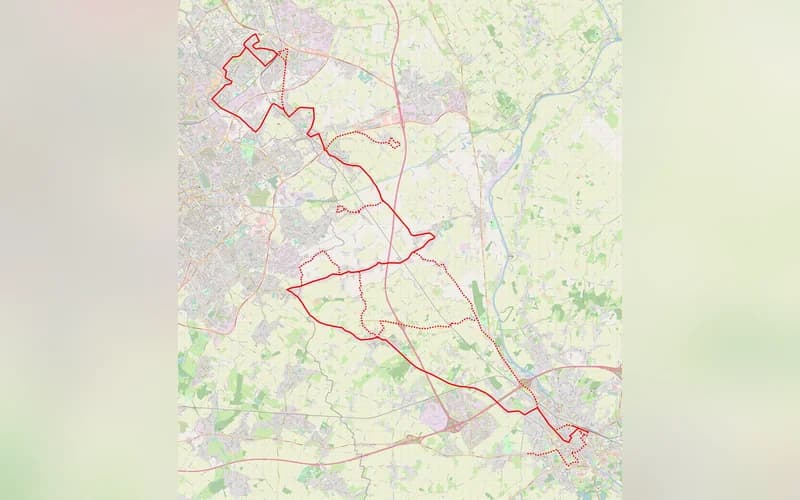
How does TEC Hainaut turn new recruits into bus drivers?
TEC Hainaut is recruiting about 50 bus drivers a year and providing the theory and practical instruction needed to place successful candidates behind the wheel, according to a report published on 19 August.
Driver availability affects whether scheduled buses run reliably. Recruitment also offers people with a standard driving licence a route into a qualified public-service occupation, although irregular hours, passenger-facing responsibilities and workplace safety can influence whether recruits stay.
is recruiting about 50 drivers a year and training successful candidates for work across the province, according to a DH report published on 19 August after a visit behind the scenes of its driver-training operation. The continuing intake matters directly to passengers around , and the wider network: staffing determines whether the Walloon public operator can reliably deliver the routes and frequencies on which residents depend.
The recruitment route is designed to reach beyond people who already hold a bus licence. In its current vacancy for the and area, says applicants may enter with a category B driving licence and receive theoretical and practical training towards the and the legally required Certificate of Professional Competence, or CAP. Candidates must also meet medical requirements, speak French fluently, live in Belgium for the licensing process and accept variable hours, including weekends, public holidays and split shifts. TEC describes drivers as an “essential player in mobility in ”, a formulation that reflects the public-service purpose of the job as well as its operational demands.
For passengers, this is more than an employment story. A bus timetable is only as resilient as the workforce available to operate it. includes dense urban corridors, former industrial communities and rural areas where alternatives to the car can be limited. The reported in 2025 that ’s operated service across grew by about 10% between 2019 and 2024, reaching roughly 100 million vehicle-kilometres annually. Part of that growth strengthened urban services in and , making sustained recruitment and formation of conducteurs a practical condition for maintaining the expanded offer.
Training has long been embedded in the operation. ’s 2018 regional report recorded 52 candidates entering its driving school, with 37 completing the full course; it also listed 560 hours of theory and 6,916 hours of practical instruction that year. Earlier, TEC had lengthened initial training from six to eight weeks to introduce recruits to articulated buses and the routes in their future operating area. Those historical figures should not be treated as the current syllabus, but they show why the training centre is not simply a licence school: it connects vehicle handling, passenger safety, accessibility, route knowledge and customer contact.
There are two legitimate ways to view the recruitment drive. management presents paid or employer-supported training and a benefits package as a route into a stable, socially useful profession. Its current advert includes meal vouchers, hospital and group insurance, and free travel on TEC, STIB and De Lijn. Employees, however, have stressed that retention also depends on working conditions. In a 2024 open letter covered by , staff said, “We refuse to get used to this violence.” Spokesperson Audrey Lepape reported nine physical assaults and 119 incidents involving intimidation, threats or aggressive behaviour in the province that year. Training can prepare drivers for difficult situations, but it cannot by itself remove the safety pressures they encounter.
The institutional chain is specifically Walloon rather than federal or Brussels-based. The runs under a 2024–2028 public-service contract with the Walloon Region. That arrangement operates within the framework of EU Regulation 1370/2007 for public passenger transport, but neither the European Commission nor Belgium’s federal government manages ’s everyday bus recruitment. The relevant political and administrative stakeholders are the Walloon government, its mobility administration, TEC management, employees and trade unions, alongside the municipalities and passengers served.
The next test is conversion rather than publicity: how many applicants enter training, complete the licensing and professional requirements, remain with and translate into dependable services. TEC’s open recruitment reserve confirms that hiring continues, but the operator has not published, alongside the August report, a detailed current breakdown of completion rates, retention or vacancies by depot. Those figures—and whether recruitment keeps pace with retirements, departures and additional services—will determine whether the annual intake produces a lasting improvement passengers can see.
Impact
Regional — The programme supports services across Hainaut, where strengthened urban routes and communities with limited alternatives to the car depend on a stable driving workforce.
Local — The recruitment and training programme directly supports bus operations around Mons and La Louvière, where TEC maintains an active full-time candidate reserve. Its wider effects extend to Tournai, Mouscron and other Hainaut communities served by the regional business unit. A stable pool of qualified drivers matters for strengthened urban routes and for places where residents have limited alternatives to travelling by car. Staffing shortages, by contrast, can affect whether scheduled local services operate reliably.
What it means for you
Jobseekers in or near Hainaut who hold a category B licence can check TEC’s recruitment portal for the active full-time driver reserve covering Mons and La Louvière; they do not need to arrive with a category D licence or professional CAP because the pathway provides the required theory and practical training. Applicants should weigh the qualification opportunity against irregular working hours, passenger-facing duties and reported workplace-safety concerns. Bus users should watch TEC service notices rather than assume recruitment immediately guarantees every scheduled journey, since candidates must first complete training successfully.
Opposing perspectives
- TEC management and Walloon mobility authorities
TEC presents the driver as an “essential player in mobility in Wallonia” and frames employer-supported licensing, continuous training and benefits as an accessible route into a responsible public-service career. For the operator, regular recruitment is necessary to sustain and expand scheduled services.
- TEC Hainaut drivers and frontline personnel
Employees argue that recruitment cannot be separated from retention and safety. Their 2024 open letter, reported by RTBF, said, “We refuse to get used to this violence,” highlighting assaults, threats and the accumulated strain of passenger-facing work.
Who, where and what
Key people, places and terms in this story
Walloon province where the recruitment programme and affected bus services are based.
Belgian region responsible for the public-transport policy framework.
Hainaut city covered by TEC’s active full-time driver recruitment reserve.
Hainaut city served by the TEC Hainaut business unit.
Hainaut city covered by TEC’s active full-time driver recruitment reserve.
Show the full library (15)
Walloon province where the recruitment programme and affected bus services are based.
Belgian region responsible for the public-transport policy framework.
Hainaut city covered by TEC’s active full-time driver recruitment reserve.
Hainaut city covered by TEC’s active full-time driver recruitment reserve.
Hainaut city served by the TEC Hainaut business unit.
Hainaut city served by the TEC Hainaut business unit.
Standard driving licence accepted as the entry-level licence for eligible recruits.
Driving licence qualification recruits work towards for professional bus driving.
Professional qualification recruits must obtain to drive buses.
Public bus and tram brand recruiting and training new drivers in Hainaut.
TEC business unit that recruits about 50 drivers annually and serves Hainaut communities.
Wallonia’s public-transport operator and the organisation behind the TEC brand.
Walloon administration that reviewed changes in the Hainaut public-transport offer from 2019 to 2024.
Belgian public broadcaster that reported assaults involving Hainaut drivers and inspectors.
News outlet that reported on TEC Hainaut’s driver training and annual recruitment.
Sources & evidence
- View sourceLa DH/Les Sports+Primaryprimary· dhnet.be· 19 August 2026Retrieved 27 August 2026· 44 days ago· Dated
- View sourceTEC recruitment portalofficial· jobs.letec.beRetrieved 27 August 2026
- View sourceService public de Wallonie — Hainaut public-transport offer reviewofficial· mobilite.wallonie.be· 8 May 2025Retrieved 27 August 2026· 512 days ago· Dated
- View sourceRTBF — TEC Hainaut workers denounce aggressioncorroborating· rtbf.be· 28 November 2024Retrieved 27 August 2026· 673 days ago· Dated
Related topics
Related to this story


Pulse Insight — This topic connects to 10 associations and 3 funding programmes through the Wallonia ecosystem.
Live connections from the Belgium Impulse ecosystem — not recommendations.
This briefing was prepared with AI assistance and reviewed by a Belgium Impulse editor before publication. methodology.