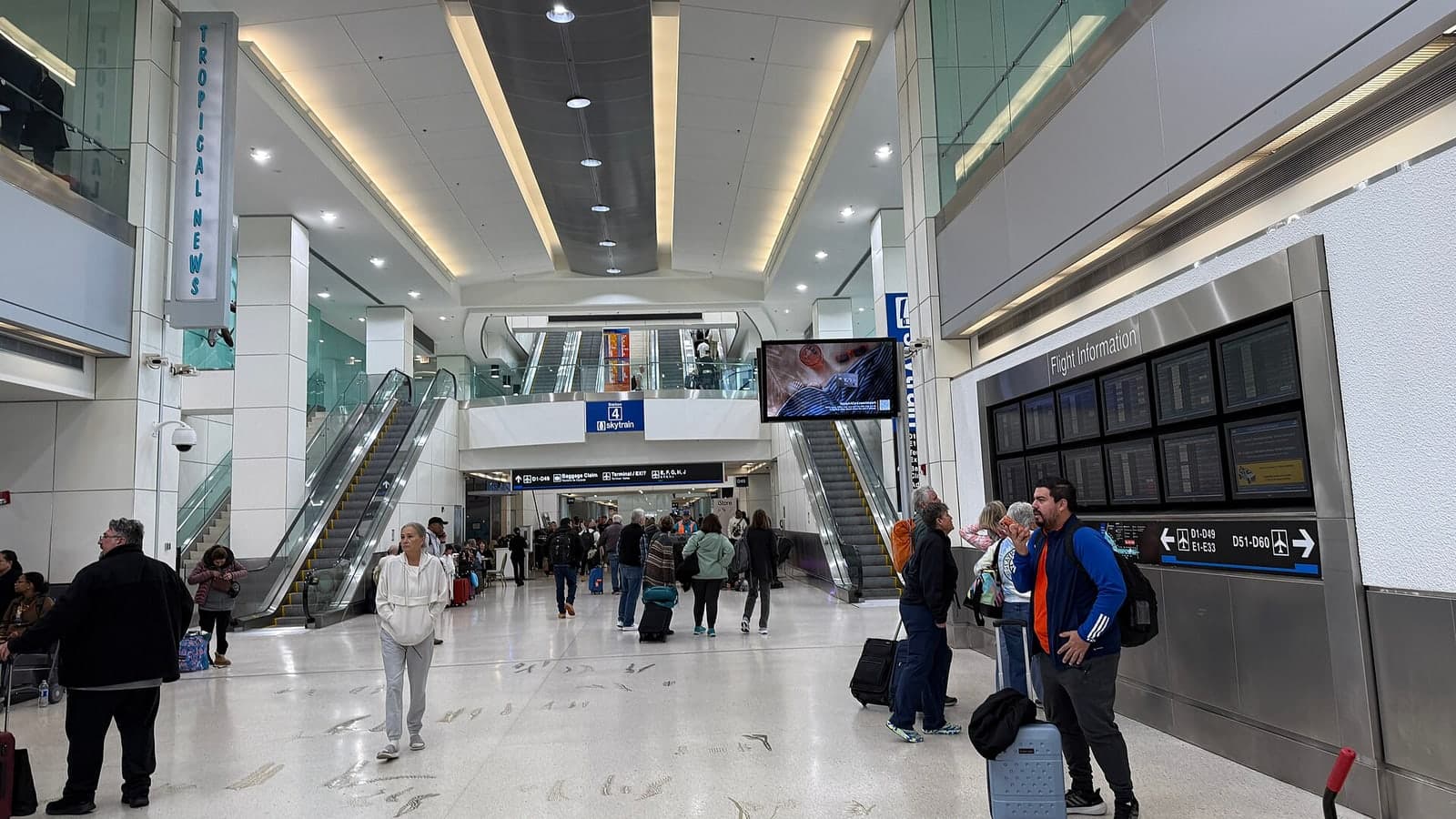
What do investigators know about the Miami cargo crash that killed five workers?
Lawyers for a worker killed in Miami’s cargo-plane crash have filed a wrongful-death lawsuit, AP reported on 9 September. Five people died when the aircraft struck their van on 6 September. Investigators are examining the landing sequence; no cause has been established.
The crash killed workers on the ground and raises questions about how landing procedures and airport protections interact. Families face bereavement and legal proceedings while travellers face disruption.
Lawyers for a cleaning worker killed when an Amazon-branded cargo aircraft overran a runway at Miami International Airport have filed a wrongful-death lawsuit against Amazon, operator 21 Air and the pilots, AP reported on Wednesday, 9 September. Five workers died in the crash three days earlier. The accident also touches a longstanding European aviation-safety concern: preventing aircraft from leaving runways, addressed in guidance published by the European Union Aviation Safety Agency, EASA. [AP](https://apnews.com/article/b7aefd1225c0ab0f4f9daf1b6090baf8)
The US National Transportation Safety Board, or NTSB, confirms that 21 Air Flight 7598 overran Runway 30 while landing in Miami, Florida, on 6 September. The Boeing 767 cargo flight had arrived from San Juan, Puerto Rico. The Federal Aviation Administration places the accident at about 2pm local time. For readers travelling from Belgium or elsewhere through Miami, the immediate relevance is airport disruption; the reviewed sources establish no direct Belgian operational impact. [NTSB](https://www.ntsb.gov/investigations/Pages/DCA26MA352.aspx), [FAA](https://www.faa.gov/newsroom/statements/accident_incidents)
The human consequences extend well beyond the aircraft. According to AP’s account of NTSB chair Jennifer Homendy’s Monday briefing, all five fatalities were occupants of a cleaning-company van carrying seven people. The aircraft subsequently struck an SUV outside airport property. Those findings put workers on the ground at the centre of the disaster. [AP](https://apnews.com/article/d5118998e880f380a3fd8786e35fd9bb)
AFP’s French-language reporting records the scale of the rescue: firefighters freed people trapped in vehicles and extracted the pilot and co-pilot from the cockpit while the aircraft’s engines were burning. Miami-Dade mayor Daniella Levine Cava announced five deaths and five injuries; fire chief Ray Jadallah initially described three injured people as critically hurt. Those were early assessments, not a verified account of everyone’s condition today. [AFP](https://www.afp.com/fr/un-avion-cargo-damazon-sort-de-piste-son-atterrissage-miami-cinq-morts)
The investigation now turns on the final seconds of the landing. Flightradar24’s account of flight-recorder information released by the NTSB on 8 September describes braking, followed by an increase in thrust consistent with attempting a go-around, then reduced thrust and renewed braking. It also reports investigators found no indication in the released data that speed brakes or thrust reversers deployed. The sequence raises questions about how the crew tried to recover the landing; it does not establish why events unfolded that way. [Flightradar24](https://www.flightradar24.com/blog/flight-tracking-news/major-incident/21-air-767-overruns-runway-on-landing-in-miami/)
Accountability and technical explanation are therefore proceeding on separate tracks. The family’s lawsuit seeks legal redress; its filing does not establish liability. Amazon spokesperson Kelly Nantel told AFP the company was supporting those affected and cooperating with authorities. The NTSB continues to list its investigation as ongoing, with no published causal finding on its investigation page. [AFP](https://www.afp.com/fr/un-avion-cargo-damazon-sort-de-piste-son-atterrissage-miami-cinq-morts), [NTSB](https://www.ntsb.gov/investigations/Pages/DCA26MA352.aspx)
European safety guidance provides a broader frame without offering a verdict on Miami. The global prevention plan hosted by EASA states: “The jointly owned risk requires joint solutions.” It addresses airlines, airports, controllers and regulators together. EASA’s separate 2018 proposal focused on technology “supporting the flight crew during the landing phase”. These are complementary prevention approaches, not European reactions to this accident. [Prevention plan](https://www.easa.europa.eu/community/system/files/2021-05/GAPPRE%20Parts%201%20and%202%20Full.pdf), [EASA proposal](https://www.easa.europa.eu/en/document-library/notices-of-proposed-amendment/npa-2018-12)
Belgium has its own historical reference point. A report hosted by FPS Mobility and Transport recalls the Kalitta Air Boeing 747 runway overrun at Brussels Airport on 25 May 2008. That accident involved a rejected take-off, so it cannot explain this landing crash. [FPS Mobility](https://mobilit.belgium.be/en/file/4754/download?token=ASoG0v4f)
AP reported that three of Miami’s four runways were available by Tuesday evening. Travellers should check individual flights with their airline. Investigators must still connect the recorder evidence with crew accounts and the wider operating circumstances. Until they do, the cause—and any safety changes warranted by it—remains unresolved. [AP](https://apnews.com/article/a7b95b9c94c60fddeecaf25d59d05a37)
Impact
International — The accident concerns US operations but illustrates runway-safety questions addressed internationally through shared prevention guidance.
What it means for you
Passengers travelling through Miami should check their airline’s flight information. The reporting does not establish disruption at Belgian airports or to Belgian parcel deliveries.
Opposing perspectives
- Victim’s family — legal accountability
AP reports that lawyers for Yoel Rodriguez Naranjo’s family filed a wrongful-death lawsuit against Amazon, 21 Air and the pilots. This seeks legal accountability; the filing itself does not establish liability or the accident’s cause.
- Amazon — assistance and cooperation
Spokesperson Kelly Nantel told AFP that Amazon was supporting those affected and cooperating with authorities. This is the company’s stated response, not an independently verified assessment of its conduct or responsibility.
- European prevention plan — shared responsibility
The EASA-hosted global plan says: “The jointly owned risk requires joint solutions.” Its established framework spans airport, airline and controller responsibilities. This broadens the analysis beyond individual actions but is not a reaction to Miami.
- EASA — flight-crew support technology
EASA’s 2018 proposal emphasised technology “supporting the flight crew during the landing phase”. This offers a distinct prevention focus alongside system-wide coordination. Neither source establishes a European disagreement with US investigators.
Sources & evidence
- View sourceLa Libre — supplied initial accident headline; page inaccessiblePrimarybackground· lalibre.be· 6 September 2026Retrieved 9 September 2026· 26 days ago· Background / context
- View sourceAP — cleaning workers and family lawsuitprimary· apnews.com· 9 September 2026Retrieved 9 September 2026· 23 days ago· Dated
- View sourceNTSB — investigation DCA26MA352official· ntsb.govRetrieved 9 September 2026
- View sourceFAA — aviation accident statementsofficial· faa.govRetrieved 9 September 2026
Related to this story

Live connections from the Belgium Impulse ecosystem — not recommendations.
This briefing was prepared with AI assistance and reviewed by a Belgium Impulse editor before publication. methodology.