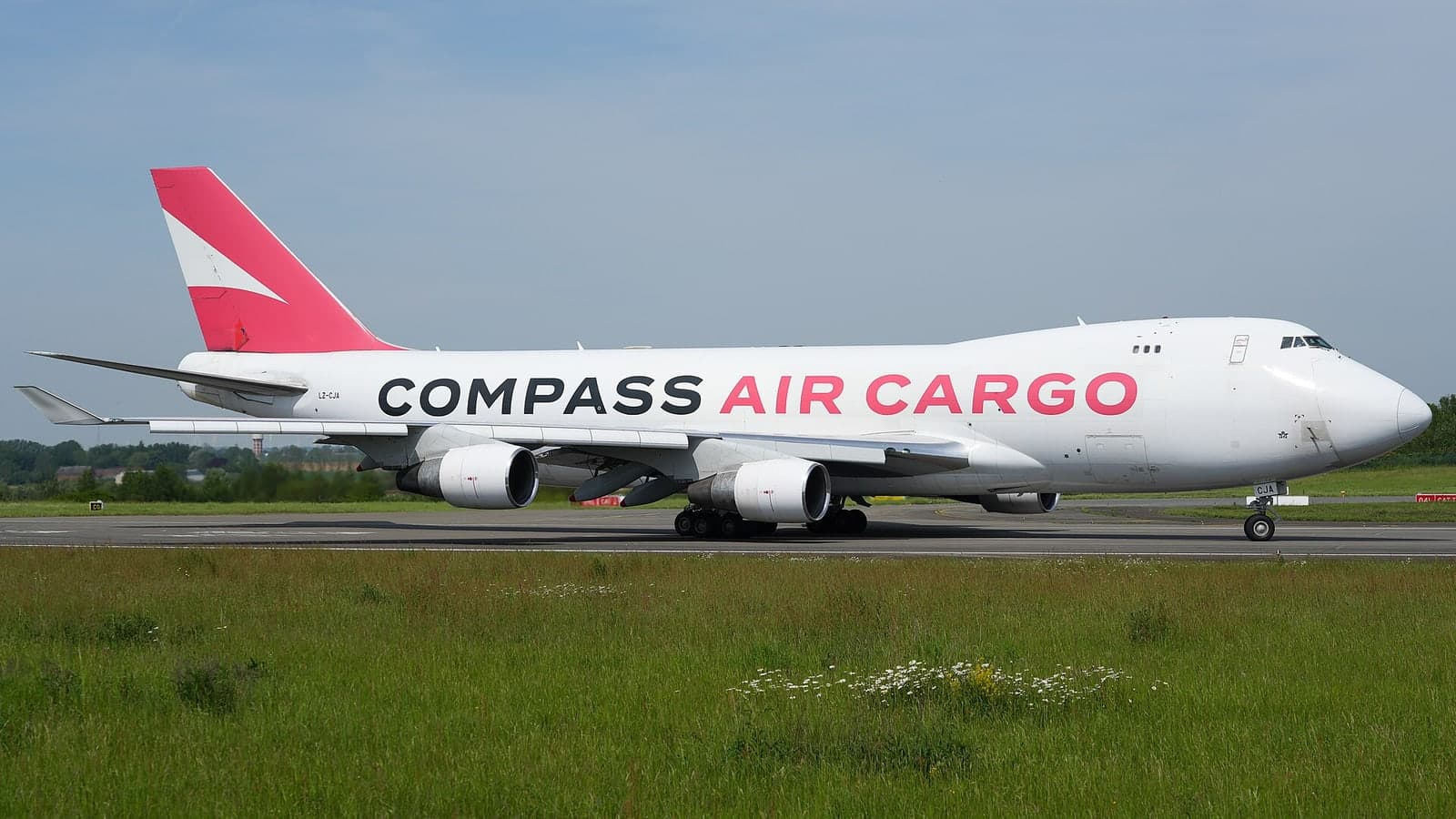
Has the EU’s €3 small-parcel duty started to slow Liège Airport’s e-commerce boom?
Cargo traffic at Liège Airport fell by nearly 4% between 1 and 5 July 2026 compared with the same period in 2025, an early decline reported after the European Union introduced a €3 customs duty on low-value e-commerce imports.
The early decline tests whether Europe can narrow the price advantage enjoyed by non-EU platforms without abruptly damaging a logistics sector that supports thousands of jobs around Liège. For shoppers, the immediate consequence is a higher checkout price on many low-cost orders; for Belgian retailers, it may produce fairer competition; and for cargo businesses, it could mean fewer parcels or a shift towards bulk imports and EU-based warehouses.
Cargo traffic at Liège Airport fell by nearly 4% between 1 and 5 July 2026 compared with the same five-day period last year, according to figures reported by L-Post after the European Union’s new customs duty on low-value e-commerce imports took effect on 1 July. The decline is the first quantified indication that the measure may be changing the flow of small parcels through Belgium’s largest cargo airport, although five days of data are far too few to establish a lasting trend.
The duty applies to consignments worth no more than €150 arriving from outside the EU. It is commonly described as a €3 parcel tax, but the Federal Public Service Finance says the charge is actually calculated by product category: several pairs of trousers in one shipment attract €3, while trousers, shoes and earrings classified under three different tariff headings attract €9. The European Commission says the seller or importer is responsible for declaring and paying the duty.
For households, that distinction matters. The federal finance administration expects online platforms to include the duty and VAT at checkout in roughly 95% of transactions. Where they do not, the buyer may have to pay the duty, VAT and a carrier’s customs-processing charge before receiving the goods. A very cheap mixed order from a platform outside the EU can therefore become noticeably more expensive even though its underlying price has not changed.
The initial fall at Liège contrasts sharply with the airport’s performance before the measure began. Transportmedia reported that the hub handled 697,816 tonnes of freight in the first half of 2026, up 11.3% from 626,690 tonnes in the equivalent period of 2025. Cargo-aircraft movements increased by a more modest 3.3%, indicating that higher loads, rather than flights alone, supported the expansion. Growth had already eased from 15.6% in the first quarter to 7.5% in the second.
The comparison also requires care because parcel numbers, customs declarations and cargo tonnage measure different things. A shipment may contain several goods and generate classifications that do not map neatly onto its weight. Liège Airport had already cautioned that the first few days could not show the full effect and that a complete month of figures would be needed. The available evidence therefore supports an early slowdown, not a conclusion that the airport’s overall freight business has entered a sustained contraction.
Liège’s exposure is nevertheless unusually high. In March, the federal customs administration said close to 20% of the EU’s e-commerce customs declarations were being processed at the airport. It recorded 1.3 billion such declarations in 2025, an average of 3.6 million a day, rising to 4.7 million a day in January 2026. The administration also noted that the number of physical parcels had declined since 2023 while the average number of articles inside each shipment increased, suggesting that sellers and logistics operators were already consolidating orders.
That enormous throughput made Liège a natural test case for the EU intervention. The airport says it has handled more than one billion e-commerce parcels and has built a specialist ecosystem around rapid customs clearance, repacking and onward distribution. The wider airport economy comprised almost 150 companies and supported an estimated 12,600 direct, indirect and induced jobs in 2025, according to a University of Liège impact study cited by Belga. These figures cover the whole airport ecosystem, not only low-value imports, so they should not be read as the number of jobs immediately at risk from the duty.
The policy was designed to address a structural imbalance in European retail. Until July, goods below the €150 threshold generally benefited from customs-duty relief even as VAT remained payable. The Commission argues that the exemption favoured non-EU sellers over businesses manufacturing or stocking goods inside the single market, while the torrent of declarations strained customs services and made it harder to detect unsafe, counterfeit or undervalued products. Belgian customs said EU declaration volumes had risen from 395 million in 2023 to more than 1.3 billion in 2025.
Retailers operating from Belgium or elsewhere in the EU may welcome a smaller price advantage for overseas platforms. Logistics companies and airport workers see the other side: if shoppers reduce orders, sellers consolidate more goods into fewer consignments, or platforms place stock inside the EU before sale, some high-volume air-cargo handling could migrate towards maritime freight and European warehouses. The duty could therefore alter the logistics model even if European demand for inexpensive imported products remains resilient.
Recent French experience illustrates how quickly those routes can change. After France introduced its own €2 charge in March 2026, French parliamentary evidence described traffic shifting towards airports including Liège and Amsterdam. The EU-wide duty has removed much of that incentive to choose one member state over another. France suspended its national scheme when the common European measure entered into force, reducing the scope for simple airport-shopping within the single market.
Liège Airport is better diversified than the small-parcel headline suggests. Its first-half figures showed second-quarter exports rising 18%, including gains towards Asia and North America, while imports grew by less than 1%. Pharmaceuticals, perishables, express freight and other specialised cargo remain part of the business. That mix could cushion the airport if low-value e-commerce traffic weakens, although companies devoted specifically to parcel sorting and customs processing would feel the shift more directly.
The next meaningful evidence will come from full-month and quarterly comparisons separating parcel declarations, freight tonnage and aircraft movements. Analysts will also watch whether platforms pass the charge transparently to shoppers, combine more products into each order, build inventories within Europe or switch transport modes. The present result is a warning signal for Liège’s e-commerce engine, but not yet a verdict on the airport’s broader cargo strategy.
Impact
Regional — Liège Province is particularly exposed because the airport anchors a network of cargo handlers, customs specialists, road hauliers and warehouses. The wider ecosystem was estimated to support 12,600 direct, indirect and induced jobs in 2025, although no verified figure isolates employment dependent on small parcels.
Local — Businesses around Grâce-Hollogne that specialise in parcel handling, customs processing and onward road transport have the greatest exposure. The airport’s export growth and other specialised freight activities provide some diversification.
International — The measure is part of Europe’s response to the rapid expansion of low-cost e-commerce imports, particularly from Asian platforms. Because it applies across the EU, it should reduce the route diversion caused by earlier national taxes.
What it means for you
Belgian consumers should check whether customs duty and VAT are included at checkout and whether a carrier may charge an additional clearance fee. Importers and small businesses need accurate tariff classifications because mixed-category consignments can attract multiple €3 charges.
Opposing perspectives
- European Commission and EU-based retailers
The duty is intended to reduce the customs advantage enjoyed by non-EU sellers, support fairer competition for businesses operating inside the single market and improve enforcement against unsafe, counterfeit or undervalued goods.
- Liège cargo and logistics businesses
Operators face a risk that lower demand or new platform strategies will reduce parcel-handling volumes, but the airport stresses that a five-day decline is not enough to establish a trend and that its freight portfolio extends beyond e-commerce.
- Consumers buying low-cost imports
Buyers may benefit from stronger product oversight and clearer competition rules, but they also face higher checkout prices, especially when an order contains goods assigned to several tariff categories or triggers separate carrier processing fees.
Sources & evidence
- View sourceL-PostPrimaryprimary· lpost.be· 9 July 2026Retrieved 18 August 2026· 85 days ago· Dated
- View sourceBelgian Federal Public Service Financeofficial· news.belgium.be· 16 June 2026Retrieved 18 August 2026· 108 days ago· Dated
- View sourceEuropean Commissionofficial· commission.europa.eu· 29 June 2026Retrieved 18 August 2026· 95 days ago· Dated
- View sourceBelgian Federal Public Service Financebackground· news.belgium.be· 4 March 2026Retrieved 18 August 2026· 212 days ago· Background / context
Related topics
Related to this story
Pulse Insight — This topic connects to 10 associations and 3 funding programmes through the Wallonia ecosystem.
Live connections from the Belgium Impulse ecosystem — not recommendations.
This briefing was prepared with AI assistance and reviewed by a Belgium Impulse editor before publication. methodology.