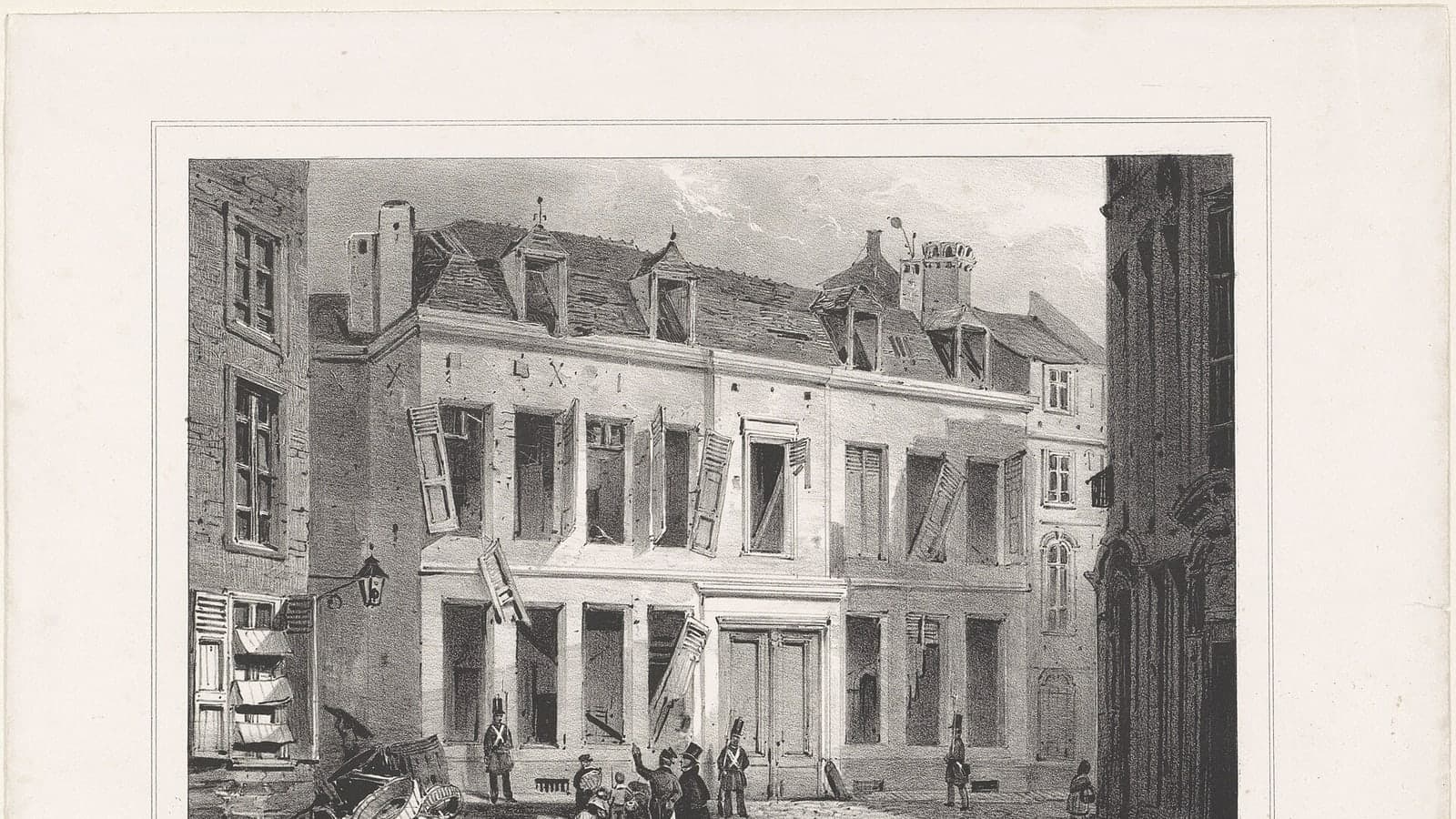
How has Inkendaal kept children learning while they rehabilitate for 50 years?
Ziekenhuisschool Inkendaal in Vlezenbeek has opened a year of celebrations marking 50 years of official recognition, highlighting a Belgian model that combines tailored education, rehabilitation and ordinary childhood routines.
A serious illness, accident or neurological condition can disrupt a child’s education and social life at the same time. Inkendaal’s model seeks to prevent that double exclusion by coordinating lessons, therapy and peer contact within one daily programme.
Ziekenhuisschool Inkendaal in Vlezenbeek, Flemish Brabant, opened its 50th-anniversary year on 1 September, with Sint-Pieters-Leeuw mayor Jan Desmeth and education alderman Wouter De Craen cutting a ceremonial ribbon alongside pupils, teachers and hospital staff. The school will mark five decades of official recognition throughout the 2026-27 academic year, VRT NWS reported.
For families in and around Brussels, the anniversary draws attention to a service that is easy to overlook until illness, an accident or a developmental condition interrupts a child’s education. Inkendaal allows children to attend small classes while following an individual rehabilitation programme in the same complex. School director Koen Bellemans told VRT NWS that pupils can be children there while they rehabilitate—a philosophy built around continuity rather than treating education as an optional extra to healthcare.
Inkendaal says its partial day-hospitalisation service has 60 places and integrates medical treatment, nursing, therapy and education. Pupils may include children with developmental or neuromuscular conditions and acquired brain injuries. According to Bellemans, most arrive in the morning, go home in the evening and study in groups of no more than eight, with therapy sessions fitted into the day. The school also has a branch at UZ Brussel, extending its relevance beyond Vlezenbeek to patients treated in the capital’s university-hospital network.
The model is distinctive, but it sits within a broader Flemish framework. The Flemish government defines hospital schools as Type 5 special-education institutions attached to a hospital, preventorium or residential setting. It says the child’s health takes priority, while teachers adapt instruction to individual needs and coordinate with the pupil’s home school. The objective is to limit learning loss and prepare a workable return. The home school remains responsible for awarding qualifications.
That policy framing offers a different emphasis from Inkendaal’s institutional account. Inkendaal presents a full school community in which care and learning reinforce one another; the Flemish administration stresses a medically conditioned, transitional provision connected to the child’s original school. These are not contradictory positions, but they reveal the balancing act: creating belonging and stability without losing sight of reintegration where that becomes possible.
A second perspective comes from the European Commission. Its child-rights policy calls for “free and effective access” to education and healthcare for children in need and promotes access to mainstream services for children with disabilities. That EU framing concentrates on equal rights and preventing exclusion across systems. Inkendaal illustrates one Belgian method of pursuing those aims through a specialist setting, although the anniversary reporting supplies no comparative evidence showing whether its approach produces better educational or rehabilitation outcomes than alternatives such as home tuition or online participation.
Flanders also offers temporarily home-based teaching and synchronous online education through Bednet. Government guidance says eligible pupils can combine these measures, while hospital education remains the relevant route for many children staying in a Type 5 setting. The options serve different circumstances: digital links preserve contact with a familiar class, whereas Inkendaal’s daily programme provides an on-site peer group and close coordination among teachers, clinicians and therapists.
The school traces its roots to initiatives begun by Emma Crousse-Washer and her daughter Juliette in 1909. Teaching was established on the present site in 1957, official recognition as special education followed in 1976, and ambulatory child rehabilitation expanded in 1985. Inkendaal says hundreds of children have since combined schooling and rehabilitation there.
Planned anniversary events include open days, a lantern walk commemorating pupils who died, a quiet place in Inkendaal Park, a photographic portrait project and an end-of-year celebration. Bellemans says the longer-term ambition is to expand the offer and strengthen outreach to mainstream and special schools. No detailed expansion plan, budget or capacity target has yet been published, leaving access, staffing and future demand as the questions to watch after the festivities.
Impact
Regional — The school serves families through its main site in Vlezenbeek, near Brussels, and a branch at UZ Brussel. Its work involves Flemish education authorities, local government, home schools, healthcare teams and pupil-guidance services.
Local — The anniversary highlights a specialist service in Vlezenbeek and its connection with UZ Brussel. Sint-Pieters-Leeuw officials describe the school as a regional reference point for children whose education is disrupted by illness or rehabilitation.
International — Inkendaal provides a local example of the wider European effort to protect children’s simultaneous access to healthcare and education. EU institutions set inclusion objectives, but the organisation and funding of hospital education remain primarily national or regional responsibilities.
What it means for you
Families dealing with long-term illness can discuss Type 5 education, TOAH or Bednet with the child’s home school, medical team and pupil-guidance centre. Admission to hospital education requires documentation from the treating physician or relevant institution.
Opposing perspectives
- Inkendaal’s integrated-school perspective
Director Koen Bellemans and Inkendaal describe the school as a community where pupils receive education and therapy but can also experience ordinary routines, friendships and play. Their emphasis is on a complete school day and the mutually reinforcing roles of education, care and rehabilitation.
- Flemish government’s transitional perspective
Flemish guidance says that in Type 5 education “the health of the child plays the leading role” and stresses coordination with the home school, limiting learning loss and preparing a return. This frames hospital education chiefly as tailored provision within a wider educational pathway.
- European Commission’s inclusion perspective
The Commission frames the issue through children’s rights, calling for “free and effective access” to education and healthcare while promoting access to mainstream services for children with disabilities. That system-wide approach places specialist provision within a broader goal of inclusion and non-discrimination.
Sources & evidence
- View sourceVRT NWSPrimaryprimary· vrtnws.be· 1 September 2026Retrieved 4 September 2026· 31 days ago· Dated
- View sourceHet Nieuwsbladcorroborating· nieuwsblad.be· 1 September 2026Retrieved 4 September 2026· 31 days ago· Dated
- View sourceSint-Pieters-Leeuw local news servicecorroborating· sint-pieters-leeuw.eu· 1 September 2026Retrieved 4 September 2026· 31 days ago· Dated
- View sourceRevalidatieziekenhuis Inkendaalofficial· inkendaal.beRetrieved 4 September 2026
Related to this story

Pulse Insight — This topic connects to 10 associations and 2 funding programmes through the Flanders ecosystem.
Live connections from the Belgium Impulse ecosystem — not recommendations.
This briefing was prepared with AI assistance and reviewed by a Belgium Impulse editor before publication. methodology.