She said teachers were central to better learning outcomes and treated their continued use of the approaches as an important measure of success [1].
News • International
UK partnership supports literacy and numeracy for 200,000 children in Pakistan
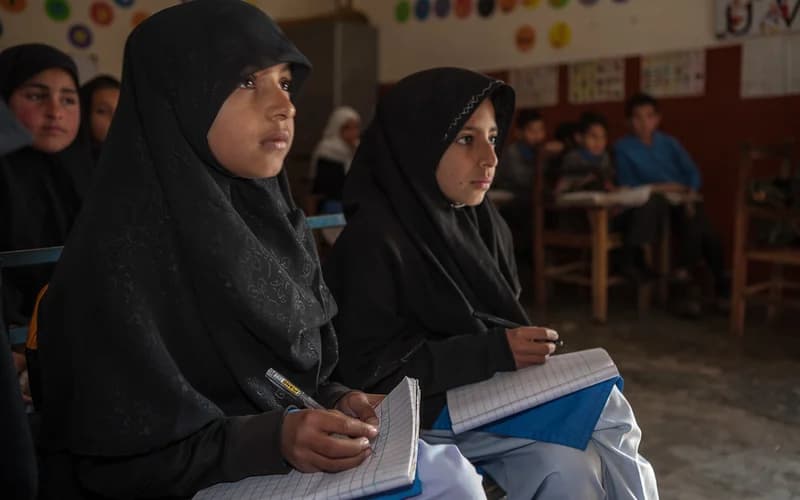
A UK partnership with the provincial governments of Punjab and Khyber Pakhtunkhwa has helped more than 200,000 children improve access to schooling and essential skills [1]. The programme also returned more than 35,000 out-of-school children to education and trained thousands of educators [1].
In 30 seconds
✓More than 200,000 children have improved their access to schooling through this programme.
✓Over 35,000 out-of-school children returned to education.
✓The programme trained thousands of educators and master trainers.
The full picture
This article discusses a partnership between the United Kingdom (UK) and the governments of Pakistan's Punjab and Khyber Pakhtunkhwa provinces. The aim was to improve literacy, numeracy, and basic life skills for children in these regions through targeted education programs and teacher training.
A UK partnership with the governments of Punjab and Khyber Pakhtunkhwa has helped more than 200,000 children improve their access to schooling, basic reading, numeracy and life skills, according to the UK Government [1]. The programme reached more than 500 public schools and enabled over 35,000 children who had been out of school to return to education [1]. Reported learning results show substantial changes among participating children. Urdu reading levels rose from 15% to 78%, while English reading increased from 15% to 45% [1]. Subtraction skills improved from 37% to 67% [1]. The source does not specify the assessment dates or explain whether every participating child was included in each measurement. The UK-Pakistan partnership assessed children according to their learning level and provided targeted instruction intended to help them catch up [1]. It combined this approach with teacher coaching and regular monitoring of pupils’ progress [1]. These methods focused support on what children could already understand rather than relying only on their school grade. The work extended beyond the children who returned to school. It provided remedial education to 48,000 learners and trained more than 5,500 educators and 250 master trainers [1]. The programme also improved facilities in 400 schools [1]. The source does not give a breakdown of these results between Punjab and Khyber Pakhtunkhwa. British High Commissioner Jane Marriott said teachers were central to improving children’s learning outcomes [1]. She identified teachers’ willingness to continue using the programme’s approaches as an important measure of success and described the feedback received so far as encouraging [1]. Her comments place continued use by educators alongside the reported improvements in reading and subtraction. For people in the United Kingdom, the results provide a measurable account of what a UK international partnership has delivered in public schools overseas [1]. They include changes in learning levels, the return of children to education, teacher training and improvements to school facilities [1]. However, the supplied evidence does not state the programme’s cost, duration, future timetable or how its results were independently verified. The next points to examine are the results from regular progress tracking and whether educators continue using the teaching approaches, both of which the source identifies as part of assessing and sustaining the work [1]. Further information would also be needed to establish how outcomes vary between the two provinces and whether the reported gains continue over time.
The wider picture
This is a cross-border development partnership linking the United Kingdom with two provincial governments in Pakistan. Its reported results concern education access and basic skills rather than a direct Belgian or EU policy change. For Belgium Pulse readers, the story offers a concrete example of bilateral education assistance, but the available source does not identify EU involvement, Belgian funding or consequences for EU institutions. Comparisons with European development programmes would require additional evidence.
Why now?
The UK Government has reported the partnership’s results, including support for more than 200,000 children and the return of over 35,000 out-of-school children to education [1]. It also published learning-level changes in Urdu reading, English reading and subtraction [1].
Voices & reactions
More than 5,500 educators and 250 master trainers received training through the programme [1].
More than 35,000 returned to education through the partnership [1].