What legacy does Frank Comhaire leave after the Ghent fertility pioneer’s death at 86?
Frank Comhaire, the Ghent fertility specialist associated with the creation of the city’s sperm bank, died on 1 September aged 86, according to his death notice and Belgian reporting. His legacy connects fertility treatment with research into environmental influences on reproductive health.
His death invites an assessment of how specialist fertility care developed in Belgium and how research into environmental exposures complements treatment for people trying to have children.
Frank Comhaire, the Belgian fertility specialist remembered for establishing Ghent’s sperm bank, died on 1 September aged 86. His death notice in De Standaard identifies Sint-Martens-Latem, near Ghent in East Flanders; Het Nieuwsblad’s obituary describes him as the sperm bank’s founding figure. His death brings renewed attention to a medical career concerned both with helping people conceive and understanding what can undermine fertility. [De Standaard](https://www.standaard.be/binnenland/inmemoriam/frank-comhaire-86-jaar/161017989.html), [Het Nieuwsblad](https://www.nieuwsblad.be/regio/oost-vlaanderen/regio-gent/gent/vader-van-gentse-spermabank-frank-comhaire-86-overleden-milieu-heeft-invloed-op-vruchtbaarheid/161044618.html)
VRT NWS’s report, available through an indexed news excerpt, identifies Comhaire as an emeritus professor of endocrinology at Ghent University and credits him with founding Belgium’s first sperm bank within a university hospital. That gives his work a significance beyond one institution: it belongs to the development of specialist reproductive care in Belgium. The full VRT article was unavailable for verification, so the account supports this broad description rather than a detailed chronology. [VRT NWS excerpt](https://www.dekrantenkoppen.be/detail/3799069/oud-professor-endocrinologie-frank-comhaire-universiteit-gent-overleden.html)
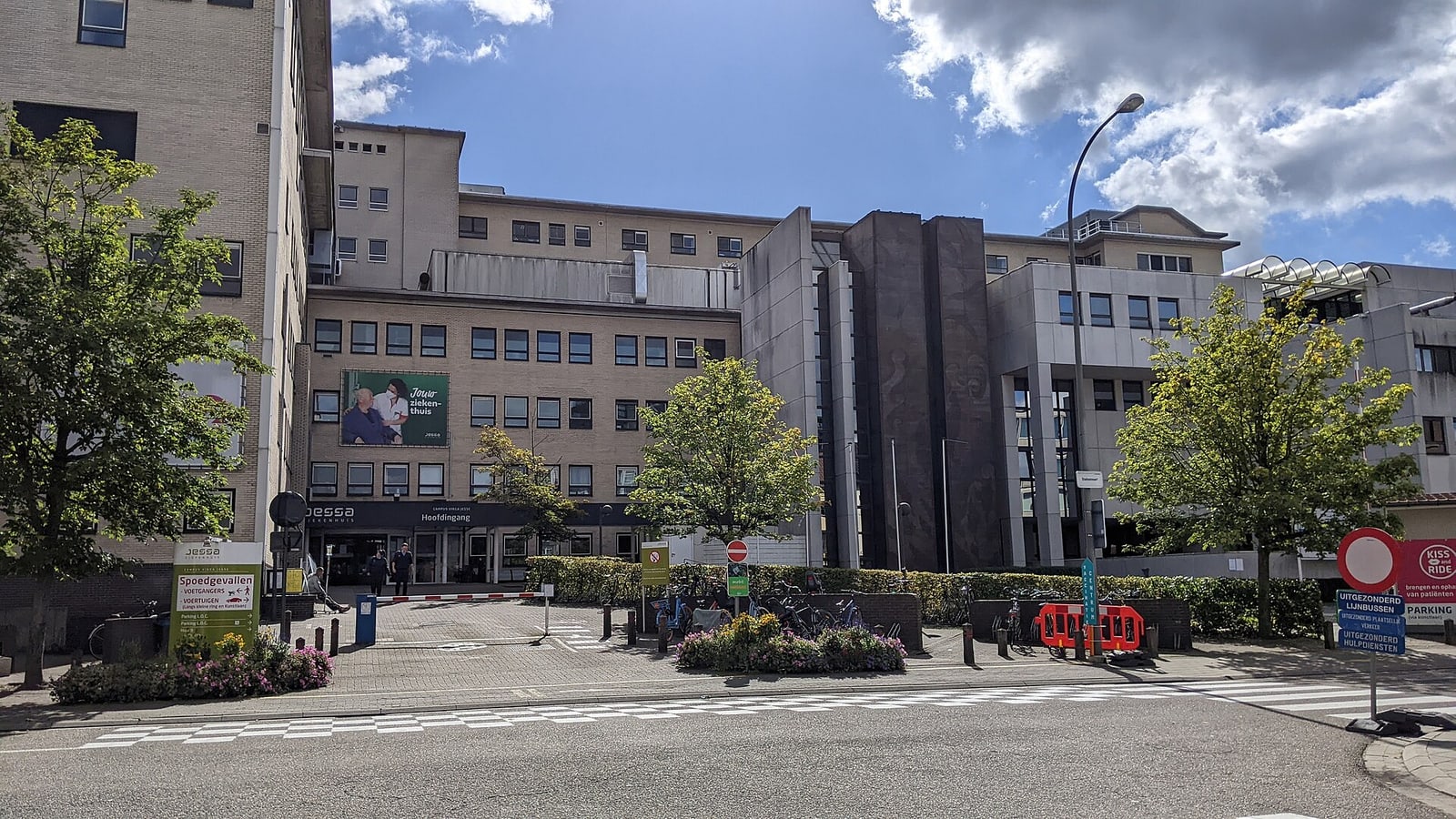
For people seeking fertility treatment, that history has a practical, human dimension. UZ Gent’s reproductive medicine department describes its purpose as helping patients fulfil their wish for a child. Its donor-sperm guidance also recognises the grief that can accompany infertility and the need for time and psychological support before choosing another route to parenthood. Scientific advances matter because they expand those choices; they do not remove the difficult decisions surrounding them. [UZ Gent department](https://www.uzgent.be/nl/reproductieve-geneeskunde), [patient guidance](https://uzgent.be/sites/default/files/documents/behandeling-met-donorsperma.pdf)
Comhaire’s university bibliography shows a career broader than sperm banking. It records work on semen analysis, hormonal disorders, male infertility and environmental exposures, alongside collaboration with researchers including Ahmed Mahmoud and Jean Kaufman. He also co-edited the 2006 reference book Andrology for the Clinician with Wolf-Bernhard Schill and Timothy Hargreave. These publications place the Ghent clinician within an international medical conversation about male reproductive health, diagnosis and treatment. [Ghent University bibliography](https://biblio.ugent.be/person/FC50864C-F0ED-11E1-A9DE-61C894A0A6B4)
His environmental research deserves a careful reading. A 2007 study with Mahmoud and Frank Schoonjans examined records from 562 candidate sperm donors between 1977 and 2004. The authors reported an association between dioxin pollution and sperm movement, but no significant change in total sperm count over time. They also found that demographic factors primarily explained birth numbers. Their findings support investigating environmental influences without treating every fertility measure—or falling birth rates—as evidence of the same phenomenon. [Reproductive Toxicology study](https://pubmed.ncbi.nlm.nih.gov/17158028/)
Two Belgian perspectives help explain the legacy without manufacturing a dispute. UZ Gent’s clinical framing is “de kinderwens van onze patiënten helpen te vervullen”—helping patients fulfil their wish for a child. Belgium’s federal public-health service takes a preventive perspective: endocrine disruptors can affect the hormonal system, and its national action plan seeks to reduce exposure. One starts with the person needing care; the other addresses risks across the population. These are complementary priorities, not competing verdicts on Comhaire’s work. [UZ Gent](https://www.uzgent.be/nl/reproductieve-geneeskunde), [FPS Public Health](https://www.health.belgium.be/nl/node/1204)
That preventive agenda remains active. On 1 April 2026, FPS Public Health launched a campaign with Belgium’s regions and communities focused on protecting children during their first 1,000 days. The announcement connects public information, research and regulation, including the EU’s REACH and CLP chemical rules. This is the substantive European connection: how countries address shared environmental risks, rather than an institutional response to an individual death. [Federal announcement](https://www.health.belgium.be/nl/nieuws/2026-4-bescherm-kinderen-tegen-hormoonverstoorders-vanaf-eerste-1000-dagen)
The immediate next step is remembrance and a fuller assessment of Comhaire’s contribution. The sources reviewed do not establish a cause of death or a public memorial programme. Those details should await family or institutional confirmation. His published work leaves a continuing question for researchers and clinicians: how can reproductive medicine improve treatment while better understanding the conditions that make treatment necessary?
Impact
Regional — The story centres on Ghent University, UZ Gent and the surrounding East Flanders community. No operational change to fertility services has been established.
Local — Ghent and nearby Sint-Martens-Latem form the geographical centre of the obituary; UZ Gent’s fertility services provide its continuing institutional context.
International — Comhaire’s publications and co-edited clinical reference book connect his Belgian career to international reproductive medicine. European chemical regulation supplies a limited policy connection.
What it means for you
The obituary establishes no change to patient appointments or treatment. UZ Gent’s published information remains the relevant source for its fertility services.
Opposing perspectives
- UZ Gent: the clinical and patient perspective
UZ Gent describes its aim as “de kinderwens van onze patiënten helpen te vervullen”: helping patients fulfil their wish for a child. Its guidance stresses the emotional dimensions of donor treatment. This complements prevention; no dispute with public-health authorities is documented.
- FPS Public Health: population-level prevention
FPS Public Health frames its approach as reducing “jouw blootstelling én die van het milieu”—your exposure and that of the environment. It combines prevention, research and regulation. This broadens the clinical perspective without constituting an evidenced disagreement or an Anglo-Belgian divide.
Sources & evidence
- View sourceHet Nieuwsblad — Comhaire obituary; indexed headlinePrimaryprimary· nieuwsblad.beRetrieved 9 September 2026
- View sourceDe Standaard — Frank Comhaire death notice; indexed textcorroborating· standaard.beRetrieved 9 September 2026
- View sourceVRT NWS — report excerpt reproduced by De Krantenkoppencorroborating· dekrantenkoppen.be· 5 September 2026Retrieved 9 September 2026· 27 days ago· Dated
- View sourceGhent University — Frank Comhaire bibliographyofficial· biblio.ugent.beRetrieved 9 September 2026
Related to this story

Pulse Insight — This topic connects to 10 associations and 2 funding programmes through the Flanders ecosystem.
Live connections from the Belgium Impulse ecosystem — not recommendations.
This briefing was prepared with AI assistance and reviewed by a Belgium Impulse editor before publication. methodology.