
What should patients know about Imelda Hospital’s campaign against aggression?
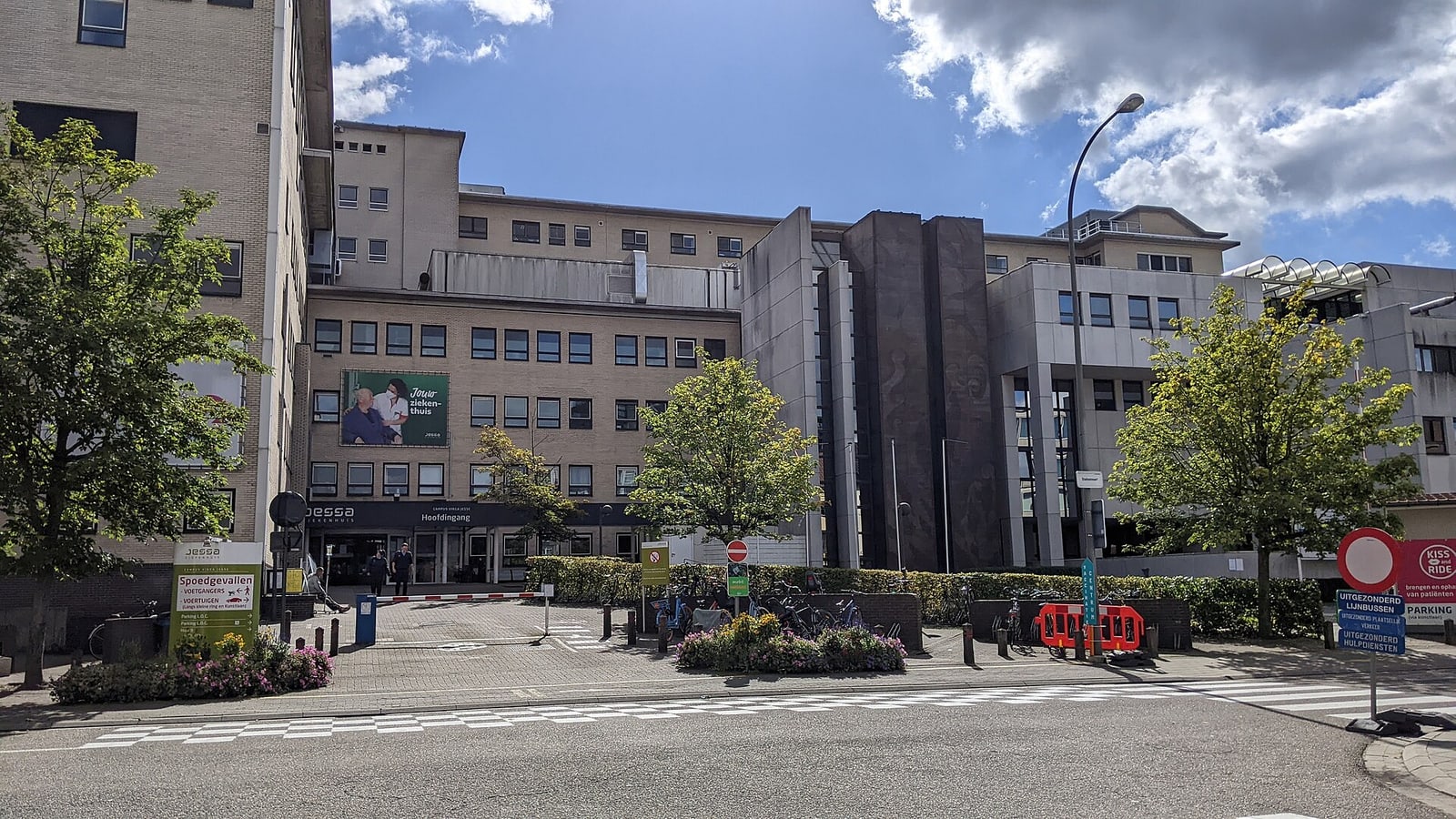
Imelda Hospital in Bonheiden has launched a campaign against workplace aggression after recording 208 incident reports in 2025. Patients and visitors are being asked to raise concerns calmly, request an explanation when delays are unclear and never direct threats, insults or violence at staff.
Aggression can harm employees, disrupt teams and make care less safe, while poor communication during stressful waits can intensify conflict. Patients and visitors benefit from knowing how triage works, how to request information and where to submit a complaint without escalating a difficult situation.
in has launched a campaign against workplace aggression after recording 208 incident reports in 2025, combining public messages with staff training, closer follow-up and an internal working group. The practical message for patients and visitors is straightforward: frustration about waiting or communication can be raised with the care team, reception desk or hospital ombuds service, but intimidation, insults and physical aggression are not acceptable.
According to reporting by , employees described incidents ranging from verbal abuse to objects being thrown when people felt they had waited too long. Hospital care coordinator Filip Liekens told the media that fear, grief, uncertainty and frustration often lie behind confrontations. The institution says those emotions deserve understanding but cannot excuse behaviour that crosses a boundary.
The hospital counted 152 instances of verbal aggression and 140 of physical aggression during 2025, within 208 overall reports, according to figures published by and specialist medical publication . The available reporting does not explain precisely how the categories overlap, so the two category totals should not be added together as if they represented separate reports. Imelda also believes its total understates the problem because employees do not report every incident.
### What is the hospital changing?
Posters, social-media messages and internal communications will make the campaign visible inside and outside the hospital. Imelda has also established a multidisciplinary aggression working group to examine reports, identify patterns and propose preventive measures. Employees receive training in aggression prevention and conflict management, while volunteers are briefed on how to respond to difficult situations, according to the hospital’s account reproduced by .
That distinction matters. A poster can establish a social boundary, but reporting and analysis allow the hospital to see whether confrontations cluster around a department, time of day, communication failure or recurring safety problem. Imelda says better reporting should also make it easier to support affected workers and target prevention.
The approach is not unique to . In December 2024, reported that hospitals, police, prosecutors and emergency services in had launched a joint respect campaign after recording substantial numbers of incidents. Jessa Hospital registered 108 cases that year and Ziekenhuis Oost-Limburg 204, compared with 67 and 71 respectively in 2022. Those figures come from separate organisations with their own reporting systems, so they illustrate a broader concern rather than providing a direct league table.
### How should patients and visitors handle a delay?
Waiting is particularly difficult when somebody is frightened, in pain or uncertain about what will happen next. In an emergency department, however, arrival order is not necessarily treatment order: clinical teams prioritise patients according to medical urgency. A later arrival may therefore be seen first without the earlier patient having been forgotten.
If a delay or instruction is unclear, ask the reception desk or responsible nurse for an update and explain any change in symptoms immediately. A useful formulation is: “Could you tell me whether I am still registered and what the next step is?” Staff may not be able to promise an exact time, but they can often clarify the process. Patients who struggle with Dutch can say “Ik spreek niet goed Nederlands” and ask whether an explanation is available in English or French. Language assistance will depend on the department and available staff; is a Dutch-language gemeente in , so an automatic right to service in English should not be assumed.
For a non-urgent complaint about communication, administration or care, patients can contact the hospital’s ombudsdienst rather than confronting an individual employee. Belgium’s Federal Public Service Public Health explains that every patient has rights including understandable information, informed consent, privacy and access to a complaints-mediation function. The ombuds service is intended to facilitate dialogue and seek a solution; it is not a court and does not impose a judicial sanction.
Anyone facing an immediate medical emergency should call 112. An immediate threat or assault can also require police intervention. Routine dissatisfaction, by contrast, is better documented calmly: note the date, department, people involved and the specific outcome sought, then use the hospital’s complaint channel.
### What protections do healthcare workers have?
Belgian workplace-welfare rules define workplace violence as a situation in which somebody is psychologically or physically threatened or attacked while working. The Federal Public Service Employment lists threats, blows, verbal intimidation and insults among the possible forms. This means that aggression need not cause a visible injury before it becomes a workplace-safety issue.
The same federal guidance says employers whose staff deal with third parties, including patients and visitors, must adopt a specific prevention policy and maintain a register of incidents involving third parties. When a worker experiences violence, the employer must arrange appropriate psychological support through specialised services. Employees can also approach a confidential counsellor or the prevention adviser for psychosocial matters. Depending on the facts, a victim may report an offence to the police, the labour prosecutor or an investigating judge.
These protections do not remove the hospital’s responsibility to communicate well. Patients and relatives may have legitimate concerns about long waits, confusing instructions or how they were treated. The two principles coexist: hospitals should make their processes understandable and responsive, while patients and visitors must express complaints without abuse or violence.
### What happens next?
Imelda’s working group is expected to keep reviewing incident reports and refine prevention and staff support. The main unanswered questions are whether reporting becomes more complete, whether particular departments or situations account for a disproportionate share of incidents, and whether the campaign produces a sustained reduction rather than a temporary rise in awareness. Publishing comparable annual figures and explaining how verbal and physical categories overlap would make that progress easier for patients, staff and the wider community to assess.
Impact
Regional — The initiative directly affects patients, visitors, volunteers and healthcare staff in Bonheiden and the surrounding Rivierenland area. Similar campaigns and incident figures from Limburg hospitals indicate that the concern is not confined to one Flemish institution.
Local — The campaign directly concerns people receiving care, accompanying relatives or working and volunteering at Imelda Hospital in Bonheiden. Posters and other communications will make the expected conduct more visible inside the hospital, while staff training and the multidisciplinary working group address prevention and responses behind the scenes. For Bonheiden and the surrounding Rivierenland area, the practical change is clearer guidance on how to question delays, request information and submit non-urgent complaints without disrupting care or threatening staff.
What it means for you
If you attend Imelda Hospital, ask staff calmly for an explanation when waiting times or care decisions are unclear; emergency and other urgent care may be prioritised through triage. Do not use threats, insults or physical force, even during a stressful delay. Try to resolve immediate communication problems with the relevant care team. For a non-urgent complaint about care, information or communication, contact the hospital’s ombuds service. The campaign does not remove Belgian patient rights: you may still request information, raise concerns and use formal complaint procedures. No new patient charge or compliance deadline is identified.
Opposing perspectives
- Healthcare workers and hospital management
Imelda’s management and care staff argue that insults, threats and physical actions cannot be accepted as part of healthcare work. They favour visible boundaries, more consistent incident reporting, de-escalation training and structured support for employees after confrontations.
- Patients and accompanying relatives
Patients and relatives may experience pain, fear, grief, long waits or uncertainty and can reasonably expect timely, understandable information. Their concerns remain legitimate even though those circumstances do not justify intimidation or violence; accessible complaint and language-support routes are therefore important.
Who, where and what
Key people, places and terms in this story
Dutch-speaking Belgian region in which Bonheiden, Rivierenland and the cited hospital initiatives are situated.
Flemish province where emergency workers ran a comparable respect campaign in December 2024.
Flemish municipality where Imelda Hospital is located.
Surrounding area whose patients, visitors and healthcare community are directly affected.
Public-service news outlet reporting on the Imelda Hospital campaign and the Limburg precedent.
Show the full library (12)
Flemish municipality where Imelda Hospital is located.
Surrounding area whose patients, visitors and healthcare community are directly affected.
Dutch-speaking Belgian region in which Bonheiden, Rivierenland and the cited hospital initiatives are situated.
Flemish province where emergency workers ran a comparable respect campaign in December 2024.
Campaign using public communication, staff training and multidisciplinary coordination to prevent and respond to aggression.
Rules requiring employers whose staff encounter third parties to maintain a specific prevention policy and incident register.
Public-service news outlet reporting on the Imelda Hospital campaign and the Limburg precedent.
General hospital in Bonheiden that launched the campaign after recording 208 aggression reports in 2025.
Belgian newspaper reporting on the 208 aggression reports and hospital response.
Medical news publication covering the campaign and reported incident total.
Belgian federal authority explaining employer duties and definitions concerning third-party workplace violence.
Belgian federal authority providing official information about patients’ rights.
Sources & evidence
- View sourceVRT NWS — Imeldaziekenhuis in Bonheiden starts workplace-aggression campaignPrimaryprimary· vrtnws.beRetrieved 25 August 2026
- View sourceHet Nieuwsblad — 208 reports prompt action at Imelda Hospitalcorroborating· nieuwsblad.beRetrieved 25 August 2026
- View sourceDe Specialist — Imelda Hospital launches campaign after 208 reportscorroborating· despecialist.eu· 13 July 2026Retrieved 25 August 2026· 81 days ago· Dated
- View sourceFPS Employment — Working with third parties in the workplaceofficial· werk.belgie.beRetrieved 25 August 2026
Related topics
Related to this story

Pulse Insight — This topic connects to 10 associations and 2 funding programmes through the Flanders ecosystem.
Live connections from the Belgium Impulse ecosystem — not recommendations.
This briefing was prepared with AI assistance and reviewed by a Belgium Impulse editor before publication. methodology.