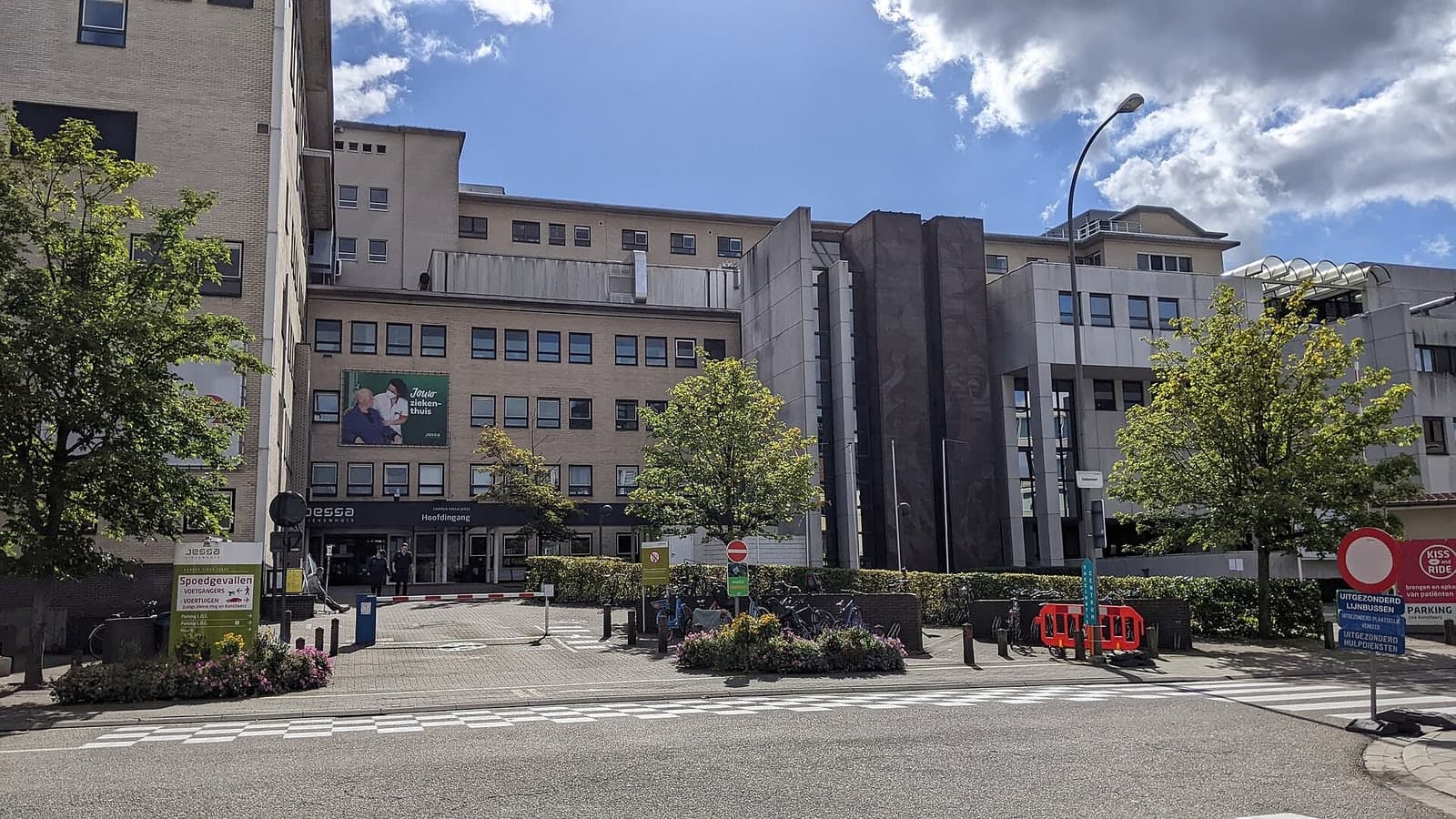
What will ZOL Genk’s €540 million hospital overhaul change for patients?
Ziekenhuis Oost-Limburg has moved into the implementation phase of a major building and renovation programme at Campus Sint-Jan in Genk, with the complete programme now reported at €540 million. The investment will concentrate more acute and inpatient care in Genk while changing the role of ZOL’s Lanaken campus.
The project will determine the capacity and location of emergency, intensive, surgical and inpatient care for a large part of Limburg. It also commits substantial Flemish public support while requiring ZOL to finance part of the investment itself.
Ziekenhuis Oost-Limburg has begun advancing the new construction and renovation programme that will remake its Campus Sint-Jan in Genk, a project whose total cost is now reported at €540 million. The development is one of Flanders’ largest current hospital-infrastructure programmes and will affect where patients across Limburg receive emergency, surgical, intensive and inpatient care.
The central component is ZOL’s approved VIPA 5 programme: three new buildings, a connecting axis and the renovation of the present surgical day hospital. ZOL says that package covers 61,300 square metres, including 57,650 square metres of new construction. A new block will group critical services, including an enlarged emergency department, medical imaging, operating theatres and intensive care. Another will accommodate nursing wards, while a separate technical building will support the expanded campus.
For patients, the important change is not the architecture but the reorganisation behind it. ZOL says its emergency department will double in size and sit alongside the out-of-hours general-practitioner service. Ten additional operating theatres are planned, together with new intensive-care facilities and more space for geriatric care. Maternity and neonatal intensive care are also intended to move into modern accommodation designed to let parents remain closer to newborn or premature babies.
The €540 million headline requires context. ZOL’s own account of the approved VIPA 5 core project puts that component at about €330 million, with the Flemish authorities providing €288 million. The larger figure reported for the current programme appears to encompass a wider set of new-build, renovation and supporting campus works. A detailed, publicly accessible breakdown reconciling every component of the €540 million total was not available at the time of writing, so the figures should not be treated as interchangeable.
This is directly a Flemish policy story because hospital buildings are supported through VIPA, the Flemish infrastructure fund for health and welfare facilities. The Flemish government describes that support as a contribution towards construction and initial equipment rather than an automatic payment of every project cost. Its rules also require hospitals seeking a strategic forfait to show that they can carry the investment during construction without endangering continuity of care. ZOL financial director Elke Panis has consequently called financing the remaining share a major challenge; the hospital and its doctors have established a supplement fund for building works.
ZOL chairman Tom Arts presents the programme as necessary to preserve specialist care in Limburg, saying the institution’s infrastructure must remain “top” if its clinical services are to do the same. Chief executive Erwin Bormans has pointed to a more immediate constraint: parts of Campus Sint-Jan date from the 1980s, while critical departments face a shortage of space. VRT NWS reported that the hospital had been developing the present expansion plan since at least 2022, although its scope and estimated cost have evolved substantially since then.
The harder perspective comes from the geography of care. Inpatient services from Campus Sint-Barbara in Lanaken are due to move to Genk when the new nursing capacity becomes available. ZOL argues that acute services need immediate access to the larger clinical platform in Genk and says Lanaken will remain an ambulatory centre for consultations and the Multidisciplinary Pain Centre. For patients in Lanaken and the Maasland, however, centralisation means that some hospital admissions will eventually require a longer journey. The hospital has not yet published a complete patient-by-patient transition timetable.
The broader shift is familiar across European healthcare: shorter hospital stays, more day treatment and increasingly specialised acute care favour larger, networked campuses over small inpatient sites. In Limburg, that logic is reinforced by INEZ Limburg, the collaboration established by ZOL and Hasselt’s Jessa Hospital in 2025. It may reduce duplication and concentrate expertise, but it also makes accessibility, public transport and clear referral pathways more important.
The next milestones are detailed design, procurement, financing and phased construction while Campus Sint-Jan remains operational. Patients should watch for firm completion dates, disruption and access plans, and a precise schedule for moving Lanaken services. The hospital’s stated horizon remains around 2035, but the final sequence—and whether the €540 million estimate holds through a long construction period—has not yet been publicly settled.
Impact
Regional — Genk will gain a much larger concentration of specialist and acute services. Lanaken will retain consultations and pain care, but its inpatient function is expected to close as beds and clinical activity move to Genk.
Local — Genk will become the clearer centre of gravity for ZOL’s acute and inpatient services, bringing investment and construction activity but also years of possible disruption around Campus Sint-Jan. Lanaken’s hospital site is expected to shift towards consultations and pain care.
International — The programme reflects a wider European trend towards concentrating complex acute care on larger campuses while moving suitable treatment to day clinics and outpatient settings. No direct EU funding or EU institutional decision has been identified.
What it means for you
Current services continue for now. Patients should not assume that departments have already moved, but people using the Genk or Lanaken campuses will eventually need to check appointment locations and transport arrangements as the phased reorganisation proceeds.
Opposing perspectives
- ZOL leadership and Flemish infrastructure planners
ZOL chairman Tom Arts argues that the investment is indispensable to preserve high-level specialist care, framing the objective as ensuring that hospital infrastructure remains “top” alongside clinical quality. Flemish policy likewise treats infrastructure support as a way to keep care facilities functional, accessible and technically fit for long-term use.
- Patients in Lanaken and the Maasland
ZOL says that “acute care is concentrated in Genk, but Lanaken remains important as an ambulatory centre.” For communities around Campus Sint-Barbara, that model nevertheless exchanges nearby inpatient services for a more centralised specialist platform, raising practical questions about travel, public transport and access for relatives.
- ZOL financial management
Financial director Elke Panis has described financing as a major challenge even with Flemish support. This qualifies the institution’s optimistic modernisation case: the hospital must fund a substantial share while also protecting staffing, medical investment and day-to-day care during a long construction programme.
Sources & evidence
- View sourceHet NieuwsbladPrimaryprimary· nieuwsblad.be· 5 September 2026Retrieved 4 September 2026· 27 days ago· Dated
- View sourceZiekenhuis Oost-Limburgofficial· zol.beRetrieved 4 September 2026
- View sourceVRT NWScorroborating· vrt.be· 1 December 2023Retrieved 4 September 2026· 1036 days ago· Dated
- View sourceVRT NWShistorical· vrt.be· 22 September 2022Retrieved 4 September 2026· 1471 days ago· Background / context
Related to this story

Pulse Insight — This topic connects to 10 associations and 2 funding programmes through the Flanders ecosystem.
Live connections from the Belgium Impulse ecosystem — not recommendations.
This briefing was prepared with AI assistance and reviewed by a Belgium Impulse editor before publication. methodology.