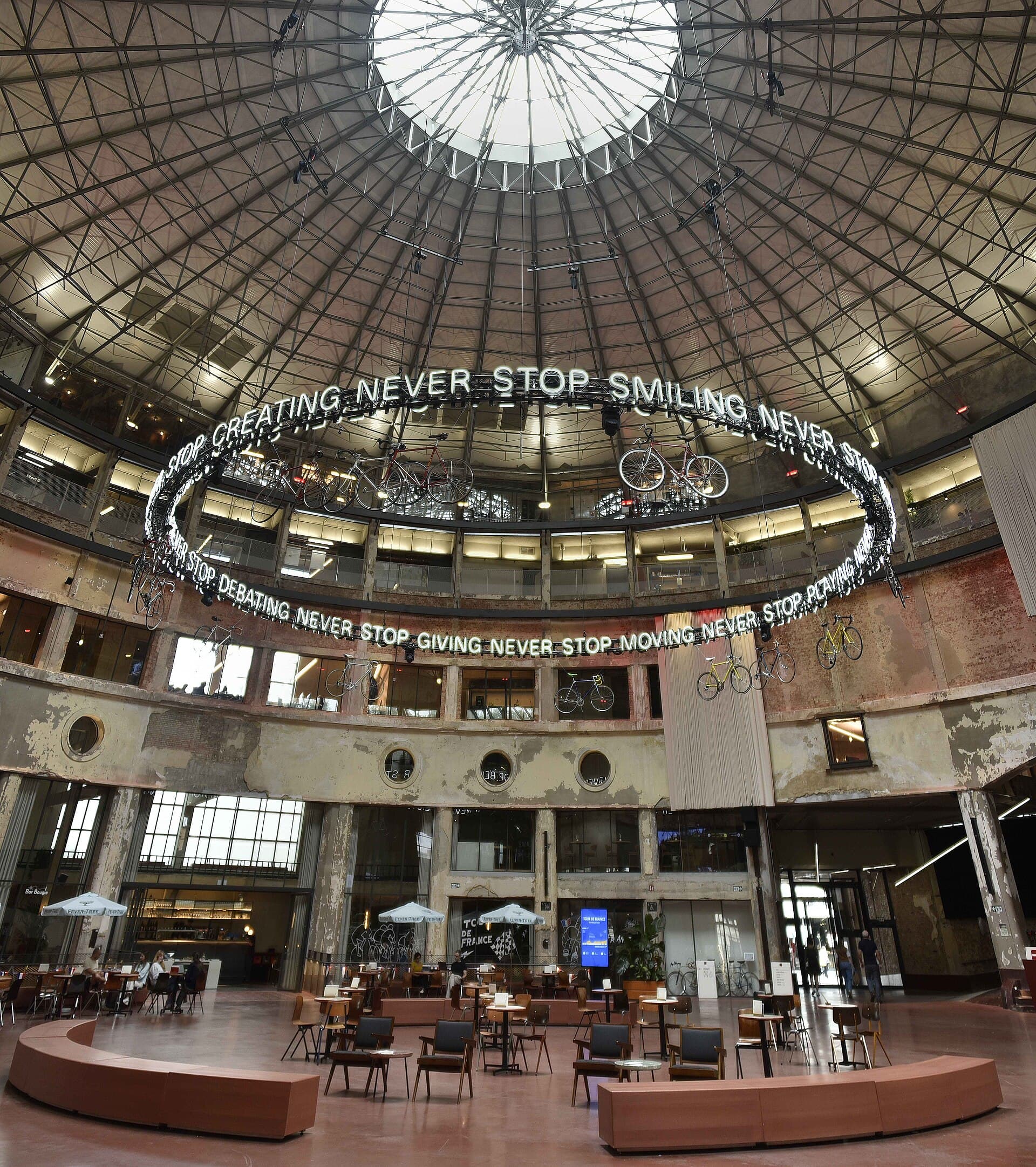
Why is Ghent's Wintercircus staging its technology festival again?
Ghent's Wintercircus — the redeveloped former circus building that now houses a technology and innovation community — will once more host a technology festival, according to Het Nieuwsblad. Fuller details of dates, scale and programme were not set out in the available reporting, but the return of the event says something about how a landmark restoration is being used as a shop window for the city's start-up and knowledge economy.
For Ghent's start-ups, students and nearby small businesses, a recurring technology festival in a landmark venue is a low-cost channel for recruitment, partnerships and footfall. More broadly, it is a visible test of Flanders' bet that restored heritage buildings and innovation events can anchor a local knowledge economy — a strategy whose real economic payoff is notoriously hard to measure and worth judging over several editions rather than on day-one attendance.
The Wintercircus is a redeveloped former circus building in central Ghent (East Flanders) that has been converted into a hub for technology companies, start-ups and innovation programmes. According to Het Nieuwsblad, it will again host a technology festival. Named entities in the wider ecosystem include Ghent University, the Flemish start-up scene and research institutes such as imec; the specific organisers, corporate participants and financing of this particular festival were not detailed in the available reporting.
Background
The Wintercircus began as a circus hall, later served as a garage and stood empty for years before a redevelopment turned it into a home for technology firms and innovation activity. Reusing decayed heritage buildings as working innovation hubs — rather than restoring them as static monuments — has become a recognisable model in Flemish cities, betting that a daily commercial function and occasional public events can make expensive restorations financially sustainable.
Impact
Regional — Directly relevant to Ghent and East Flanders: the event uses a restored city-centre building as a shop window for the local tech and start-up economy, with practical spillovers for nearby hospitality and for graduates entering the local labour market. It fits the wider Flemish policy of anchoring prosperity in innovation districts.
Local — For Ghent, the event offers start-ups visibility, students a route into the local job market, and nearby cafés, hotels and caterers a few days of extra footfall, while keeping a landmark building commercially active.
What it means for you
Local founders and job-seekers get a nearby, low-cost venue for recruitment and partnerships; nearby businesses can plan for event-driven demand; the reader should treat unpublished figures with caution until organisers confirm them.
Opposing perspectives
- Ghent innovation-hub advocates
Supporters of Ghent's innovation strategy — city economic developers and the Wintercircus's tech tenants — argue that a recurring festival in a restored landmark is exactly how a mid-sized city builds a durable reputation: it gives start-ups visibility, connects students to employers and keeps a heritage building economically alive rather than a costly monument. In this view, repetition is the point, because reputations compound edition by edition.
- Sceptical regional economists
Economists who study innovation-district policy caution that buzz and networking are easy to stage but hard to convert into lasting jobs, patents or retained investment. They would judge the festival not by the crowd on the day but by whether it draws serious investors and larger firms, whether it can sustain itself without open-ended public subsidy, and whether measurable local returns appear across several editions rather than in press coverage.
Sources & evidence
- View sourceHet NieuwsbladPrimaryprimary· nieuwsblad.beRetrieved 10 August 2026
Related to this story
Pulse Insight — This topic connects to 10 associations and 2 funding programmes through the Flanders ecosystem.
Live connections from the Belgium Impulse ecosystem — not recommendations.
This briefing was prepared with AI assistance and reviewed by a Belgium Impulse editor before publication. methodology.