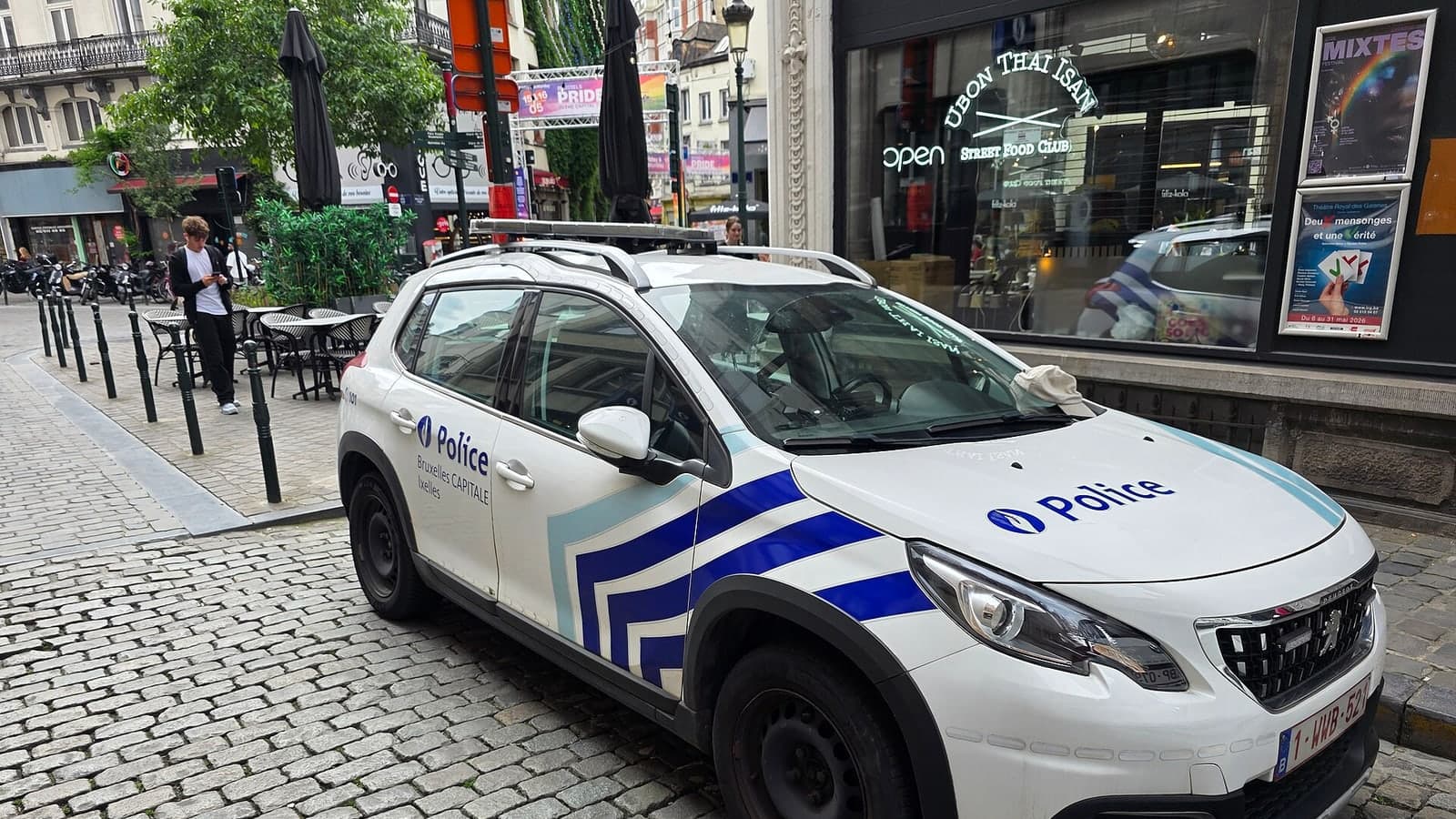
Why was a Brussels detective arrested over €25,000 missing during a house search?
An investigating judge ordered the arrest of a Brussels-Capital/Ixelles detective last week over €25,000 allegedly taken during a drug-related house search, BRUZZ reported on 8 September. The officer reportedly confessed; no verdict has been reported.
The case raises questions about the handling of property during police searches and the safeguards that protect both residents and the integrity of investigations.
An investigating judge ordered the arrest of a Brussels-Capital/Ixelles police detective last week over the alleged theft of €25,000 during a house search linked to a drug investigation, BRUZZ reported on Tuesday, 8 September. The Dutch-language Brussels outlet, citing Le Soir and confirmation from the Brussels public prosecutor’s office, said the officer had admitted taking the cash. The reported judicial decision concerns a Belgian local police officer; no EU institution is implicated. [BRUZZ](https://www.bruzz.be/actua/veiligheid/brusselse-politieagent-aangehouden-voor-diefstal-van-25000-euro-tijdens-huiszoeking-2026-09-08)
The immediate public interest extends beyond the amount involved. A search places officers in a position of exceptional trust inside someone’s home. The allegation raises a straightforward accountability question: how was money encountered during a police operation kept outside the official seizure process, and what brought that discrepancy to light? For Brussels residents, including those unfamiliar with Belgian policing, those questions concern the reliability of an essential public service.
According to The Brussels Times, also drawing on Le Soir, the person questioned in the drug investigation mentioned the money. The police zone’s internal control service then investigated and found the cash in the detective’s possession. That account describes an internal response triggered by information from a suspect. It does not establish whether routine checks would otherwise have detected the missing money. [The Brussels Times](https://www.brusselstimes.com/2308011/brussels-police-officer-admits-to-stealing-e25000-while-searching-house-for-drugs)
There are limits to what the published accounts establish. Multiple outlets repeat the same original reporting, so their agreement should not be mistaken for several independent examinations of the evidence. The precise search address, the officer’s identity and the underlying case documents were not established in the sources reviewed. Nor was a response from the officer’s lawyer available. A reported confession is a significant development, but it is not a court judgment.
BRUZZ reports that the prosecutor’s office confirmed the facts while declining further comment. The police zone likewise declined to comment “at this stage”. That leaves the public without an explanation of the safeguards operating during this particular search. Their limited response should not be read as an admission of wider organisational failings—or as reassurance that none occurred. [BRUZZ](https://www.bruzz.be/actua/veiligheid/brusselse-politieagent-aangehouden-voor-diefstal-van-25000-euro-tijdens-huiszoeking-2026-09-08)
The broader Belgian framework offers a useful distinction between investigating an individual and examining how a police service functions. Comité P, the external police oversight body, describes its mission as contributing to “a democratic, upright and community-oriented police service”, translated from its Dutch-language website. Its remit includes police effectiveness and respect for fundamental rights. That is an institutional standard, not a comment by the watchdog on this arrest; its involvement in this case has not been established. [Comité P](https://www.comitep.be/opdrachten.html)
That oversight architecture predates this controversy. Comité P says it was created in 1991 to give the federal parliament an external means of scrutinising policing and began operating in mid-1993. Its history helps explain why accountability can involve more than a force investigating its own personnel. This case nevertheless provides no sound basis for estimating how widespread theft by officers might be. [Comité P’s institutional history](https://www.comitep.be/over-het-comiteacute-p.html)
The same demand for trustworthy justice applies to the detective. Belgium’s Court of Cassation has distinguished indications supporting pre-trial detention from proof of guilt. The public can expect scrutiny of the allegation while recognising that the criminal process remains unfinished. No published defence account was found that would support presenting a factual dispute between prosecution and defence. [Court of Cassation](https://justice.belgium.be/sites/default/files/downloads/tradcas_1996.pdf)
The next meaningful developments will be clarification of the legal allegations, the officer’s detention status and any disciplinary action. No hearing date was established in the reviewed reporting. A further question is whether the investigation identifies a weakness in cash-handling safeguards requiring changes across the service. Until those answers emerge, the evidence supports reporting a serious individual case, with institutional questions still open.
Impact
Regional — The immediate accountability questions concern a Brussels police service.
Local — The institutional focus is the Brussels-Capital/Ixelles police zone; the exact search address was not established.
What it means for you
The reviewed reporting establishes no change to public services or action residents need to take.
Opposing perspectives
- Brussels police zone — limited public response
BRUZZ reports that the police zone declined to comment “at this stage”. This is its documented response, not a defence of the alleged conduct or a rebuttal of the reporting.
- Comité P — external accountability standard
Comité P’s published mandate emphasises integrity and fundamental rights alongside effective policing. This provides a broader institutional perspective, not a case-specific reaction or evidence of disagreement with the police zone.
Sources & evidence
- View sourceBRUZZ / Belga, citing Le SoirPrimaryprimary· bruzz.be· 8 September 2026Retrieved 8 September 2026· 24 days ago· Dated
- View sourceThe Brussels Times, citing Le Soircorroborating· brusselstimes.com· 8 September 2026Retrieved 8 September 2026· 24 days ago· Dated
- View sourceComité P — Our responsibilitiesofficial· comitep.beRetrieved 8 September 2026
- View sourceComité P — Institutional historyofficial· comitep.beRetrieved 8 September 2026
Related to this story
Pulse Insight — This topic connects to 10 associations and 1 funding programme through the Brussels ecosystem.
Live connections from the Belgium Impulse ecosystem — not recommendations.
This briefing was prepared with AI assistance and reviewed by a Belgium Impulse editor before publication. methodology.