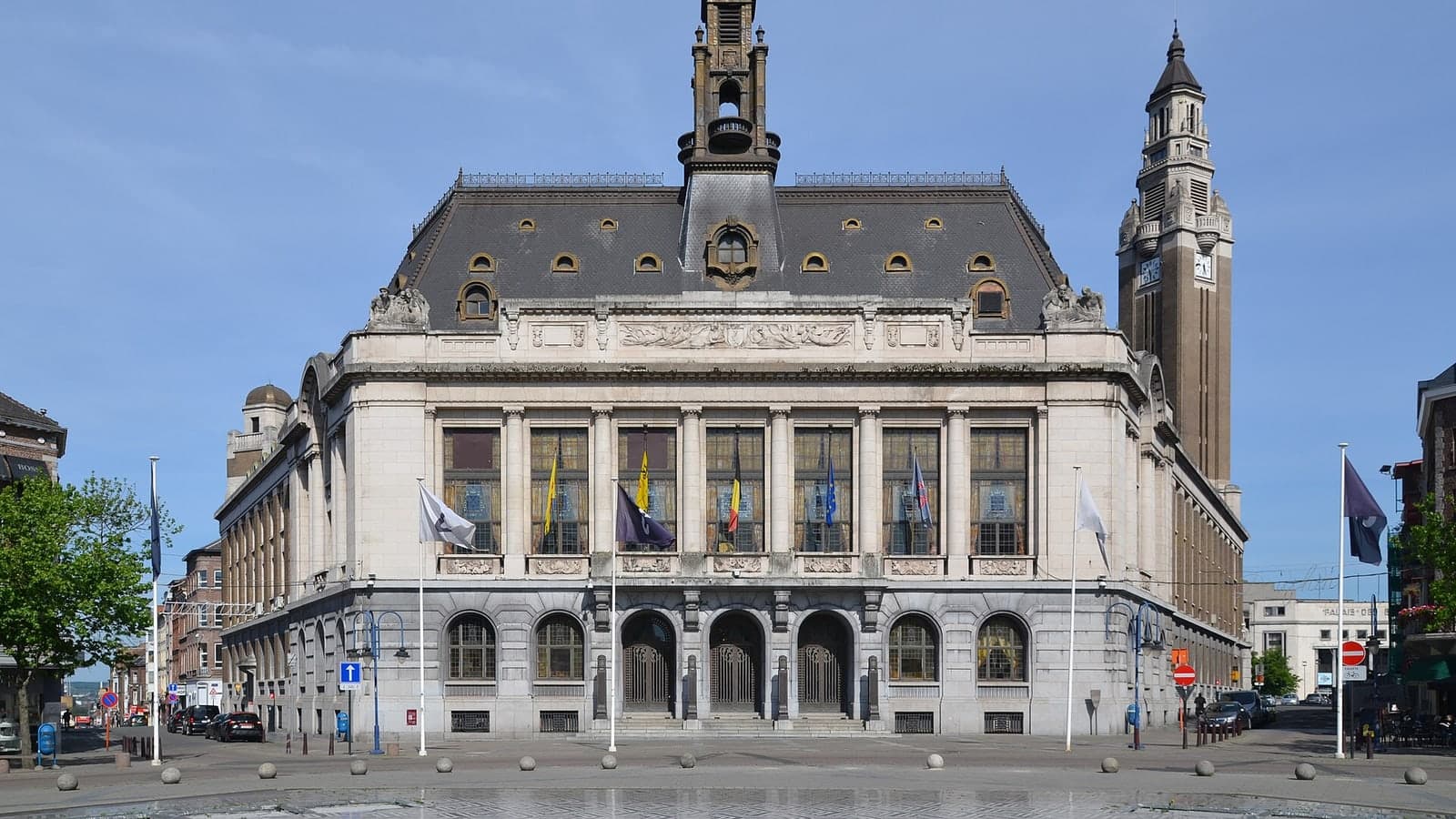
Can Charleroi’s ‘precarity fair’ turn social hardship into a political reckoning?
The Équipes Populaires have announced a forthcoming “precarity fair” in Charleroi to challenge what the Belgian civic movement calls the “trickle-down of misery”, bringing a national argument over welfare reform into one of Wallonia’s most exposed urban areas.
The initiative turns an abstract dispute over activation, welfare and redistribution into a local question about who absorbs the consequences when income support ends. For Charleroi residents, the immediate institutions are the CPAS, housing services and frontline associations; for Belgian policymakers, the test is whether reforms reduce long-term unemployment without increasing local hardship.
The Équipes Populaires have announced that they will stage a “precarity fair” in Charleroi, using the deliberately unsettling format to denounce what the Belgian adult-education movement calls the “trickle-down of misery”. La DH reported the initiative on 5 September, but the date, venue and complete programme could not be independently confirmed in the organisers’ public agenda at the time of publication.
For people in Charleroi, the campaign lands amid a tangible debate about housing, income and access to social protection. It also speaks to a wider Belgian argument: whether tighter benefits and stronger pressure to find work will improve employment outcomes, or transfer costs and hardship towards municipalities, families and public social-welfare centres, known as CPAS. The federal government has not publicly responded to this particular event.
The fair is part of a broader Équipes Populaires campaign built around the slogan “Précarité: à qui le tour?”—roughly, “Precarity: whose turn next?” The movement argues that policies presented as incentives for work can weaken households and then entire neighbourhoods when adequate jobs, housing or support are unavailable. Its campaign language reverses the familiar promise that wealth created at the top eventually benefits everyone: in its telling, insecurity is what spreads downwards.
That is an explicitly political interpretation, not a neutral description of every household’s experience. Yet Charleroi provides substantial evidence for treating the issue seriously. The Walloon Observatory on Homelessness counted 1,904 adults experiencing homelessness or housing exclusion across the Charleroi administrative district in October 2024. Its report recorded 1,361 of them in Charleroi municipality, while 344 affected adults had 611 minor children directly touched by their housing situation. Twenty per cent of the adults counted had no income, and 48.1% received the integration income administered through the CPAS.
The figures describe more than people sleeping outdoors. The Walloon count used a broad framework encompassing emergency accommodation, temporary stays with relatives or friends, unconventional housing and households threatened with eviction. That matters because precarity often remains hidden until a missed payment, family rupture or institutional discharge produces an emergency. The report identified family conflict, addiction, unsuitable housing, eviction and financial problems among the routes into housing instability.
National indicators give a more mixed picture. Statbel reported that 16.5% of Belgium’s population—just over 1.9 million people—was at risk of poverty or social exclusion in 2025, down from the previous year. It also found sharp territorial and social differences: 21.9% of Walloon respondents described themselves as subjectively poor, compared with 9.4% in Flanders, while 39.3% of unemployed people nationally reported subjective poverty. Separately, 44.6% of Walloon respondents said they had difficulty making ends meet.
Those numbers sustain two competing readings. The Équipes Populaires see insecurity as a structural outcome requiring stronger collective protection, public services and redistribution. Federal Employment Minister David Clarinval and the De Wever government frame the two-year limit on unemployment benefits differently: as a policy to “responsibilise, activate” and accompany people towards work. The government has presented that reform as one of its central socio-economic measures, while opponents fear that people who lose federal benefits will turn to already stretched CPAS services.
The European connection is institutional rather than rhetorical. Belgium has endorsed the Lisbon Declaration’s goal of ending homelessness by 2030, including preventing avoidable evictions and ensuring that nobody leaves an institution without appropriate housing. The Walloon administration says European financial support helped fund the 2024 counts in Charleroi and Namur. The contrast is therefore measurable: commitments made at Belgian and EU level can be compared with conditions recorded locally.
The broader lesson is that poverty policy cannot be judged from a single headline indicator. Falling national poverty rates can coexist with concentrated hardship, particularly among tenants, unemployed people, single-parent households and those moving between unstable forms of accommodation. Charleroi’s fair is designed to make that concentration visible and politically uncomfortable.
What comes next depends first on the organisers publishing or confirming the practical arrangements and participating organisations. More consequentially, attention will turn to how the unemployment-benefit limit affects referrals to Charleroi’s CPAS, housing insecurity and demand for emergency services. Until local caseload and budget data emerge, claims about the reform’s precise impact remain projections rather than established outcomes.
Impact
Regional — Charleroi has a documented concentration of homelessness and housing exclusion. Any increase in households without unemployment income could affect the municipal CPAS, emergency accommodation, debt mediation and housing support, although no event-specific impact forecast is yet available.
Local — The debate directly concerns Charleroi’s CPAS and network of housing, emergency and social-support organisations. The 2024 count indicates that hardship extends beyond visible street homelessness and affects hundreds of children.
International — The campaign echoes an international dispute over trickle-down economics and welfare conditionality, but its immediate substance is Belgian. EU relevance comes through common poverty indicators and the Lisbon Declaration on homelessness.
What it means for you
Residents concerned about income loss should seek individual guidance from their unemployment-payment body, trade union or CAPAC and from their municipal CPAS. The announced fair may offer information and political discussion, but its services and access arrangements still require confirmation.
Opposing perspectives
- Équipes Populaires and anti-poverty organisers
The movement says the supposed trickle-down of prosperity has been replaced by a “trickle-down of misery”: weakening income protection shifts insecurity from individuals to families, neighbourhoods, CPAS services and society as a whole. It favours stronger redistribution, collective services and protection of social-security rights.
- David Clarinval and the federal government
Employment Minister David Clarinval and the De Wever government present the two-year ceiling on unemployment benefits as a means to “responsibilise, activate” and accompany employable people towards work. Their framing stresses labour-market participation and a clearer distinction between unemployment insurance and means-tested CPAS assistance.
Sources & evidence
- View sourceLa DH/Les Sports+Primaryprimary· dhnet.be· 5 September 2026Retrieved 7 September 2026· 27 days ago· Dated
- View sourceÉquipes Populaires — Ce qui ruisselle, c’est la misèreprimary· equipespopulaires.be· 29 June 2026Retrieved 7 September 2026· 95 days ago· Dated
- View sourceÉquipes Populaires agendacorroborating· equipespopulaires.beRetrieved 7 September 2026
- View sourceWalloon Observatory on Homelessness — Charleroi 2024 reportofficial· actionsociale.wallonie.beRetrieved 7 September 2026
Related to this story


Pulse Insight — This topic connects to 10 associations and 3 funding programmes through the Wallonia ecosystem.
Live connections from the Belgium Impulse ecosystem — not recommendations.
This briefing was prepared with AI assistance and reviewed by a Belgium Impulse editor before publication. methodology.