What should survive a lifetime? Charleroi exhibition opens a photographer’s family archive
CAL Charleroi has scheduled Tout doit disparaître (?) from 26 September to 24 October 2026, bringing Caroline Desvaux’s exploration of her father Hervé’s photographic legacy into public view. The exhibition considers the choices behind an inheritance, with wider implications for preserving images and deciding how they may be shared.
Families sorting inherited photographs face decisions about space, time, identification and sharing. Cultural organisations face related preservation work and costs. The exhibition provides a concrete starting point for considering those choices.
CAL Charleroi has scheduled Tout doit disparaître (?) for 26 September to 24 October 2026, with free admission and opening on six days out of seven, Monday to Saturday. The forthcoming exhibition centres on author and artist Caroline Desvaux’s sorting of the legacy left by her father, photographer Hervé Desvaux. Its published programme confirms the Charleroi venue and dates; the exhibition has yet to open. [CAL Charleroi’s programme](https://cal-charleroi.be/calendar/cal-charleroi/)
The material is personal, but the decision it represents is recognisable well beyond a photographer’s family. What deserves a place in the next generation’s life, and who gets to choose? According to the Centre d’Action Laïque’s announcement, Desvaux brings together photographs, sound, objects and archival material to explore that question. The interest lies in the movement between a working life and a family’s understanding of it: an image can be both a professional creation and something a daughter inherits. [Centre d’Action Laïque](https://www.laicite.be/evenement/tout-doit-disparaitre/)
The title translates roughly as “Everything must go (?)”. Its question mark does useful work. Read as an invitation to consider inheritance, it leaves room for uncertainty rather than demanding either complete preservation or a clean break. Keeping an object does not necessarily settle what it means. Discarding one need not settle how a person is remembered. Those are interpretations of the exhibition’s premise, rather than conclusions about Desvaux’s family or the individual pieces visitors will encounter.
For someone facing boxes of photographs after a death, that distinction has practical weight. The immediate decision might concern space in a home, the time available to sort a collection, or whether relatives can identify the people pictured. The larger question is what future family members will be able to understand. An image without a name or explanation may survive physically while losing much of its meaning. This is where the exhibition’s intimate subject reaches beyond the gallery without needing to become a lesson in estate planning.
The organiser places the exhibition within its 2026 theme, “Nos héritages, nos choix” — our inheritances, our choices. That framing makes selection part of the subject, rather than an invisible preparation for the display. It also gives visitors a useful question to carry through it: whose account of a life emerges when somebody else decides what to show? The published description establishes the daughter’s role in shaping the presentation; it does not establish that every surviving document will be exhibited. [CAL Charleroi](https://cal-charleroi.be/category/accompagnement/)
There is an economic dimension to such choices, although no verified exhibition budget or valuation of this archive is available in the sources reviewed. Belgium’s State Archives advises institutions to budget for photographic preservation materials and storage, alongside staff who identify, describe and make collections accessible. Its guidance also warns that poor classification wastes researchers’ time and increases handling risks. For a small cultural organisation, preserving a collection therefore entails continuing work as well as somewhere to put it. These are sector-wide considerations, not reported costs for this exhibition. [State Archives preservation guide](https://www.arch.be/docs/brochures/archives_photographiques.pdf)
The broader institutional picture also complicates the boundary between private possessions and public memory. The State Archives says it holds records from families and businesses as well as public authorities. It describes cataloguing, research access and restoration as parts of its mission, while acknowledging restrictions linked to privacy and the condition of documents. A family collection can consequently have significance beyond its original household. That does not mean the Desvaux archive has been offered to, or accepted by, a public repository; no such arrangement has been verified. [State Archives’ role](https://www.arch.be/index.php?l=fr&m=l-institution&r=notre-role)
For photographers and publishers, another distinction matters: keeping an image and having permission to use it are separate questions. Belgium’s federal economy department, SPF Economie, explains that photographs can qualify for copyright protection and that many uses require authorisation from the creator or rights holders. The business implication is straightforward: a prospective publication or digital project needs clarity about rights before it can proceed. The reporting establishes no commercial licensing project connected with this exhibition. [SPF Economie on copyright](https://economie.fgov.be/fr/themes/propriete-intellectuelle/droits-de-propriete/droits-dauteur-et-droits/les-droits-dauteur)
People shown in photographs have interests of their own. SPF Economie’s guidance distinguishes permission to take a recognisable person’s photograph from permission to publish it, subject to the circumstances and applicable exceptions. Applied to the broader question of family archives, that means sharing a discovery deserves its own consideration. This is contextual guidance, not evidence of a rights dispute involving Desvaux or CAL Charleroi. [SPF Economie on image rights](https://economie.fgov.be/fr/themes/propriete-intellectuelle/droits-de-propriete/droits-dauteur-et-droits/droits-dauteur/droit-limage)
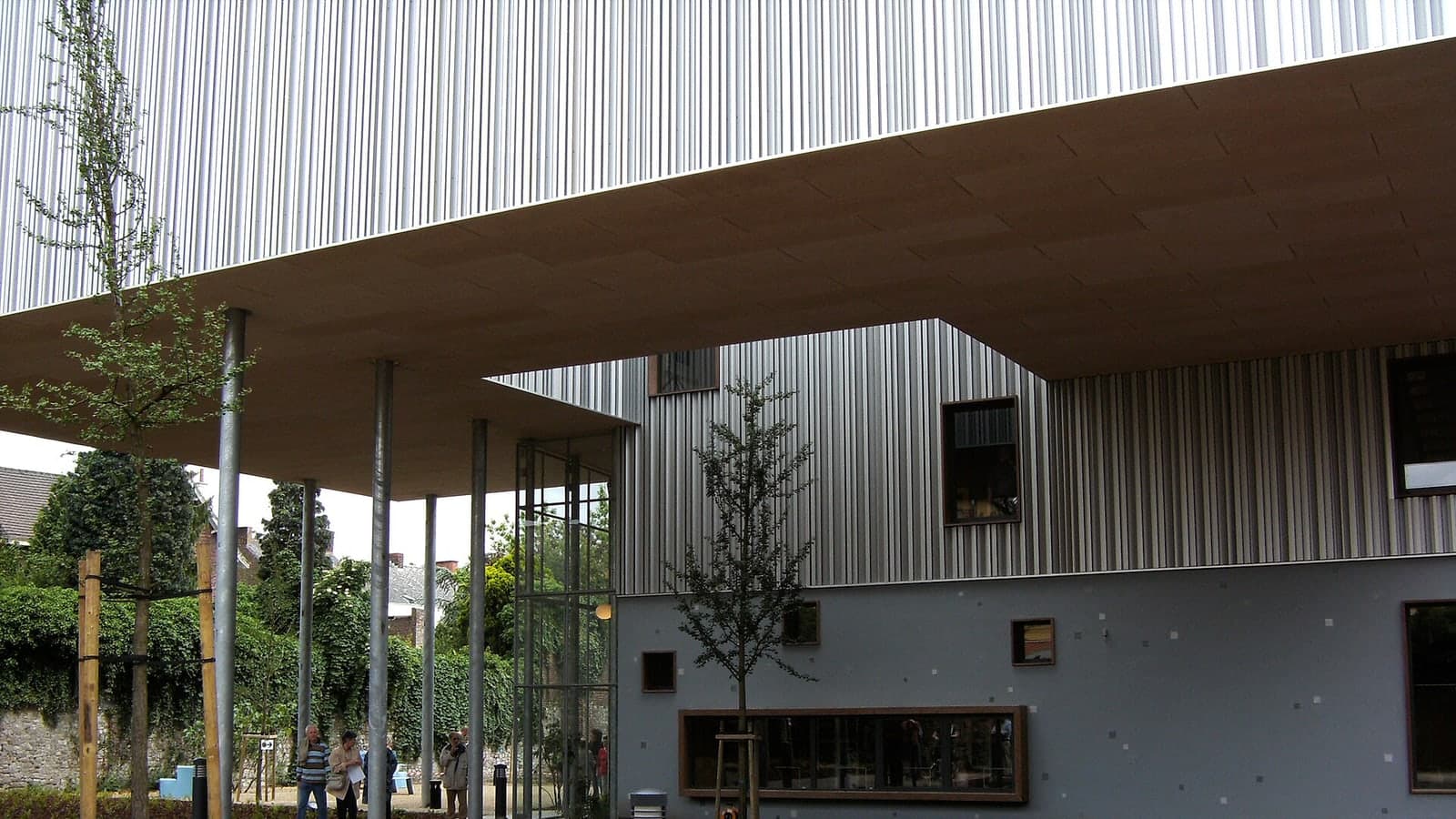
The next confirmed step is the preview on 25 September at 18:00, with Caroline Desvaux scheduled to attend, according to CAL Charleroi. Public visiting follows at Rue de France 31, with guided visits available for schools and associations. The organisers’ listings offer a clear opportunity to encounter the work; they leave its eventual reception, the full extent of the displayed archive and its longer-term destination unresolved. Those questions will become easier to assess once visitors can see how a private act of sorting has become a public exhibition. [CAL Charleroi’s preview information](https://cal-charleroi.be/category/philosophies/)
Impact
Regional — Charleroi residents, schools and associations gain access to a local exhibition about family memory and transmission. No measurable employment, tourism or spending effect has been established.
Local — The immediate local benefit is access to a free cultural programme, including opportunities for organised educational visits.
What it means for you
Consult CAL Charleroi’s programme before travelling and contact the organiser about preview registration or group visits. General archive and rights guidance should not be mistaken for an assessment of this particular collection.
Sources & evidence
- View sourceLa DH/Les Sports+ — supplied Charleroi exhibition reportPrimarybackground· dhnet.be· 6 September 2026Retrieved 8 September 2026· 26 days ago· Background / context
- View sourceCAL Charleroi — exhibition calendarprimary· cal-charleroi.beRetrieved 8 September 2026
- View sourceCentre d’Action Laïque — Tout doit disparaître (?)primary· laicite.beRetrieved 8 September 2026
- View sourceCAL Charleroi — exhibition framingprimary· cal-charleroi.beRetrieved 8 September 2026
Related to this story
Pulse Insight — This topic connects to 10 associations and 3 funding programmes through the Wallonia ecosystem.
Live connections from the Belgium Impulse ecosystem — not recommendations.
This briefing was prepared with AI assistance and reviewed by a Belgium Impulse editor before publication. methodology.