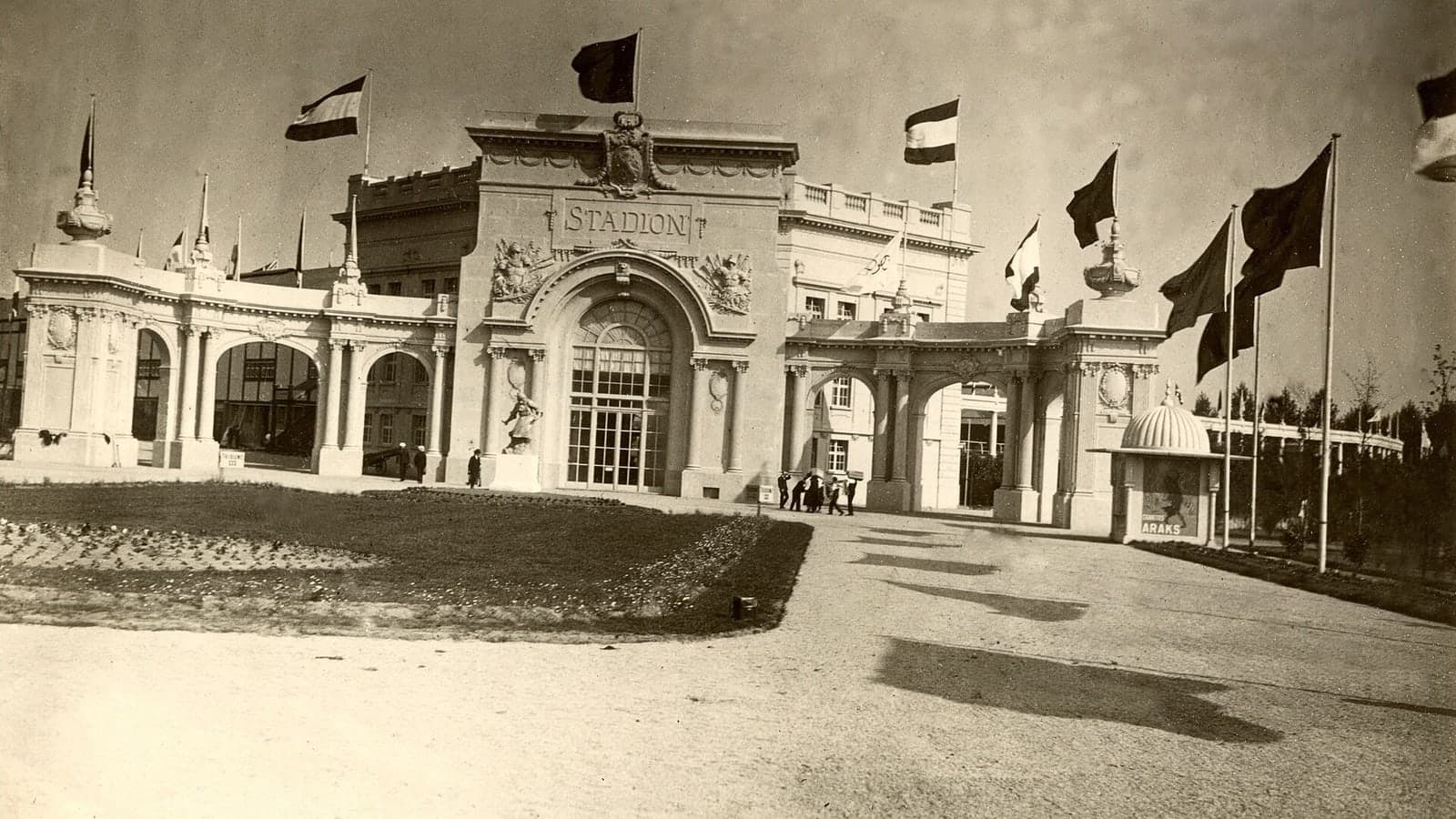
Will more than 1,000 Antwerp supporters be allowed into Sclessin after all?
More than 1,000 Royal Antwerp FC supporters are expected to be admitted to Sclessin for Saturday evening’s match against Standard de Liège after the Antwerp supporters’ federation said Liège Mayor Willy Demeyer had withdrawn a last-minute ban. The reversal eases an immediate security and financial dispute, although the City of Liège had not publicly detailed the revised policing arrangement at the time of writing.
The reversal affects more than 1,000 ticket holders and the supporter clubs, coach companies, cafés and stadium suppliers serving them. It also tests whether Belgian football can make proportionate security decisions without imposing unpredictable costs on supporters and clubs that complied with an approved travel plan.
More than 1,000 Royal Antwerp FC supporters are expected to be admitted to Standard de Liège’s Sclessin stadium on Saturday, 5 September, after Antwerp’s supporters’ federation said Liège Mayor Willy Demeyer had withdrawn a ban imposed less than 24 hours before kick-off. Het Nieuwsblad and HLN reported the reversal on Saturday, quoting federation representatives who welcomed what they described as the mayor’s corrected decision. The match is scheduled to begin at 20:45 local time. No updated municipal order or detailed statement from the Liège police was publicly available at the time of writing, so the precise conditions attached to the reversal remain unclear.
The abrupt change followed an equally abrupt prohibition. Royal Antwerp said on Friday afternoon that Demeyer had informed the club that visiting supporters would not be allowed into Sclessin because the city lacked enough police officers to guarantee security. The club called the timing unprecedented and disrespectful, arguing that more than 1,000 fans had already bought tickets and arranged coach travel. It also said it would examine whether costs for buses, tickets and related preparations could be recovered from the City of Liège.
That first decision cut across arrangements already published by Standard. On Thursday, the Liège club said the mandatory combi system would apply: Antwerp supporters with tickets were to travel on organised coaches, with away tickets distributed exclusively through their club. Standard also published a Federal Police plan separating supporters’ buses at designated motorway stops along the E313 and E40. Those measures show that a controlled away allocation had been operationally planned before the city intervened on Friday.
The late ban created a difficult security paradox. Antwerp urged its supporters to remain in their home cafés, but a prominent supporters’ group proposed travelling to central Liège if entry to Sclessin remained prohibited. Standard supporters’ group Ultras Inferno 1996 also called for the visitors to be admitted and warned that it might join a protest. A measure intended to reduce pressure around the stadium therefore risked producing a less controlled gathering elsewhere in the city, beyond the ticketing, coach and segregation system designed for a high-risk fixture.
Allowing the organised coaches to proceed should reduce the immediate commercial damage. For travelling households, the dispute concerned money already committed to match tickets, supporter-club transport, food and drink, as well as a Saturday built around a journey of roughly 130 kilometres from Antwerp to Liège. For the clubs and their partners, an empty away section would have meant lost match-day spending and refund or compensation work. Local cafés, coach operators, stewards and catering suppliers also depend on predictable attendance. The exact value at stake in this case has not been disclosed, and Antwerp’s earlier reference to recovering costs was a statement of intent rather than a settled claim.
The sums can nevertheless become material for Belgian clubs, whose finances remain fragile despite rising revenues. The Pro League reported that its clubs’ combined pre-tax loss narrowed from €175 million to €117 million in 2024, while only seven of 26 professional clubs recorded a profit. Standard supplied a more direct comparison in July 2026: it estimated that a full stadium closure linked to disciplinary sanctions would cost the club €227,000, based on its regular-season Walloon derby figures. Saturday’s dispute concerns only the visiting allocation, so that €227,000 cannot be treated as an estimate of the present loss. It does illustrate why access decisions are not merely questions of atmosphere.
There is also a genuine public-order case behind the caution. The previous Standard-Antwerp match at Sclessin, on 17 October 2025, was stopped in the 88th minute after objects were thrown onto the pitch. Antwerp’s account said the referee ended the game after three such episodes. Standard later said identified perpetrators received civil stadium bans. Separately, disciplinary action following incidents at Standard’s May 2026 match against Charleroi means three blocks of Tribune 3 are due to remain closed for the Antwerp fixture. Those restrictions affect home sections and are distinct from Demeyer’s short-lived measure against Antwerp’s travelling support.
Belgian professional football has been trying to replace broad collective restrictions with more targeted enforcement. Pro League figures published in 2026 showed that match-affecting incidents in the top division fell from 55 in 2024-25 to 17 in the following season. Since the National Chamber for Civil Exclusions was created in July 2022, it had handled 951 cases involving Pro League clubs and imposed a combined 1,065 years of stadium bans, according to the league. The organisation’s position is that individuals who cross the line should face firm sanctions while the wider supporter population remains welcome.
That balance explains the opposing reactions in Liège. The mayor and police carry responsibility for public order and must be able to respond when staffing or intelligence changes. Antwerp, its supporters’ federation and sympathetic Standard groups argue that a collective ban announced one day before a match transfers the cost to people who have followed the approved travel procedure. Their concern is also commercial: if away attendance can disappear after tickets and transport have been sold, supporter clubs and operators cannot plan reliably.
The immediate test is now practical rather than rhetorical. Authorities must confirm coach routes, parking, escort arrangements and entry procedures quickly enough for more than 1,000 travellers to reach Sclessin safely. Supporters should follow instructions issued directly by Royal Antwerp, Standard and the police rather than relying only on social-media messages. After the match, the Pro League and local authorities are likely to face questions about how a detailed transport plan was approved, cancelled and apparently restored within roughly two days. What remains unknown is why the expected police capacity changed, whether extra personnel were found, and whether either club will still pursue compensation for costs caused by the disruption.
Impact
Regional — The dispute links Antwerp and Liège through a large organised supporter movement. Liège bears the policing and mobility burden around Sclessin, while Antwerp-based supporter clubs and hospitality businesses had already organised travel or alternative viewing arrangements.
Local — Liège faces a compressed policing and transport operation around Sclessin, while businesses near the stadium regain some expected away-supporter demand. In Antwerp, supporter clubs must reactivate coach plans at very short notice.
International — Restrictions on away supporters are becoming more common across European football, but this case is chiefly about Belgian municipal policing, league governance and supporter rights.
What it means for you
Antwerp supporters should travel only with an authorised coach and valid away ticket, check final club and police notices, and avoid driving independently to Sclessin. Standard warns that nearby roadworks and strict parking enforcement will make access difficult.
Opposing perspectives
- Liège mayor and public-order authorities
The mayor and police are responsible for safety around Sclessin and may restrict attendance when operational intelligence or staffing levels indicate that a fixture cannot be adequately secured. The publicly reported justification for Friday’s ban was insufficient police capacity.
- Royal Antwerp FC and its supporters’ federation
Antwerp and its organised supporters regarded a ban announced one day before the match as arbitrary and financially damaging because more than 1,000 people had already bought tickets and arranged coach travel under the prescribed combi system.
- Standard supporter groups favouring away attendance
Standard groups including Ultras Inferno 1996 argued that visiting supporters should be admitted and that a ban could move the security risk from a controlled stadium environment to an unregulated gathering in central Liège.
Sources & evidence
- View sourceHet NieuwsbladPrimaryprimary· nieuwsblad.be· 5 September 2026Retrieved 5 September 2026· 27 days ago· Dated
- View sourceHLNcorroborating· hln.be· 5 September 2026Retrieved 5 September 2026· 27 days ago· Dated
- View sourceRoyal Antwerp FCprimary· royalantwerpfc.be· 4 September 2026Retrieved 5 September 2026· 28 days ago· Dated
- View sourceStandard de Liègeofficial· standard.be· 3 September 2026Retrieved 5 September 2026· 29 days ago· Dated
Related to this story
Pulse Insight — This topic connects to 10 associations and 2 funding programmes through the Flanders ecosystem.
Live connections from the Belgium Impulse ecosystem — not recommendations.
This briefing was prepared with AI assistance and reviewed by a Belgium Impulse editor before publication. methodology.