Can Belgium’s €7 flight tax compromise satisfy both Charleroi and Zaventem?
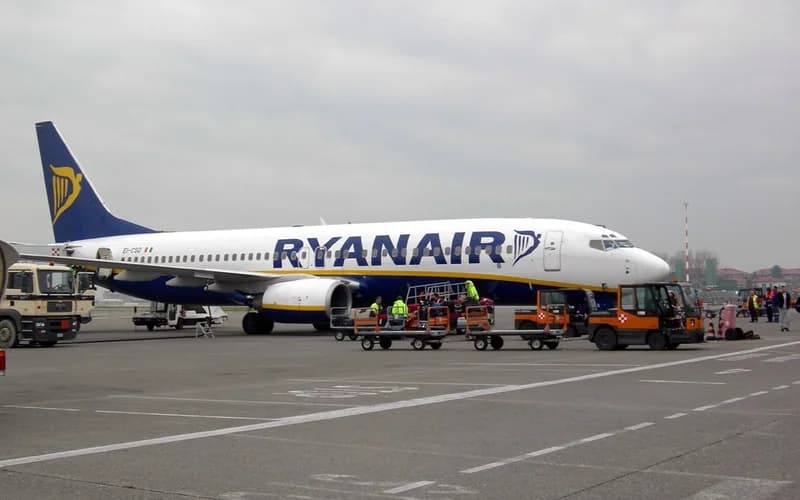
Belgium has reduced its planned 2027 boarding-tax increase from €10 to €7 for flights of 500 to 3,500 kilometres, but the compromise has not ended the dispute: Charleroi welcomed the relief, Brussels Airport warned against rules favouring one business model, and Ryanair subsequently announced cuts affecting both airports.
The direct charge rises by €2 for each qualifying departure, but the larger risk for households and companies is reduced airline capacity: fewer flights can mean higher fares, inconvenient schedules and extra travel to alternative airports. Airport employment, regional activity and Belgium’s international connectivity are also at stake.
’s federal government decided on 18 July to raise the boarding tax on flights of 500 to 3,500 kilometres from €5 to €7 on 1 January 2027, retreating from a planned increase to €10 after pressure from and the aviation industry. The €2 increase is 40% above the present rate, but €3 below the figure previously budgeted. welcomed the compromise; and had argued that shifting more of the burden towards very short or long-distance flights would disproportionately affect . Four days later, said even the reduced rate would lead it to remove five aircraft from and cut about two million seats across its Charleroi and Zaventem schedules for winter 2026 and summer 2027.
The sequence turns what began as a budget measure into a contest over the shape of Belgian aviation. is overwhelmingly oriented towards low-cost European services, many of them between 500 and 3,500 kilometres. combines short-haul feeder flights, European business routes and intercontinental services, while acting as ’ home hub. A distance-based revision can therefore redistribute the tax burden between airports even when the same statutory rates apply nationwide.
Walloon Minister-President ’s office said the €7 compromise followed talks with Prime Minister Bart De Wever and federal Economy Minister David Clarinval. had warned that the €10 proposal could cost its economy 1,100 jobs and €95 million in added value. Those estimates are attributed projections rather than observed losses, and ’s federal mobility administration told parliament in 2025 that it did not possess a measured assessment showing how the existing tax had affected ’s passenger traffic.
The available traffic figures complicate the industry’s account of a sector already in retreat. reported that more than 36 million passengers used Belgian airports in 2025, almost 4% more than in 2024 and above the 35.5 million recorded in 2019. Commercial flight movements, however, remained below their pre-pandemic level: 296,756 in 2025 against about 325,000 in 2019. That combination—more passengers but fewer flights—points to fuller or larger aircraft and helps explain why airports treat each carrier’s allocation decisions as economically significant even amid strong overall demand.
also entered the dispute from a position of growth. , enterprise number 0890.082.292, reported 24.4 million passengers in 2025, up 3.3% year on year, and €828 million in revenue, up 6%. In the first half of 2026, passenger traffic rose another 3.6% to 11.7 million. Its concern is less that a €2 charge will immediately erase that growth than that a tax design tailored to protect medium-haul low-cost traffic could weaken the economics of feeder and long-haul routes that support a network hub.
’s exposure is different. is its dominant airline, so moving five based aircraft would affect airport activity, ground handling and route choice more directly. The threat also comes after a separate controversy over Charleroi city’s proposed €3-per-passenger municipal charge. refused to approve that local tax in February, saying it would have been paid by airport operator and threatened the airport’s financial viability. The federal levy is legally distinct: airlines are responsible for declaring the boarding tax, although they can incorporate it into fares.
For passengers, the immediate arithmetic is modest but concrete. A return journey covered by the revised band carries €14 in Belgian departure tax if both legs leave —which normally only one leg of a simple return does—compared with €10 under the current Belgian rate and €20 under the abandoned proposal. The larger household effect would arise if airlines reduce frequencies or withdraw routes, leaving travellers with higher fares, less convenient departure times or additional ground-transport costs to reach an alternative airport. Businesses relying on frequent European travel face the same €2 increase per qualifying Belgian departure, but schedule reductions could matter more than the tax itself.
presents the planned capacity reduction as a direct response to taxation and says aircraft can earn better returns in countries reducing aviation levies. The federal government must weigh that warning against revenue needs and the environmental rationale for taxing air travel, whose tickets remain exempt from VAT on international journeys and whose fuel enjoys favourable tax treatment. Aviation economist Wouter Dewulf has also noted in Belgian reporting that comparable passenger taxes are substantially higher in several neighbouring markets, including the Netherlands and Germany. That does not prove can raise its levy without losing traffic, but it puts claims of exceptional Belgian taxation in perspective.
The broader issue is whether public policy should protect passenger volume, reflect aviation’s environmental costs or support the connectivity generated by a network hub. These aims overlap only partly. Penalising very short flights may encourage rail substitution where a practical service exists; raising long-haul charges may better reflect emissions per journey but can weaken a hub competing with Amsterdam, Paris and Frankfurt. Holding down the rate on the middle band protects ’s core market, yet risks looking like policy shaped around one airport and one dominant carrier.
The €7 decision settles the headline rate for medium-distance flights, subject to its final legal implementation, but not the commercial outcome. has not publicly provided a complete route-by-route list showing where all two million seats will disappear, and it remains unclear how many announced cuts will persist after negotiations. Travellers should watch the airline’s winter 2026 and summer 2027 schedules rather than assume every threatened route has already been cancelled. Policymakers, meanwhile, still have to specify the compensating ecotax measures reportedly needed to cover the revenue lost by abandoning €10. The struggle between and has therefore moved from the tax table to a harder test: whether can pursue a coherent aviation strategy without simply transferring costs and advantages from one airport model to another.
Impact
Regional — Wallonia secured a lower increase for the distance band central to Charleroi’s low-cost network, while Flemish stakeholders around Zaventem argue that changes targeting other distance bands could burden Belgium’s national hub and its long-haul and feeder services.
Local — Charleroi gains directly from the reduced medium-distance rate because that band is central to BSCA’s low-cost network. Wallonia had projected that the abandoned €10 rate could threaten 1,100 jobs and €95 million in added value, although those figures remain estimates. The compromise did not prevent Ryanair from announcing the removal of five Charleroi-based aircraft. Around Zaventem, Brussels Airport argues that the overall tax design must not shift the burden toward the hub’s feeder and long-haul business model.
International — The dispute affects Belgium’s cross-border air connectivity because both airports serve international passengers and businesses. The 500-to-3,500-kilometre band covers much of the market central to Charleroi, while Zaventem relies on a mixture of European feeder traffic and longer-distance services. Ryanair’s announced reduction of about two million seats across Charleroi and Zaventem could reduce route choice or frequency. No specific impact on EU institutions or individual international routes has yet been established in the facts provided.
What it means for you
If you depart from a Belgian airport on a flight between 500 and 3,500 kilometres from 1 January 2027, the airline-declared tax attached to that departure will be €7 rather than the current €5. Whether the full €2 increase appears in fares will depend on airline pricing. Travellers planning 2027 journeys should compare Charleroi and Zaventem schedules, particularly after Ryanair’s announced capacity cuts, and check whether frequencies or routes change before booking accommodation or onward transport. Employers should also review travel budgets and alternatives if reduced capacity makes business trips less convenient or more expensive.
Opposing perspectives
- Walloon Government and Charleroi airport
Walloon authorities and BSCA argue that doubling the main European-flight rate to €10 would undermine an airport whose traffic is concentrated in the 500-to-3,500-kilometre band. They regard €7 as a more balanced compromise protecting employment, regional economic activity and affordable connectivity.
- Brussels Airport and Brussels Airlines
Zaventem-based stakeholders argue that redesigning the tax to shelter Charleroi’s medium-haul low-cost traffic by charging more for very short or long-distance journeys would distort competition. Their network model depends on feeder services and intercontinental connectivity not present to the same degree at Charleroi.
- Ryanair
Ryanair says even the €7 rate makes Belgian operations less competitive and warrants shifting aircraft and seats to lower-cost markets. Its announced response suggests that the compromise did not meet its demand, although the precise route-level cuts and their permanence remain uncertain.
- Environmental taxation advocates
Supporters of higher aviation charges argue that flying retains favourable tax treatment compared with other transport and imposes climate, air-quality and noise costs. From this perspective, protecting traffic volumes should not override the case for making aviation users bear more of those external costs.
Who, where and what
Key people, places and terms in this story
Statbel is Belgium’s statistical office. It matters in these excerpts as a source for official national data on population, prices, road accidents and casualties, and EU-harmonised gender pay gap figures.
Country imposing the aircraft-boarding tax on passengers departing from its airports.
Walloon city associated with Brussels South Charleroi Airport and the low-cost aviation interests central to the dispute.
Belgian region that sought a lower tax increase for the distance band important to Charleroi airport.
Flemish municipality where Brussels Airport is located.
Show the full library (15)
Walloon Minister-President whose government welcomed cancellation of the proposed €10 rate for the relevant distance band.
Country imposing the aircraft-boarding tax on passengers departing from its airports.
Walloon city associated with Brussels South Charleroi Airport and the low-cost aviation interests central to the dispute.
Flemish municipality where Brussels Airport is located.
Belgian region that sought a lower tax increase for the distance band important to Charleroi airport.
Statbel is Belgium’s statistical office. It matters in these excerpts as a source for official national data on population, prices, road accidents and casualties, and EU-harmonised gender pay gap figures.
Administrative name for Belgium’s aircraft-boarding tax declared by air carriers.
Low-cost-oriented airport expected to benefit from the reduced medium-distance tax increase.
Abbreviation for Brussels South Charleroi Airport.
Belgium’s main airport at Zaventem, which warned against tax rules favouring one aviation business model.
Operator reporting Brussels Airport’s 2025 passenger, revenue and investment performance.
Airline that announced the removal of five Charleroi-based aircraft and about two million seats across Charleroi and Zaventem schedules.
Network airline associated with Brussels Airport’s hub and feeder model.
Federal administration responsible for official information on the aircraft-boarding tax.
Federal parliamentary institution whose proceedings document the tax debate.
Sources & evidence
- View sourceL’EchoPrimaryprimary· lecho.be· 6 July 2026Retrieved 26 August 2026· 88 days ago· Dated
- View sourceThe Brussels Timescorroborating· brusselstimes.com· 18 July 2026Retrieved 26 August 2026· 76 days ago· Dated
- View sourceFPS Financeofficial· finances.belgium.beRetrieved 26 August 2026
- View sourceStatbelofficial· statbel.fgov.be· 9 July 2026Retrieved 26 August 2026· 85 days ago· Dated
Related topics
Related to this story
Live connections from the Belgium Impulse ecosystem — not recommendations.
This briefing was prepared with AI assistance and reviewed by a Belgium Impulse editor before publication. methodology.