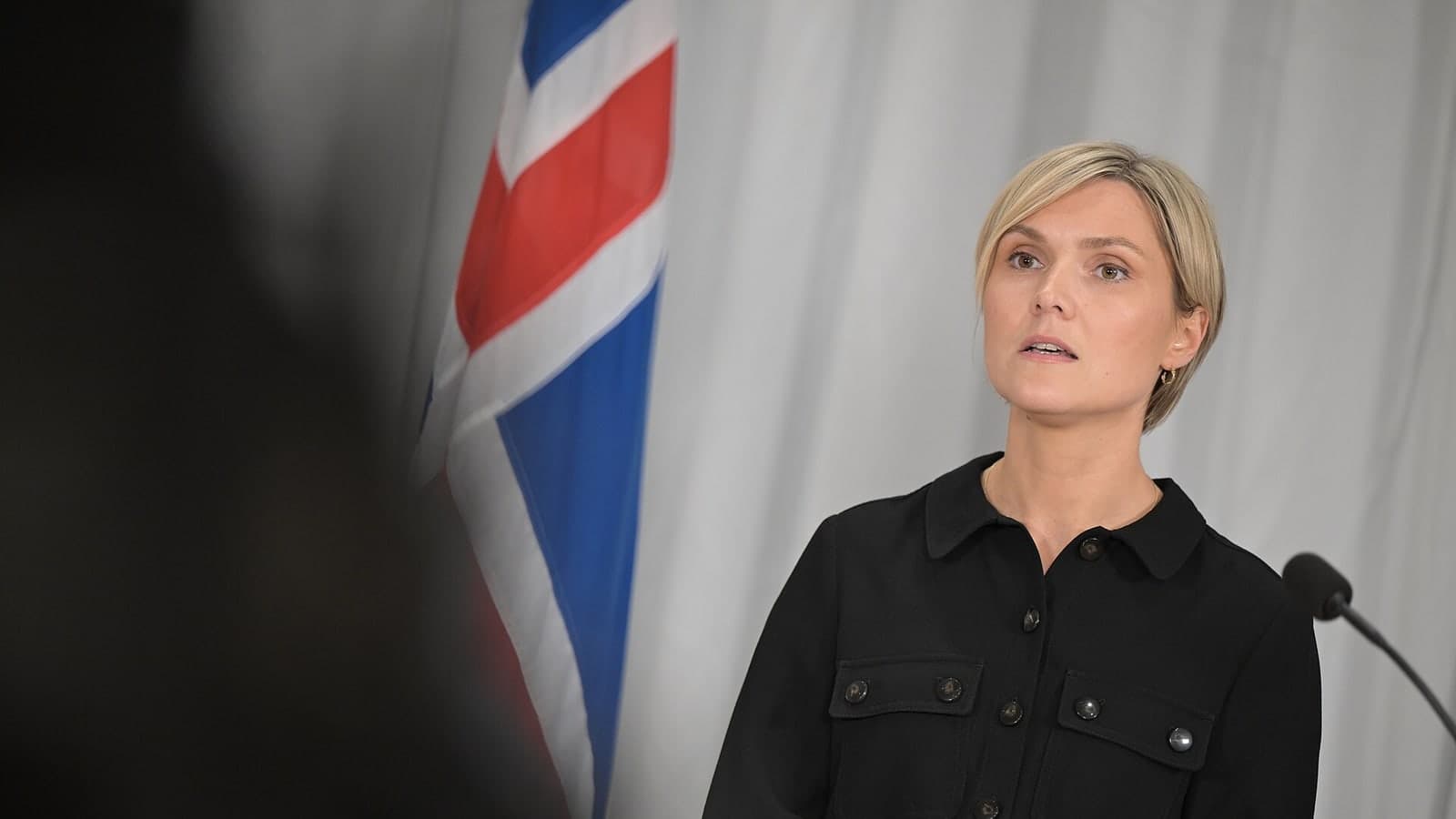
Iceland rejects renewed EU accession talks despite Brussels hopes
Icelandic voters rejected reopening European Union accession negotiations, with 52.8% voting no in the 29 August referendum, leaving Brussels without the strategically important Arctic partner it had hoped could become the bloc’s 28th member.
The result preserves Iceland’s unusually close but non-voting relationship with the EU and denies Brussels a prospective member with strategic importance in the North Atlantic and Arctic. It also shows how control over fisheries and natural resources can outweigh economic and security arguments for deeper integration.
Icelandic voters have rejected reopening accession negotiations with the , halting for now a process that would have been conducted largely through the and Council institutions based in . The National Electoral Commission recorded 52.8% for no and 47.2% for yes after the 29 August referendum, according to the Associated Press. Prime Minister said her government would respect the result and would not resume negotiations during its term, which is due to run until 2028.
For -based EU officials and diplomats, the decision removes what looked like a relatively straightforward but strategically valuable enlargement prospect. is a stable democracy, a founding member and an state already deeply integrated into European structures. The says the country participates in the single market through the European Economic Area, belongs to Schengen and applies a substantial body of EU law without holding a vote when that law is made. Yet the immediate practical effect for Belgian travellers and businesses is limited: those arrangements remain in place.
The result was close, but its geography was revealing. According to Euronews, supported renewed negotiations while rural constituencies voted against, in some cases by more than 60%. Fisheries carry greater economic and cultural weight outside the capital, and opponents feared that membership would weaken Icelandic control over fishing grounds, quotas and investment in seafood companies. Guðrún Hafsteinsdóttir, leader of the opposition Independence Party, told Icelandic public broadcaster RÚV that wanted close relations with Europe while steering its own course.
That argument prevailed over the government’s case that negotiations would let test what was prepared to offer. Foreign Minister Þorgerður Katrín Gunnarsdóttir had insisted that no membership agreement could be accepted without full Icelandic control over fisheries management. Before the vote, however, the Commission declined to speculate on whether such an arrangement was realistic, saying at its Berlaymont press briefing that the choice belonged to Icelandic citizens. The suspicion heard during the no campaign — that Brussels would ultimately override Icelandic safeguards — was therefore never resolved by an actual negotiated text.
The vote was not a referendum on membership itself. ’s government had specified that, had talks resumed and produced an agreement, voters would have received a second and decisive referendum. Previous negotiations opened in 2010 after Iceland’s banking collapse. The Commission records that 27 negotiating chapters were opened and 11 provisionally closed before suspended the process in 2013 and asked in 2015 no longer to be treated as a candidate country.
The broader issue is whether the EEA model has become politically more attractive than full membership for affluent northern European states. receives single-market access and participates in European programmes while retaining national control in sensitive fields including fisheries and agriculture. The trade-off is institutional: it implements many rules agreed by the EU’s 27 member states, including , without representation in the Council or European Parliament. figures show that the EU accounted for 53.6% of Iceland’s goods trade in 2025 and absorbed 66.5% of its exports.
’s direct role is secondary but tangible. The Belgian Foreign Ministry describes close EU- cooperation and recalls the historic “IJslandvaart”, when Belgian crews undertook long fishing expeditions to Icelandic waters. Today the relevant Belgian stakeholders include the federal diplomatic service, Belgium’s representatives in the Council and Belgian MEPs dealing with enlargement, fisheries and EEA legislation. No specific public response from Belgium’s federal government or Belgian European Commissioner Hadja Lahbib was located by publication time. European Council President António Costa, by contrast, called Frostadóttir and stressed that Iceland remained a close EU partner.
The no vote also complicates Europe’s effort to strengthen its northern flank amid greater attention to security and uncertainty over transatlantic relations. remains protected through , whose political headquarters are in , but EU membership would have added it to the bloc’s foreign-policy, economic-security and decision-making structures. That distinction matters: Brussels here means the EU and NATO institutions headquartered in the Belgian capital, not the Brussels regional authorities.
The government will now leave the accession file dormant while continuing cooperation through the EEA, Schengen, and bilateral arrangements. The question is unlikely to disappear permanently: turnout exceeded 82%, and nearly half the electorate backed another negotiation. What remains unknown is what political or security change could persuade Icelanders to revisit the issue after 2028 — and whether the EU could ever offer fisheries guarantees strong enough to change the result.
Impact
Regional — The immediate impact in Belgium is institutional rather than economic: Belgian ministers and diplomats will continue dealing with Iceland through the EU Council, EEA and NATO frameworks, while existing travel and single-market arrangements remain unchanged.
International — The result removes the immediate prospect of Iceland becoming the European Union’s 28th member and leaves Brussels without the additional Arctic and North Atlantic partner it had hoped to bring into the bloc. EU institutions will continue managing relations through existing European Economic Area, Schengen and trade arrangements. Belgium and Iceland will also remain partners through NATO. Iceland consequently retains extensive access to European structures while continuing to lack a vote in EU law-making and institutional decisions.
What it means for you
Belgium-based travellers, businesses and residents do not need to change current arrangements: Iceland remains in Schengen and continues participating in the EU single market through the European Economic Area. The referendum does not introduce new border procedures, tariffs or membership-related rights. EU and Belgian officials should expect Iceland files to remain within existing EEA, Schengen, trade and NATO channels. The next firm political marker is 2028, when the current Icelandic government’s term is due to end; it says accession talks will not resume before then.
Opposing perspectives
- Frostadóttir government and pro-negotiation voters
Prime Minister Kristrún Frostadóttir supported reopening talks so Iceland could discover what terms the EU would offer, while retaining a later referendum on any completed agreement. She framed the eventual rejection as a democratic decision rather than a defeat and left open the possibility that changed circumstances could revive the debate.
- Independence Party and sovereignty-focused voters
Opposition leader Guðrún Hafsteinsdóttir argued that Iceland can maintain close European relations while controlling its own course. The no campaign concentrated on fisheries, natural resources and the risk that assurances negotiated in Brussels would not permanently protect Icelandic autonomy.
- European Commission and Council leadership
The Commission publicly treated the referendum as a decision for Icelandic citizens and later respected the outcome, while European Council President António Costa stressed that Iceland remains a close EU partner. This Brussels framing emphasised continuity rather than presenting the vote as a rupture.
- European Conservatives and Reformists Group
ECR co-chairs Nicola Procaccini and Patryk Jaki said the result should prompt reflection in Brussels about sovereignty, subsidiarity and democratic control. Their interpretation casts the vote as a wider warning for the EU, rather than only a dispute over Icelandic fisheries.
Who, where and what
Key people, places and terms in this story
The European Commission is an EU institution seated in Brussels. In these excerpts it matters as an EU-level policy and service reference for Belgium, including pay transparency implementation, circular textiles, asbestos exposure rules and the Your Europe service.
Seat of major EU institutions and shorthand for the EU institutional interest in Icelandic accession.
EU and NATO member whose officials will continue relations with Iceland through existing frameworks.
Nordic republic whose voters rejected reopening EU accession negotiations.
Prime Minister whose coalition put the question of reopening accession talks to voters.
Show the full library (15)
Prime Minister whose coalition put the question of reopening accession talks to voters.
Nordic republic whose voters rejected reopening EU accession negotiations.
Seat of major EU institutions and shorthand for the EU institutional interest in Icelandic accession.
EU and NATO member whose officials will continue relations with Iceland through existing frameworks.
The only constituency identified as supporting renewed accession talks.
Strategically important region linked to Iceland’s significance for European security.
Strategic region in which Iceland has security importance.
The European Commission is an EU institution seated in Brussels. In these excerpts it matters as an EU-level policy and service reference for Belgium, including pay transparency implementation, circular textiles, asbestos exposure rules and the Your Europe service.
Vote in which 52.8% rejected and 47.2% supported reopening accession negotiations.
Framework through which Iceland participates in the EU single market without EU membership.
Passport-free travel framework in which Iceland participates.
Political and economic union that Iceland declined to resume membership negotiations with.
NATO is a Brussels-headquartered security institution referenced in relation to deterrence, Ukraine support planning, burden-sharing and Belgium’s defence commitments. It matters because it frames Brussels policy debates on escalation consequences and defence spending targets.
EU institutional channel through which Belgian ministers continue handling Iceland-related matters.
Belgian federal authority responsible for the country’s diplomatic relations, including relations with Iceland.
Sources & evidence
- View sourceHet NieuwsbladPrimaryprimary· nieuwsblad.be· 29 August 2026Retrieved 1 September 2026· 34 days ago· Dated
- View sourceAssociated Presscorroborating· apnews.com· 30 August 2026Retrieved 1 September 2026· 33 days ago· Dated
- View sourceThe Brussels Times with Belgacorroborating· brusselstimes.com· 30 August 2026Retrieved 1 September 2026· 33 days ago· Dated
- View sourceEuropean Commission — Iceland enlargement statusofficial· enlargement.ec.europa.euRetrieved 1 September 2026
Related topics
Related to this story

Live connections from the Belgium Impulse ecosystem — not recommendations.
This briefing was prepared with AI assistance and reviewed by a Belgium Impulse editor before publication. methodology.