Could a Brussels-backed study change how Belgium prevents migraine?
UZ Brussel neurologist Jan Versijpt has co-authored an international trial finding that atogepant prevented migraine more effectively and caused fewer treatment withdrawals than topiramate over 24 weeks, although cost, reimbursement conditions and limited long-term evidence still constrain its use.
Migraine can repeatedly disrupt work, education and family life, while side effects often make preventive treatment difficult to sustain. A direct comparison suggesting both better control and better tolerability could improve clinical choices, but Belgian patients’ access still depends on stricter national reimbursement rules.
A neurologist at has helped produce the strongest direct evidence yet that a migraine-specific tablet may outperform one of Belgium’s established preventive treatments. The international TEMPLE trial, published online in on 23 July and highlighted by the Brussels hospital on 20 August, found that adults assigned atogepant had fewer migraine days and were less likely to stop treatment because of side effects than those assigned topiramate.
That finding has immediate relevance in Belgium because both medicines sit at different points in the treatment pathway. Topiramate, originally developed for epilepsy, has long been used to prevent migraine. Atogepant, sold in the European Union as Aquipta, targets receptors associated with calcitonin gene-related peptide, or CGRP, and was developed specifically for migraine. Belgian reimbursement rules nevertheless generally require eligible patients to have tried topiramate and several other preventive options before atogepant can be reimbursed, according to the rules reproduced by the from .
TEMPLE enrolled 545 adults with episodic or chronic migraine across 12 countries, including Belgium. Participants had at least four migraine days a month on average and received one of the two daily treatments for 24 weeks in a randomised, double-blind comparison. says 64.1% of those assigned atogepant achieved at least a 50% reduction in monthly migraine days during the final three months, compared with 39.3% on topiramate.
The average monthly reduction was 6.3 migraine days with atogepant and 4.5 with topiramate, a difference of 1.8 days. The trial’s primary outcome concerned tolerability: 12.1% of participants taking atogepant stopped because of adverse effects, against 29.6% taking topiramate. Treatment-related adverse events were reported by 56% and 78% respectively, reported.
Professor , the neurologist and VUB academic who co-authored the study, framed adherence as central to the result: preventive medicine can work only when patients tolerate it well enough to continue. The author list also includes of , giving the Belgian contribution a wider footprint than the Brussels hospital alone.
There are, however, reasons for restraint. , which markets atogepant, funded the phase 3b trial, and several authors are affiliated with the company. The published abstract reports one drug-related serious adverse event, an anaphylactic reaction, in the atogepant group. The blinded comparison lasted 24 weeks, so it cannot settle questions about effectiveness, uncommon harms or persistence over several years. itself stresses that topiramate remains effective for some patients and that atogepant is not automatically the best or most accessible option for everyone.
The regulatory and reimbursement perspectives are also distinct. The has authorised Aquipta for migraine prevention in adults with at least four migraine days per month, judging its benefits greater than its risks. Belgium’s -backed reimbursement framework is narrower: it requires at least eight documented migraine days per month, prior failure or intolerance of several preventive treatments, specialist authorisation and evidence of a sufficient response for continued coverage. The current listed co-payment is €12.80 under ordinary reimbursement or €8.50 for people receiving increased reimbursement, according to the BCFI database.
That gap reveals the broader issue raised by the study. A medicine may be clinically superior in a head-to-head trial without immediately becoming the default first choice in a publicly financed health system. Regulators decide whether it may be sold; clinicians decide whether it suits an individual patient; reimbursement authorities must also weigh comparative value and budget impact.
For patients in Brussels and elsewhere in Belgium, the practical message is therefore not to switch treatment independently, but to discuss persistent attacks or troublesome side effects with a neurologist. The next evidence will come from longer follow-up and more diverse patient groups. The policy question is whether TEMPLE’s direct comparison is strong enough to prompt Belgian authorities to reconsider where atogepant belongs in the reimbursed treatment sequence; no such revision has yet been announced in the sources reviewed.
Impact
Regional — UZ Brussel in Jette contributed clinical expertise to a 12-country trial. Patients across Belgium may benefit from the evidence, although access is governed nationally through RIZIV reimbursement conditions rather than by the Brussels-Capital Region.
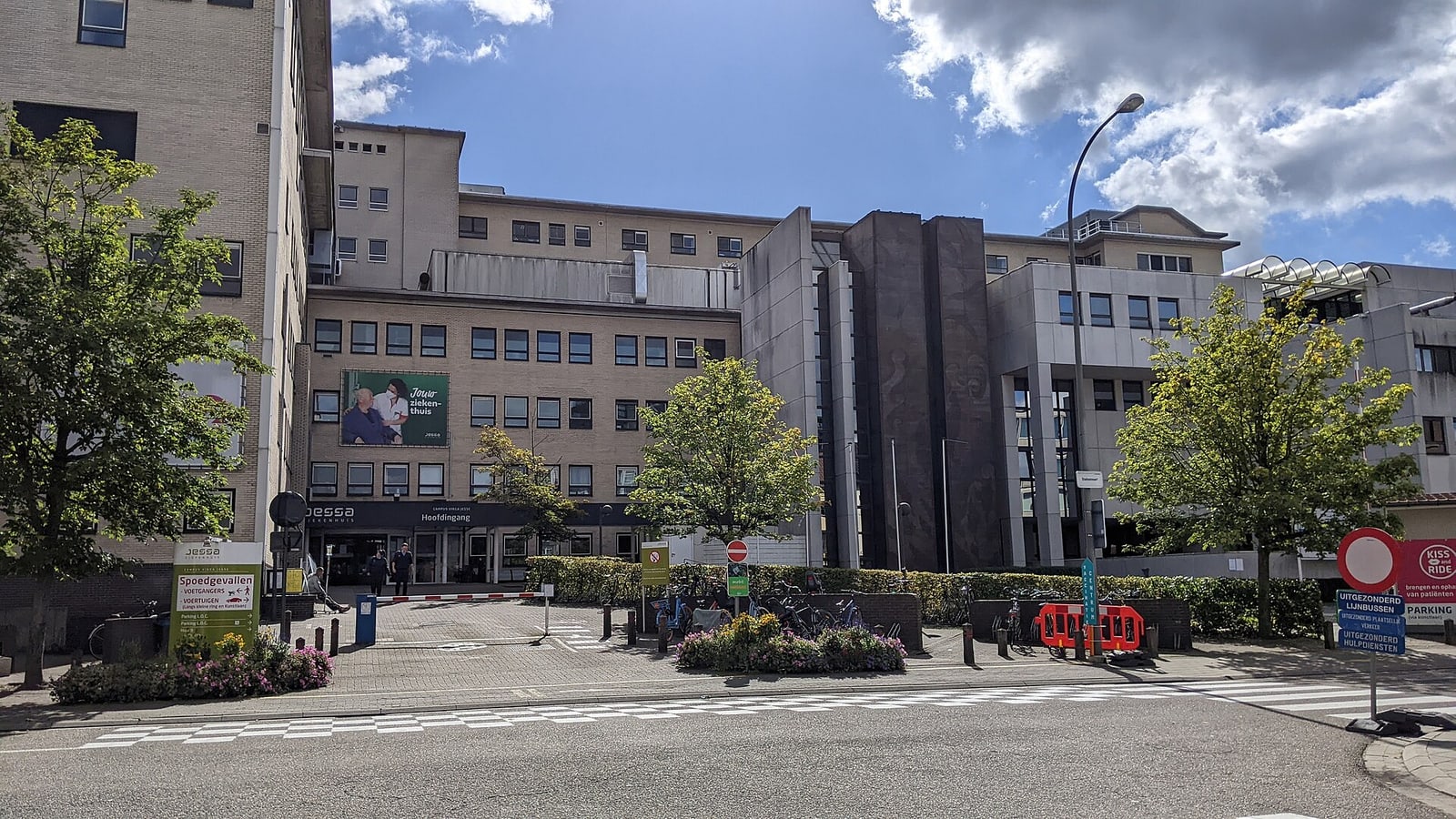
Local — UZ Brussel, based in Jette, supplied clinical expertise through neurologist Jan Versijpt to a trial spanning 12 countries. That gives Brussels a direct research link to evidence that may influence migraine consultations. Access will not be decided by Jette or the Brussels-Capital Region, however: patients treated in Brussels face the same nationally determined RIZIV reimbursement conditions as patients elsewhere in Belgium. AZ Sint-Jan Bruges also contributed Belgian expertise through neurologist Annelies Van Dycke.
International — TEMPLE was a 12-country clinical trial, making its findings relevant beyond Belgium and less dependent on one national care setting. Atogepant has been assessed by the European Medicines Agency, while individual countries retain responsibility for pricing and reimbursement. The study can therefore support prescribing discussions across Europe without creating uniform patient access. Belgium’s RIZIV conditions may remain stricter or otherwise differ from access arrangements in other participating countries despite shared clinical evidence.
What it means for you
If migraines regularly disrupt your daily life, discuss preventive treatment with a GP or neurologist rather than changing medication yourself. Ask whether you meet Belgian RIZIV reimbursement conditions for atogepant, what your out-of-pocket cost would be, and how that compares with topiramate. The study covered 24 weeks, so it does not settle every question about longer-term effectiveness or safety. If you already take topiramate and experience adverse effects, record their frequency and impact before your appointment; the new comparison may help structure a discussion about tolerability and alternatives.
Opposing perspectives
- UZ Brussel and TEMPLE investigators
Jan Versijpt and the trial team emphasise that atogepant produced a clinically meaningful reduction in migraine days while substantially fewer participants stopped because of adverse effects. Their framing puts tolerability alongside efficacy because a preventive treatment offers little benefit if patients cannot continue taking it.
- Belgian reimbursement framework
RIZIV’s rules take a more restrictive population-level view than a simple reading of the trial result. Reimbursement generally follows documented failure or intolerance of topiramate, a beta-blocker and another preventive option, reflecting affordability and treatment sequencing as well as regulatory approval.
- Cautious clinical interpretation
UZ Brussel also warns that topiramate remains useful for some patients and atogepant is not automatically the best or most accessible choice. The 24-week evidence, manufacturer funding and need for longer, more diverse follow-up argue against presenting the result as a universal replacement of established care.
Who, where and what
Key people, places and terms in this story
UZ Brussel neurologist and Belgian co-author of the TEMPLE study.
AZ Sint-Jan Bruges neurologist and Belgian co-author of the TEMPLE study.
Brussels news outlet reporting the UZ Brussel contribution.
Randomised, double-blind phase 3b trial comparing atogepant with topiramate over 24 weeks.
EU medicines regulator that assessed atogepant.
Show the full library (15)
UZ Brussel neurologist and Belgian co-author of the TEMPLE study.
AZ Sint-Jan Bruges neurologist and Belgian co-author of the TEMPLE study.
Randomised, double-blind phase 3b trial comparing atogepant with topiramate over 24 weeks.
EU medicines regulator that assessed atogepant.
Brussels news outlet reporting the UZ Brussel contribution.
Brussels university hospital whose neurologist contributed expertise to the trial.
Bruges hospital whose neurologist co-authored the trial.
Manufacturer of atogepant and funder of the TEMPLE study.
Belgian institution whose reimbursement conditions affect patient access to atogepant.
Belgian source of independent pharmacotherapeutic information cited for the medicine.
Medical journal associated with publication of the TEMPLE trial findings.
Biomedical literature database providing the indexed trial record.
Trial registry containing the TEMPLE study record under NCT05748483.
ClinicalTrials.gov identifier for the TEMPLE study.
Oral CGRP-receptor antagonist that performed better and had fewer adverse-effect withdrawals in the trial.
Sources & evidence
- View sourceBRUZZPrimaryprimary· bruzz.be· 20 August 2026Retrieved 27 August 2026· 43 days ago· Dated
- View sourceUZ Brusselofficial· uzbrussel.be· 20 August 2026Retrieved 27 August 2026· 43 days ago· Dated
- View sourceThe Lancet Neurology via PubMedacademic· pubmed.ncbi.nlm.nih.gov· 23 July 2026Retrieved 27 August 2026· 71 days ago· Dated
- View sourceClinicalTrials.govofficial· clinicaltrials.govRetrieved 27 August 2026
Related topics
Related to this story

Pulse Insight — This topic connects to 10 associations and 1 funding programme through the Brussels ecosystem.
Live connections from the Belgium Impulse ecosystem — not recommendations.
This briefing was prepared with AI assistance and reviewed by a Belgium Impulse editor before publication. methodology.