Can loud socks and powdered horchata help keep Brussels retail distinctive?
BRUZZ selected three locally rooted products on 26 August: Amélie Gomet’s limited-edition jewellery, statement socks sold by Rose and Little Planet’s powdered horchata. Together, they illustrate how Brussels makers combine neighbourhood retail, international influences and lower-waste ideas.
The selection gives Brussels residents and workers practical access to independent makers while exposing a larger urban question: whether distinctive, experience-led businesses can strengthen neighbourhood shopping streets under pressure from vacancies, e-commerce and chain retail.
put three products in the shop window on 26 August: limited-edition silver jewellery made in , bright statement socks sold by a long-established Ixelles gift shop and powdered horchata developed in . For people who live or work in Brussels—including staff from the EU institutions based here—the selection offers a compact guide to independent businesses beyond the international chains. It is a city story, however, rather than an EU initiative: neither the European Commission nor another EU body is involved.
The most geographically ambitious product comes from , who introduced his version of horchata in 2021 under the brand. reports that the entrepreneur sells the drink as a powder to be mixed with water at home, an approach intended to reduce packaging and the environmental cost of transporting a ready-made liquid. A 375-gram pack was listed at €9.99 when BRUZZ published its selection.
Horchata connects with Valencia, Spain, where the cool, sweet drink made from ground tigernuts is part of the regional food culture. That heritage should not be flattened into generic lifestyle branding. EU law protects “Chufa de Valencia” as a Protected Designation of Origin, with production linked to specified municipalities in the province of Valencia and traceability requirements for products using the protected name, according to EUR-Lex. describes as a Brussels version; the available reporting does not establish that its ingredients carry the Valencian PDO.
In , jewellery designer takes a different route to distinctiveness. After studying visual arts in New York and , she opened with another designer, according to . Her own pieces—small scenes cast as rings or brooches—are produced in limited editions, while customers can also request personal designs. The workshop model makes the encounter with the maker part of the product, something a conventional online transaction cannot easily reproduce.
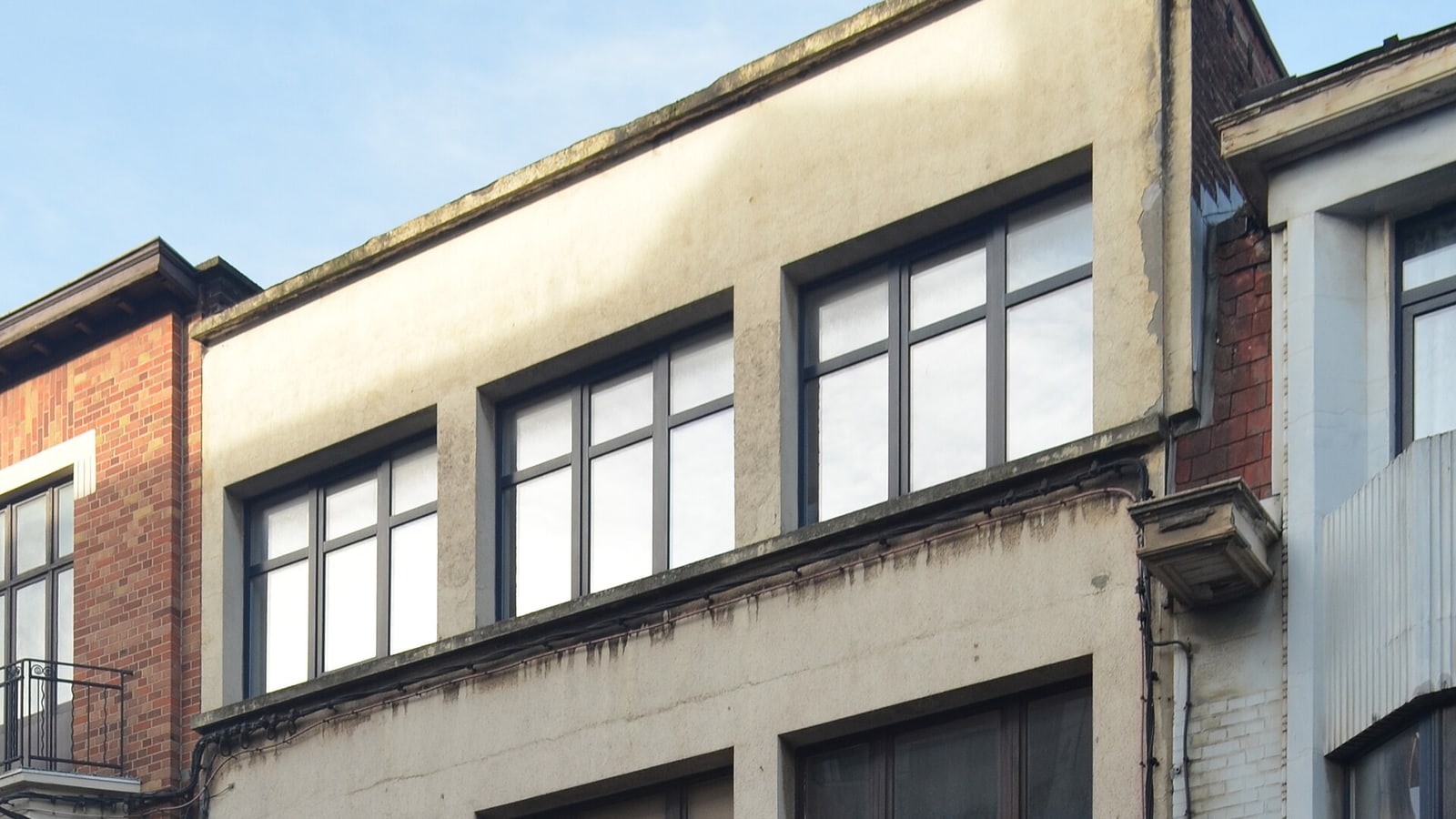
A few streets away, supplies the deliberately louder end of the selection. The gift shop, which says has operated for 20 years, sells pink “ girls do it better” socks alongside stickers, mugs and notebooks. Its own website places the shop at 56-58 in . The socks are less an export strategy than a playful badge of urban identity: merchandise designed to circulate through classrooms, offices and buses rather than official European corridors.
These small products land in a retail environment under real pressure. VRT NWS reported in 2024 that the Region had lost more than 1,000 shops since 2013, while the number of shops in had fallen by 17% over ten years. The same report described rising vacancy and a shift towards hospitality, with independent businesses squeezed by shopping centres and online competition.
Yet the official regional picture is not simply one of decline. In its 2025 retail barometer, the economic agency examined 30 shopping districts and identified growing demand for human-scale outlets offering proximity, service and sustainability. It framed retail as “more than a place to make your purchases”, stressing its role in contact between neighbours, customers, traders, generations and cultures. That is the strongest case for treating a jewellery workshop, an idiosyncratic gift shop and a small drink brand as more than shopping tips.
There is a counterpoint. Philippe Capart of the former Bortier Gallery bookshop Crypte Tonique told VRT NWS that redevelopment there felt “more mundane, more bling-bling”, while Mayor Philippe Close argued that the city could not ignore repeated bankruptcies. Their disagreement captures the larger choice: experiential retail may keep premises occupied, but food, gifts and photogenic concepts do not automatically preserve the full diversity of an urban high street.
What happens next will be determined less by a single promotional list than by repeat customers, affordable premises and the makers’ ability to scale without losing their identity. No sales figures, employment totals or public subsidies for the three featured businesses were disclosed. Their immediate achievement is more modest but visible: they translate ’ international influences into products made, designed or sold at neighbourhood scale.
Impact
Regional — The direct impact is concentrated in Ixelles and Watermael-Boitsfort. More broadly, the businesses contribute to the Brussels-Capital Region’s stated preference for nearby, service-oriented and potentially more sustainable commerce.
Local — The clearest local footprint is in Ixelles, where Feu Atelier offers jewellery workshops and Rose trades at 56-58 Rue de l’Aqueduc. Little Planet adds a second commune-level anchor in Watermael-Boitsfort. Residents can therefore encounter the featured products through Brussels-based makers or retailers rather than relying solely on chains or online sellers. Their presence contributes to the variety of neighbourhood shopping, although the article provides no figures on employment, footfall, turnover or vacancy reduction attributable to these businesses.
International — Little Planet’s horchata gives the selection a cross-border cultural dimension because the drink is associated with Spain, while the EU specification for Chufa de Valencia defines a protected Spanish geographical product. That protection should not be read as evidence that Little Planet’s Brussels-made powdered product is certified under the designation; the article makes no such claim. For EU-policy readers, the relevant distinction is between adapting an internationally recognised drink locally and meeting the separate rules attached to an EU protected geographical name.
What it means for you
Brussels residents can investigate Feu Atelier’s limited-edition jewellery and workshops in Ixelles, visit Rose at 56-58 Rue de l’Aqueduc for the featured socks, or look for Little Planet’s powdered horchata from Watermael-Boitsfort. Because the article supplies no prices, opening hours, workshop dates, stock levels or ordering conditions, check directly with each business before travelling or booking. Buyers interested in provenance or sustainability should also ask about materials, production location, packaging and preparation requirements rather than assuming that every locally sold product is wholly local or formally certified.
Opposing perspectives
- Local makers and hub.brussels
The featured entrepreneurs present distinctive products, workshops and lower-waste ideas as reasons to shop locally. hub.brussels reinforces that framing by describing retail as “more than a place to make your purchases” and as social infrastructure connecting residents, traders, generations and cultures.
- Retail-diversity sceptics
Former Bortier Gallery bookseller Philippe Capart characterised one Brussels redevelopment as “more mundane, more bling-bling”. This perspective warns that replacing struggling specialist shops with food, gifts and experience-led concepts can fill premises without preserving the intellectual and commercial diversity of the high street.
- Municipal viability argument
Brussels Mayor Philippe Close offered a harder commercial response in the VRT NWS account, asking what the city should do when existing businesses repeatedly go bankrupt. This view prioritises viable occupancy and footfall, even when the resulting commercial mix differs from a site’s earlier identity.
Who, where and what
Key people, places and terms in this story
City and regional setting for the featured makers, retailers and retail-market discussion.
Regional retail market in which hub.brussels counted about 25,000 sales outlets in its 2025 overview.
Brussels commune where Feu Atelier operates and Rose has its shop.
Brussels commune associated with Little Planet’s powdered horchata business.
Maker of limited-edition cast jewellery and provider of workshops through Feu Atelier.
Show the full library (15)
Maker of limited-edition cast jewellery and provider of workshops through Feu Atelier.
Developer of Little Planet’s powdered horchata, sold since 2021.
City and regional setting for the featured makers, retailers and retail-market discussion.
Regional retail market in which hub.brussels counted about 25,000 sales outlets in its 2025 overview.
Brussels commune where Feu Atelier operates and Rose has its shop.
Brussels commune associated with Little Planet’s powdered horchata business.
Ixelles street where Rose is located at numbers 56-58.
Brussels media outlet that selected and featured the three local product lines on 26 August 2026.
Ixelles workshop and jewellery activity associated with Amélie Gomet.
Ixelles shop selling the statement socks included in the BRUZZ selection.
Watermael-Boitsfort business selling powdered horchata developed by Yannick Bloquet.
Powdered version of horchata featured as a locally rooted Brussels product.
Cast jewellery line included in the BRUZZ selection.
Distinctive socks sold by Rose and featured by BRUZZ.
Brussels economic-support agency that published the 2025 regional retail overview.
Sources & evidence
- View sourceBRUZZPrimaryprimary· bruzz.be· 26 August 2026Retrieved 28 August 2026· 37 days ago· Dated
- View sourcehub.brussels Retail Barometer 2025official· hub.brussels· 27 October 2025Retrieved 28 August 2026· 340 days ago· Dated
- View sourceVRT NWScorroborating· vrt.be· 20 January 2024Retrieved 28 August 2026· 986 days ago· Dated
- View sourceEUR-Lex: Chufa de Valencia PDO specificationofficial· eur-lex.europa.eu· 9 September 2024Retrieved 28 August 2026· 753 days ago· Dated
Related topics
Related to this story
Pulse Insight — This topic connects to 10 associations and 1 funding programme through the Brussels ecosystem.
Live connections from the Belgium Impulse ecosystem — not recommendations.
This briefing was prepared with AI assistance and reviewed by a Belgium Impulse editor before publication. methodology.