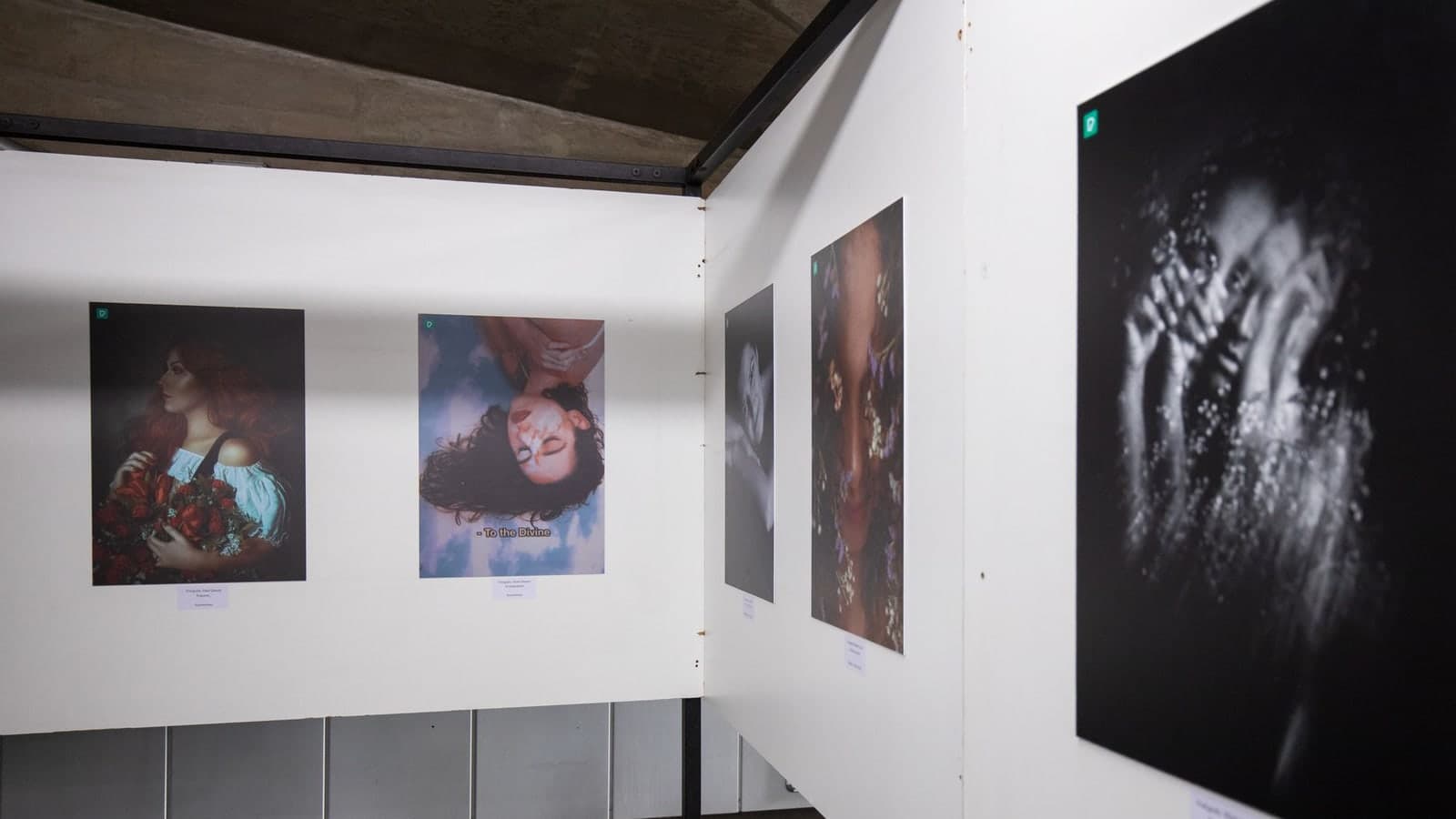
What can 44 minimalist photographs reveal about Louvain-la-Neuve?
The Université des aînés has opened a free exhibition of 44 minimalist photographs at the Forum des Halles in Louvain-la-Neuve, where it remains on view until 5 September 2026.
The exhibition provides an accessible entry point into Louvain-la-Neuve’s cultural life while showing that its university ecosystem also serves adult and lifelong learners. For newcomers, it is both a free local outing and a practical introduction to a French-language institution whose activities are open beyond the conventional student population.
The (UDA) opened an exhibition of 44 minimalist photographs at the in on 24 August, followed by a public vernissage on 25 August. The practical takeaway is straightforward: visitors can see “” at Place de l’Université until 5 September 2026, and should consult the UDA website before travelling for any change to access arrangements.
The photographs were made by participants in the . reported that the display contains 44 images, while the UDA confirms the exhibition dates and its location inside the . The venue stands beside the university buildings and close to -Université railway station, making this an unusually easy cultural stop for residents, commuters and newcomers exploring the pedestrian centre.
## Learning to leave things out
The exhibition asks a deceptively simple question: can empty space communicate as much as the object in the frame? According to the event presentation published by the local cultural platform , workshop participants worked with lines, forms, shadows, isolated objects, distant figures and horizons. The resulting photos explore minimalism not merely as an uncluttered visual style, but as an exercise in deciding what an image does not need.
That discipline changes the act of looking. A conventional travel or family photograph may try to preserve as much information as possible; a minimalist composition removes competing details so that proportion, light or absence becomes the subject. The photographs therefore document a learning process as well as presenting finished work. Their makers have had to select, simplify and construct visual relationships rather than rely on spectacular scenery.
The UDA’s current programme helps explain the context. Its official website describes courses and workshops in and as open to everyone, regardless of age or previous education, with no examinations, diplomas or certificates. Despite the institution’s French name, “”, it uses the broader motto “Tous âges, tous savoirs” and is not restricted to pensioners. That distinction may be particularly useful for expatriates who would otherwise assume that enrolment depends on age, nationality or an academic qualification.
## A university town beyond its students
This small exhibition also offers a revealing view of . The city is usually associated with ’s student population, yet the UDA brings adult learners into the same intellectual and cultural landscape. The municipality of includes the organisation in its official 2026 guide for older residents, placing continuing education alongside other local services and associations.
The setting carries its own history. Wallonia’s official heritage portal identifies the Sainte-Barbe auditoriums, inaugurated in 1972, as the first completed teaching buildings in the new university town. emerged after the linguistic division of the Catholic University of Leuven in the late 1960s, when its French-speaking section moved to Wallonia. What began as a purpose-built academic settlement subsequently developed a permanent population and a cultural life extending well beyond degree students.
That background matters without overwhelming the photographs themselves. Minimalism is the centre of gravity here: the pleasure lies in seeing how 44 workshop participants interpreted restraint. Yet the venue demonstrates how a university can serve as shared civic infrastructure, allowing work made in a non-degree classroom to enter a public exhibition space.
For international residents, the language barrier should be modest. The UDA and exhibition information are principally in French, reflecting their location in the French-speaking commune of . In Dutch, a municipality is generally called a gemeente, but local administration and cultural communication here operate in French; Ottignies-Louvain-la-Neuve is not a bilingual commune like those in the -Capital Region. Photography itself requires no translation, although anyone wishing to discuss the course programme or enrol should expect the first contact to be in French.
## How to visit — and how to continue
The is at Place de l’Université 1, 1348 . The exhibition runs through Saturday 5 September, according to the UDA. The organiser has not published detailed daily opening hours in the material reviewed by Belgium Pulse, so visitors making a special journey should verify access through uda-.be or contact its Louvain-la-Neuve office. The official UDA contact page lists its main local office at Sentier du Goria 8–10 and provides a telephone number and email address.
Anyone inspired to move from looking to making photographs can also consult the UDA’s 2026–2027 programme. At the time of publication, it lists practical photography, photographic-project and series-development courses in . Fees and schedules apply to those courses, and availability may change; the exhibition itself should not be confused with enrolment in a workshop. The UDA has also announced an open day in Louvain-la-Neuve on 1 September, during the exhibition’s final week, giving prospective participants an opportunity to ask about teaching level, language and registration.
There is no single correct reading of the show. Practitioners may judge the pictures by the precision of their framing and use of negative space, while visitors may respond more instinctively to mood or association. That tension is productive: minimalism can look austere to one viewer and restful to another.
After 5 September, the immediate question is whether the complete group of 44 photos will be shown elsewhere or preserved online; neither an extension nor a touring presentation has been announced in the sources reviewed. For now, the exhibition remains a compact invitation to slow down in one of Wallonia’s busiest university spaces—and to notice what enters the frame when almost everything else has been removed.
Impact
Regional — The event adds a small, publicly accessible exhibition to Walloon Brabant’s late-summer cultural programme and gives adult learners a visible place in the centre of Ottignies-Louvain-la-Neuve.
Local — The exhibition gives residents and visitors in Ottignies-Louvain-la-Neuve a free cultural activity in the city centre through 5 September 2026. It also places work by adult learners in a publicly accessible venue rather than keeping it inside a classroom. For people considering local continuing education, the exhibition falls near the UDA’s Louvain-la-Neuve open day on 1 September, creating an opportunity to see workshop output and learn about available activities during the same period.
What it means for you
Readers can visit the 44-photo exhibition free of charge at the Forum des Halles in Louvain-la-Neuve until 5 September 2026. Anyone interested in joining UDA activities can attend its Louvain-la-Neuve open day on 1 September. Courses and workshops are open without age or previous-education requirements, but they do not provide examinations or diplomas. Brussels-based readers should check the UDA programme carefully because activities are offered across both Brussels and Louvain-la-Neuve, and the location depends on the selected course or workshop.
Opposing perspectives
- Minimalist photography practitioners
Photographers drawn to minimalism tend to treat subtraction as an active compositional decision: reducing detail can sharpen attention to light, geometry, rhythm and the relationship between a subject and the space around it.
- Visitors preferring documentary richness
Viewers who value dense narrative or documentary detail may find minimalist images austere or ambiguous. For them, removing contextual information can limit a photograph’s social specificity even when it strengthens its graphic impact.
Who, where and what
Key people, places and terms in this story
The other city where the Université des aînés offers activities.
Belgian province containing Louvain-la-Neuve and the exhibition venue.
University city where the exhibition and UDA open day take place.
Municipality containing Louvain-la-Neuve.
Venue hosting the 44-photo exhibition.
Show the full library (15)
University city where the exhibition and UDA open day take place.
The other city where the Université des aînés offers activities.
Belgian province containing Louvain-la-Neuve and the exhibition venue.
Municipality containing Louvain-la-Neuve.
Venue hosting the 44-photo exhibition.
Free exhibition featuring 44 photographs by UDA workshop participants.
Information event scheduled for 1 September 2026.
UCLouvain-linked continuing-education organisation presenting the exhibition.
University institution linked to the Université des aînés.
Workshop whose participants produced the exhibited photographs.
Commemorative paving stone associated with UCLouvain’s establishment in Louvain-la-Neuve.
Belgian news outlet reporting on the exhibition.
Events platform listing the exhibition.
Municipal authority publishing local information for older residents.
Walloon heritage resource documenting the Pavé sacré.
Sources & evidence
- View sourceLa DHPrimaryprimary· dhnet.be· 26 August 2026Retrieved 26 August 2026· 37 days ago· Dated
- View sourceUniversité des aînés UCLouvainofficial· uda-uclouvain.beRetrieved 26 August 2026
- View sourceUniversité des aînés UCLouvain — formationsofficial· uda-uclouvain.beRetrieved 26 August 2026
- View sourceAllezgocorroborating· allezgo.beRetrieved 26 August 2026
Related topics
Related to this story
Live connections from the Belgium Impulse ecosystem — not recommendations.
This briefing was prepared with AI assistance and reviewed by a Belgium Impulse editor before publication. methodology.