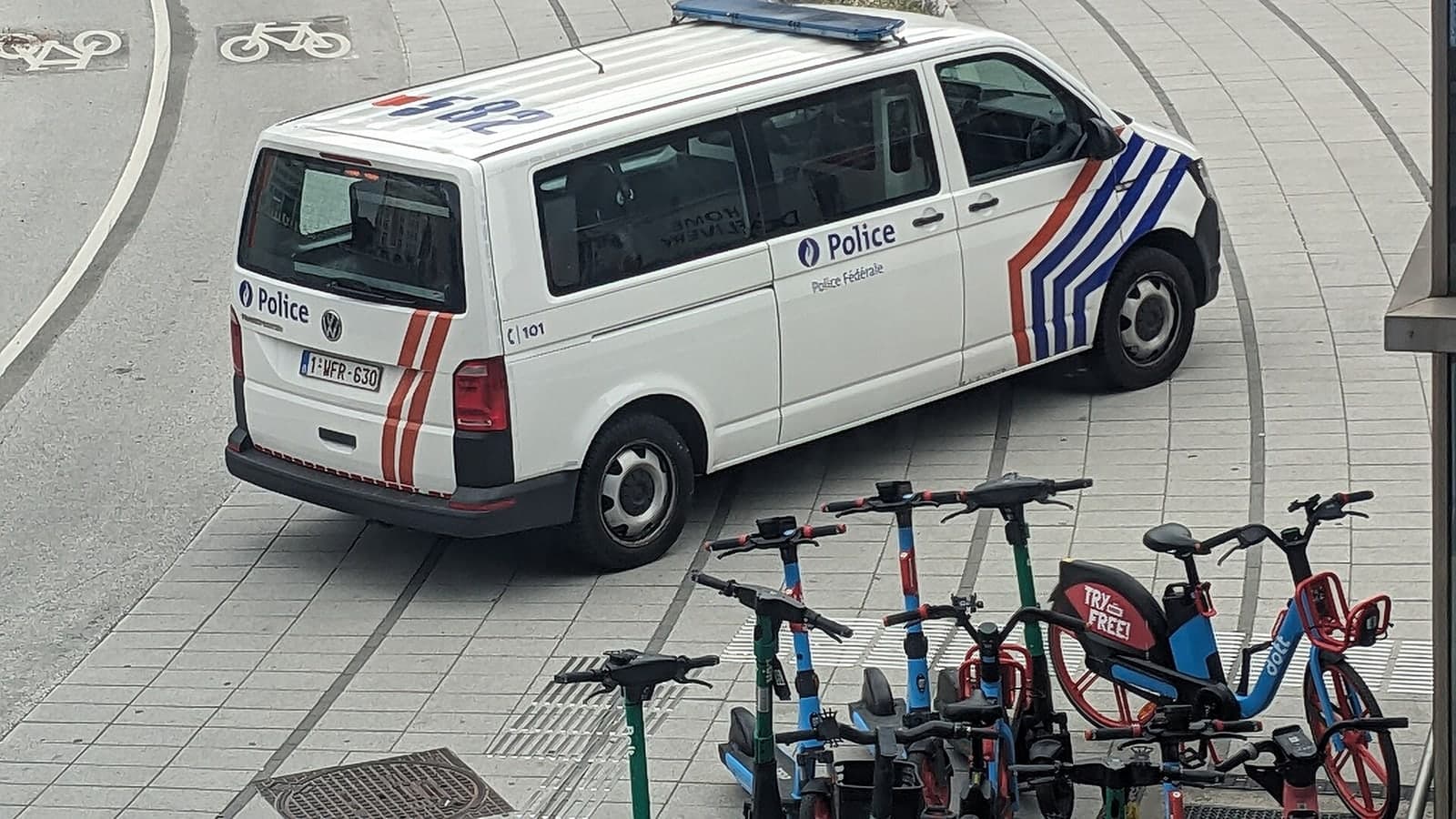
Can a single police command curb Brussels’ latest wave of shootings?
Brussels’ six police zones placed specialist teams under a single operational command on 26 August after six shootings were recorded across Anderlecht, Saint-Gilles and Molenbeek in four days. The immediate test is whether reinforced patrols and better intelligence-sharing can stop the violence while investigators pursue the criminal networks behind it.
People living, working or travelling through Brussels face a series of shootings that has reached residential streets, businesses and a police building. Unified deployment may improve immediate protection, but lasting safety depends on investigators reaching the organisations financing and directing the violence.
’ 19 mayors placed specialist officers from the capital’s six police zones under a single “Gold” operational command on Wednesday, 26 August, after six shootings were recorded in , and over four days. According to BX1, the arrangement covers 170 officers in Special Assistance Units and strengthens rapid-response, canine and other specialised capacity; dispatching and intelligence are also to be coordinated more closely through . The decision gives residents, commuters and staff working around Belgium’s national and European institutions a more unified police response, although authorities have not claimed that it will quickly dismantle the trafficking organisations suspected of driving much of the violence.
The latest sequence included gunfire directed at an police station on Friday night, three incidents in that injured two people or sent a bullet into a home, a shooting that wounded a person in , and further automatic-weapons fire near Place des Deux Bancs. BX1 reported that two suspects were detained near one of the Saint-Gilles incidents, while other suspected shooters remained at large. The said the investigations were continuing and planned a briefing for Friday. No deaths were reported in this four-day cluster.
The operational response concentrates evening and night patrols on identified hotspots and expands the use of the ARGOS service, which processes camera and automatic number-plate-recognition information. Interior Minister also announced an additional infantry platoon, stronger deployment of federal special units, continued integrated anti-drug operations and structural reinforcement for ’ , BX1 reported. These measures connect local patrol work with the investigators needed to follow money, weapons and trafficking networks beyond municipal boundaries.
Philippe Close, the mayor of the City of and president of the , told La Dernière Heure that almost all identified perpetrators in previous shooting cases had been arrested. That is a political assessment of investigative performance, not evidence that nearly all incidents have been solved: the available reporting does not publish a case-by-case denominator, distinguish suspects from convicted offenders or establish that the organisers behind the shootings were caught. The claim should therefore be treated cautiously.
The disagreement between and federal authorities is partly about where the bottleneck lies. mayor Jean Spinette argues that the capital needs exceptional national resources comparable to those devoted to terrorism investigations. mayor Fabrice Cumps said that receiving four additional officers was plainly insufficient. Quintin’s framing is different: he says substantial federal capacity has already been committed and that every level of government must accept responsibility, even as he promises further reinforcements.
Justice Minister offers a broader diagnosis. In an official statement on 23 August, she described organised crime as cross-border and highly adaptable, warning that policing and prosecution cannot compensate on their own for weak housing, school disengagement, limited opportunities for young people and inadequate prevention. Her position supports coordinated enforcement but rejects the idea that patrol numbers alone can produce a durable result.
The scale explains the urgency. BX1 counted 65 shootings in the since the start of 2026, already matching its total for all of 2025. An official regional order published in March recorded 43 shootings, two deaths and 17 injuries between 4 September 2025 and 19 February 2026, although those figures were described as provisional. The pattern predates the latest weekend and has repeatedly been linked by police and prosecutors to competition around street-level drug markets.
is both a lived-in city and the seat of major EU institutions, but the shootings occurred in residential districts rather than the European Quarter. No EU institution has announced a role in Wednesday’s policing decision. The European dimension lies instead in the trafficking economy: drugs, firearms, money and suspects move across borders, making cooperation with federal police, Europol and neighbouring states relevant to investigations even though local safety remains a Belgian responsibility.
The next indicators will be operational rather than rhetorical: whether shootings fall, whether ARGOS and unified dispatching shorten response times, and whether arrests lead investigators beyond gunmen to organisers and financial structures. Friday’s prosecutor briefing may clarify which incidents are connected and what charges follow. Until then, the identity of several shooters, the precise relationships between the attacks and the measurable effect of remain unknown.
Impact
Regional — The measures apply across the Brussels-Capital Region, with immediate attention focused on hotspots in Anderlecht, Saint-Gilles and Molenbeek. Reinforced evening patrols and centralised intelligence processing may be most visible in those districts.
Local — Residents and businesses in Anderlecht, Saint-Gilles and Molenbeek are most likely to notice the immediate measures, including reinforced evening patrols and coordinated specialist deployments. Police will process camera footage, number plates and operational intelligence centrally, potentially allowing officers to connect incidents across commune and police-zone boundaries more quickly. The measures cover the entire Brussels-Capital Region, however, so deployments may shift as intelligence identifies new hotspots. A police building was among the locations reached during the recent violence.
What it means for you
People in Brussels should expect a more visible evening police presence, particularly in Anderlecht, Saint-Gilles and Molenbeek, but no announced restrictions on travel, work or daily activity follow automatically from Gold command. The structure changes how police resources are deployed; it does not merge the six zones or create a new force. Anyone witnessing gunfire should move to safety and contact emergency services rather than approach the scene. The next concrete update to watch is the prosecutor’s office briefing planned for Friday, 28 August, which may clarify arrests and investigative progress.
Opposing perspectives
- Brussels mayors seeking federal reinforcement
Saint-Gilles mayor Jean Spinette and Anderlecht mayor Fabrice Cumps frame the shootings as a national organised-crime emergency requiring exceptional federal investigators, technical expertise and personnel. Spinette argues that the response should approach the scale once devoted to terrorism, while Cumps says the limited reinforcements received before Wednesday were inadequate.
- Federal Interior Ministry’s shared-responsibility position
Interior Minister Bernard Quintin says the federal level has already deployed substantial capacity and that local, regional and federal authorities must each assume responsibility. His new reinforcements acknowledge the pressure but frame the answer as coordinated deployment and evaluation, rather than as a purely federal rescue operation.
- Justice Minister’s prevention-and-enforcement approach
Annelies Verlinden argues that police and courts cannot solve the problem alone. She couples stronger enforcement with housing, education, integration, youth opportunities and administrative action against criminal businesses, presenting organised crime as both a security threat and a product of vulnerabilities that recruitment networks exploit.
Who, where and what
Key people, places and terms in this story
Federal minister involved in the response described by the article.
Federal minister whose office issued a reaction to the recent shootings.
City and capital region where the shootings and coordinated police response are taking place.
The regional territory covered by the unified operational measures.
Brussels commune affected by the four-day sequence of shootings.
Show the full library (15)
Federal minister involved in the response described by the article.
Federal minister whose office issued a reaction to the recent shootings.
City and capital region where the shootings and coordinated police response are taking place.
The regional territory covered by the unified operational measures.
Brussels commune affected by the four-day sequence of shootings.
Brussels commune affected by the four-day sequence of shootings.
Brussels commune affected by the four-day sequence of shootings.
Unified operational structure coordinating specialist personnel and decisions across six police zones.
Separate police services operating under the single operational command.
Specialist police capacity whose 170 officers are covered by the coordinated command.
Brussels body involved in coordinating the regional police response.
Brussels regional security body supporting coordination and centralised intelligence processing.
Federal investigative service pursuing the criminal networks behind the violence.
Camera and number-plate analysis capability intended to operate continuously.
Prosecutorial authority planning a briefing for Friday, 28 August.
Sources & evidence
- View sourceLa Dernière HeurePrimaryprimary· dhnet.be· 26 August 2026Retrieved 26 August 2026· 37 days ago· Dated
- View sourceBX1 — Unified Gold commandcorroborating· bx1.be· 26 August 2026Retrieved 26 August 2026· 37 days ago· Dated
- View sourceBX1 — Four-day shooting sequencecorroborating· bx1.be· 25 August 2026Retrieved 26 August 2026· 38 days ago· Dated
- View sourceOffice of Justice Minister Annelies Verlindenofficial· verlinden.belgium.be· 23 August 2026Retrieved 26 August 2026· 40 days ago· Dated
Related topics
Related to this story

Pulse Insight — This topic connects to 10 associations and 1 funding programme through the Brussels ecosystem.
Live connections from the Belgium Impulse ecosystem — not recommendations.
This briefing was prepared with AI assistance and reviewed by a Belgium Impulse editor before publication. methodology.