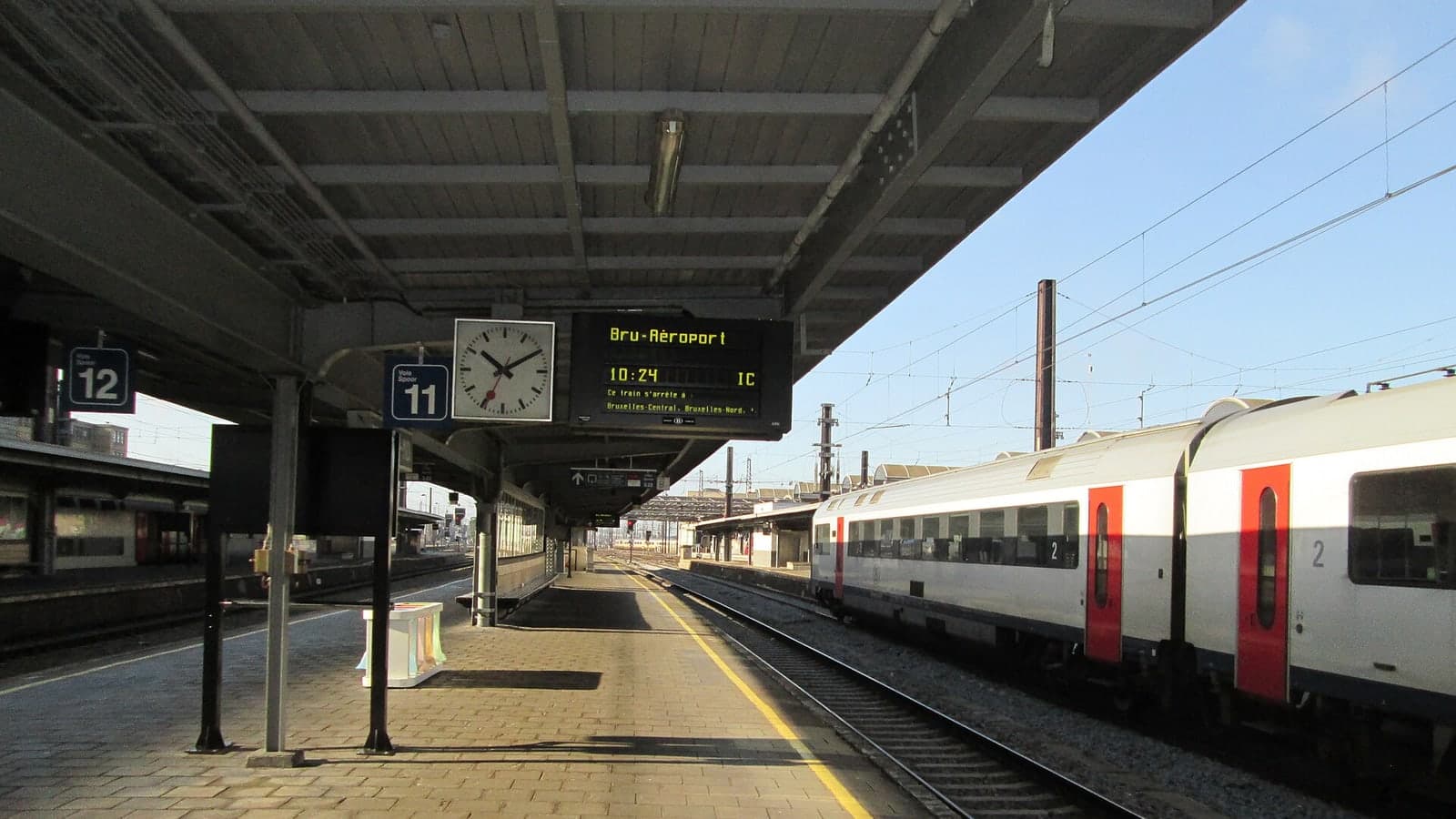
Can Brussels’ night-train revival survive a passenger’s journey from hell?
A passenger’s troubled European Sleeper journey from Bruxelles-Midi has renewed scrutiny of delays, ageing coaches and weak cross-border support just as the Belgian-Dutch operator expands its night-train network.
Night trains can only become a credible alternative to short-haul aviation if passengers can rely on the accommodation they booked, usable basic facilities, accurate information and effective help when several national rail systems fail to connect smoothly.
A passenger who boarded a European Sleeper night train at Bruxelles-Midi described a journey marred by operational and onboard problems, La DH reported on 18 August, adding a stark passenger account to concerns about the reliability of Europe’s revived sleeper network. The precise cause of every difficulty and the operator’s response to this individual complaint have not been independently established, but the episode comes amid other recent reports of long delays and defective onboard facilities.
For travellers based in Belgium, the stakes are unusually direct. Bruxelles-Midi is not merely a stop on someone else’s route: it is the operational hinge of European Sleeper’s services linking Belgium with the Netherlands, Germany, Czechia and France, with a Brussels–Zurich–Milan service scheduled to start on 9 September. SNCB International markets the company’s trains from Belgium and lists seated accommodation, couchettes and sleeping cars, although European Sleeper—not SNCB—operates the international service.
The reported misadventure therefore tests the promise at the heart of the night-train revival: passengers accept a longer journey than flying in exchange for sleeping through much of it and arriving in a city centre. That bargain weakens quickly when delays, equipment failures or poor information turn the night itself into lost time. European Sleeper’s published timetable puts the standard Bruxelles-Midi–Prague journey at roughly fifteen and a half hours, passing through Antwerp, Rotterdam, Amsterdam, Berlin and Dresden.
The company’s own disruption page shows how complicated that itinerary can become. During July and August 2026, engineering work removed regular stops at Berlin Hauptbahnhof and Berlin Ostbahnhof, replacing them with Berlin Gesundbrunnen. Several Dutch stops were also changed on specified dates, while some Paris–Berlin services used Paris-Est instead of Gare du Nord. European Sleeper says affected customers receive revised schedules, but its website displayed no exceptional current incident when checked for this article.
Passengers have nevertheless reported more than planned timetable changes. Recent customer reviews describe coaches without functioning air conditioning or electricity, unavailable toilets, downgrades and arrivals more than two hours late. Those accounts are individual testimony rather than audited performance data, and other travellers praise the staff, the social atmosphere and the convenience of reaching Berlin or Prague without flying. A 2024 Belgian review by GUIDO, for example, found basic but usable couchettes and a punctual outward journey, while noting old toilets and a delayed return.
European Sleeper’s perspective is that it is rebuilding an international product in a difficult market. The Belgian-Dutch cooperative operates without the large fleet available to historic state railways and must secure train paths across several national networks. It has continued expanding: after launching Brussels–Berlin in 2023 and extending to Prague, it restored a Paris–Brussels–Berlin connection in March 2026 and plans the direct Brussels–Milan service in September. SNCB International presents that growth as giving Belgian passengers direct overnight access to more European cities.
The passenger-rights perspective is less forgiving. Under Regulation (EU) 2021/782, a delay expected to exceed 60 minutes can trigger a choice between reimbursement and rerouting, as well as assistance such as refreshments and, where necessary and physically possible, accommodation. Compensation is normally 25% of the fare for a delay of one to two hours and 50% for two hours or more, subject to exceptions. Protection for missed connections is strongest when the journey is covered by a through-ticket; separate contracts can leave gaps.
That distinction has become a policy issue in Brussels’ EU institutions. The European Commission proposed stronger rules in May 2026 so that a single ticket spanning different operators would carry protection throughout the journey and could not simply be split into separate contracts. The proposal still has to pass through the EU legislative process, so it does not replace the rules currently in force.
No public response from Belgian Mobility Minister Jean-Luc Crucke or SNCB to this passenger’s specific account was identified. European Sleeper invites complaints by email and provides an emergency number on operating days; it also directs unresolved regulatory complaints to the Dutch enforcement authority. What happens next is partly personal—whether the traveller receives an explanation or compensation—but the larger test arrives on 9 September. Adding Milan will strengthen Brussels’ place on Europe’s night-train map. It will also make reliable coaches, clear information and credible disruption handling harder to treat as teething problems.
Impact
Regional — Brussels is a genuine operating hub in this story. Failures on services leaving Bruxelles-Midi affect Belgian residents, international visitors and onward passengers, while also shaping the reputation of Belgium’s main international railway station.
Local — Bruxelles-Midi’s role as Belgium’s principal international rail gateway makes the quality of these services relevant to the city’s accessibility and reputation, although the reported onboard problems concern an international operator rather than Brussels city services.
International — The service crosses Belgium, the Netherlands, Germany and Czechia, while European Sleeper’s other route links France, Belgium and Germany. Each journey depends on several infrastructure managers and national operating systems.
What it means for you
Passengers should check late timetable changes, confirm whether connections are covered by a through-ticket, retain receipts and disruption evidence, and submit qualifying reimbursement or compensation claims to the operator.
Opposing perspectives
- European Sleeper and rail-expansion advocates
European Sleeper presents overnight rail as a comfortable and lower-carbon way to connect European city centres. Its expansion from Brussels towards Prague, Paris and Milan shows both passenger demand and the possibility of rebuilding services that incumbent railways had withdrawn.
- Passengers seeking dependable consumer protection
Affected travellers judge the service by the accommodation, punctuality and assistance they actually receive. They argue that environmental appeal cannot excuse unusable facilities, unclear disruption information or weak remedies when a long international journey breaks down.
- European Commission passenger-rights framing
The Commission treats fragmented ticketing as a structural single-market problem. Its 2026 proposal would strengthen protection for journeys spanning several operators, shifting attention from one operator’s difficulties to the passenger’s complete trip.
Sources & evidence
- View sourceLa DH/Les Sports+Primaryprimary· dhnet.be· 18 August 2026Retrieved 18 August 2026· 45 days ago· Dated
- View sourceEuropean Sleeper disruption informationofficial· europeansleeper.euRetrieved 18 August 2026
- View sourceEuropean Sleeper timetableofficial· europeansleeper.euRetrieved 18 August 2026
- View sourceSNCB International — European Sleeperofficial· b-europe.comRetrieved 18 August 2026
Related topics
Related to this story
Pulse Insight — This topic connects to 10 associations and 1 funding programme through the Brussels ecosystem.
Live connections from the Belgium Impulse ecosystem — not recommendations.
This briefing was prepared with AI assistance and reviewed by a Belgium Impulse editor before publication. methodology.