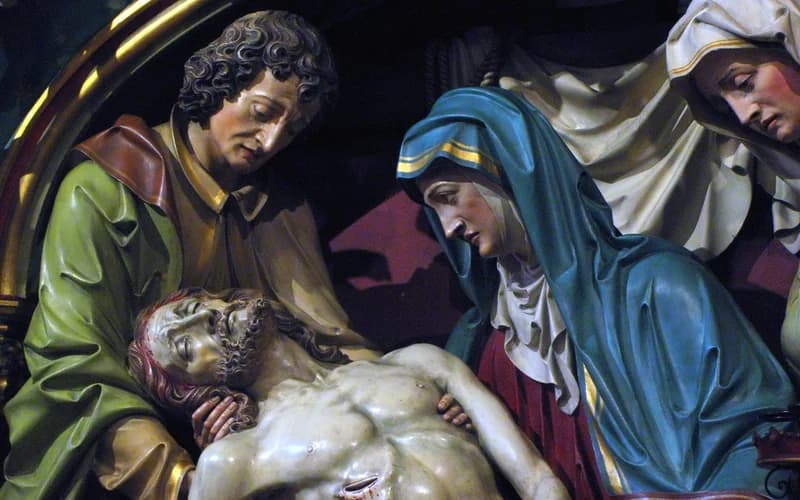
What does West Flanders’ youngest priest earn — and why does the Belgian state pay him?
Birger, the 34-year-old described by HLN as West Flanders’ youngest priest, has disclosed that his full-time ministry provides about €2,600 net a month, with another €100 to €200 from additional ceremonies. His account offers a rare look at Belgium’s constitutionally anchored system of publicly funded recognised religions.
The disclosure turns an abstract constitutional arrangement into a tangible household figure. Belgian taxpayers support recognised religious and non-confessional services, while West Flemish parishes face fewer priests, ageing congregations and consolidation across larger territories.
, the 34-year-old described by as the youngest priest in , disclosed in an interview published in August 2026 that he receives about €2,600 net a month for full-time ministry, supplemented by an average €100 to €200 for additional ceremonies such as weddings and funerals. He told the newspaper that he rents an apartment near rather than occupying the large presbytery traditionally made available to a parish priest.
For people in , the significant point is not the personal budget of one cleric but where his basic salary ultimately comes from. Under of the , the federal state pays the salaries and pensions of ministers of recognised religions. It also funds representatives of legally recognised non-confessional organisations. ’s earnings therefore illuminate a public arrangement spanning Catholic priests, ministers from other recognised faiths and organised secular humanism.
The explains that relations between the state and the Roman run through the archbishop of Mechelen-Brussels and ’s bishops. Religious authorities decide whom to appoint, while public authorities fund approved posts. That division reflects Belgium’s particular settlement between institutional autonomy and state support: the government does not employ priests in the ordinary civil-service sense or direct their religious work, but taxpayers finance the recognised position they occupy.
’s account also qualifies the familiar image of a parish priest living free of charge in a presbytery. He said he chose an ordinary rental apartment because such houses are often unnecessarily large for one person. The available reporting does not establish whether he receives a housing allowance or how rent and other personal expenses affect his disposable income. Nor does it provide a gross-pay calculation that can be compared directly with standard Belgian salary scales.
The extra money for additional celebrations is similarly modest but revealing. Weddings, funerals and other services can generate separate allowances, although presented the €100-to-€200 monthly amount as an average rather than a guaranteed supplement. It reflects work that remains socially visible even as regular Mass attendance and the number of active priests decline.
That tension is particularly clear in . reported in January 2025 that Lo-Reninge had ended Saturday Masses because attendance had become very low. Parish assistant Stefaan Pollet said the Diocese of Bruges had asked local communities to plan for fewer available priests, fewer worshippers and changing volunteer capacity. One central church would serve an area comprising 22 parish sites, illustrating how a shrinking clergy increasingly covers larger territories.
The longer trend predates ’s ordination. In figures reported by in 2018, had 2,274 publicly paid ministers of religion, including priests, deacons and trained lay workers. The same report described ageing religious communities and parish consolidation. Earlier federal figures likewise documented a sustained decline in the number of Catholic ministers filling funded posts. Birger’s relative youth is therefore not merely biographical colour; it points to an institution struggling with succession.
Two Belgian perspectives meet here. FPS Justice’s institutional defence is that recognised religions and secular humanist services answer a “societal need”, including worship, sacraments and spiritual assistance. Secular opponents of public religious funding instead question why a plural, less observant society should finance clergy through general taxation. ’s constitutional model answers that objection by distributing recognition and support across several belief systems, but it does not end the argument over fairness, cost or modern relevance.
No specific response to ’s disclosure from the federal justice minister, the Diocese of Bruges or ’s authorities was identified in the sources reviewed. The next questions are therefore structural: whether retains its present constitutional funding model, how funded posts are allocated as parishes merge, and whether younger priests such as Birger can sustain pastoral coverage across ever-larger areas. His payslip is the hook; the deeper story is how Belgium finances belief while organised Catholic life contracts.
Impact
Regional — West Flanders is already reorganising parish life around fewer clergy and worshippers. A young priest may consequently serve communities spread across several churches rather than one traditional parish.
Local — Around Roeselare and elsewhere in West Flanders, fewer priests and worshippers are changing how Catholic services are organised. A young priest may cover communities across several churches instead of serving one traditional parish. Consolidation can alter mass schedules, the location of weddings and funerals, and access to familiar local clergy. Birger’s decision to rent near Roeselare station also illustrates how contemporary ministry may differ from the traditional model of a priest living in a parish presbytery.
What it means for you
Belgian residents do not receive a separate bill for Birger’s salary: remuneration for approved clergy posts comes through the federal budget. His reported €2,600 net monthly income is an individual figure, not a universal salary scale, and his additional €100 to €200 reflects ceremonies he performs. West Flemish churchgoers and families arranging Catholic weddings or funerals should check their local parish’s current service locations and schedules, because clergy shortages can mean one priest serves several churches. Taxpayers can consult Federal Public Service Justice information to understand which recognised services receive public funding.
Opposing perspectives
- FPS Justice and defenders of the recognised-belief model
FPS Justice’s stated rationale is that recognised religions and organised non-confessional philosophy meet a societal need through worship, sacraments, moral services and spiritual assistance. From this perspective, public salaries support accessible community services while reducing dependence on private or foreign patrons.
- Secular taxpayers and advocates of stricter church-state separation
Secular opponents question whether general taxation should fund clergy in a society where regular religious participation has declined. They favour voluntary contributions or a clearer separation between public budgets and belief communities, while acknowledging that equivalent treatment must extend to every recognised worldview.
- West Flemish parish organisers
Local pastoral planners frame the issue less as an ideological dispute than as a capacity problem. Stefaan Pollet told VRT NWS that communities must account for available priests, worshippers and volunteers, making fewer services and larger shared pastoral areas increasingly likely.
Who, where and what
Key people, places and terms in this story
The Flemish province where Birger serves and where parishes face clergy shortages and consolidation.
The country whose federal system publicly funds approved posts for recognised religious and non-confessional services.
Belgium’s Dutch-speaking region, which includes West Flanders.
The 34-year-old Catholic priest described as West Flanders’ youngest priest who disclosed his income and living arrangements.
The West Flemish city near whose railway station Birger rents an apartment.
Show the full library (13)
The 34-year-old Catholic priest described as West Flanders’ youngest priest who disclosed his income and living arrangements.
The Flemish province where Birger serves and where parishes face clergy shortages and consolidation.
The country whose federal system publicly funds approved posts for recognised religious and non-confessional services.
Belgium’s Dutch-speaking region, which includes West Flanders.
The West Flemish city near whose railway station Birger rents an apartment.
The Dutch-language name for Flanders, used as an article tag.
The local landmark near Birger’s rented apartment.
The constitutional provision placing salaries and pensions of ministers of recognised religions on the federal budget.
The constitutional framework containing Article 181 and anchoring public remuneration of recognised religious ministers.
The Belgian news outlet that reported Birger’s account of his earnings.
The religious institution in which Birger serves as a priest.
The federal authority providing official information on recognised religions and organised non-confessional services.
The public-service news outlet whose reporting documents church figures, clergy shortages and parish consolidation.
Sources & evidence
- View sourceHLNPrimaryprimary· hln.be· 17 August 2026Retrieved 27 August 2026· 46 days ago· Dated
- View sourceFederal Public Service Justiceofficial· justitie.belgium.beRetrieved 27 August 2026
- View sourceVRT NWScorroborating· vrt.be· 4 January 2025Retrieved 27 August 2026· 636 days ago· Dated
- View sourceVRT NWSbackground· vrt.be· 20 November 2018Retrieved 27 August 2026· 2873 days ago· Background / context
Related topics
Related to this story
Pulse Insight — This topic connects to 10 associations and 2 funding programmes through the Flanders ecosystem.
Live connections from the Belgium Impulse ecosystem — not recommendations.
This briefing was prepared with AI assistance and reviewed by a Belgium Impulse editor before publication. methodology.