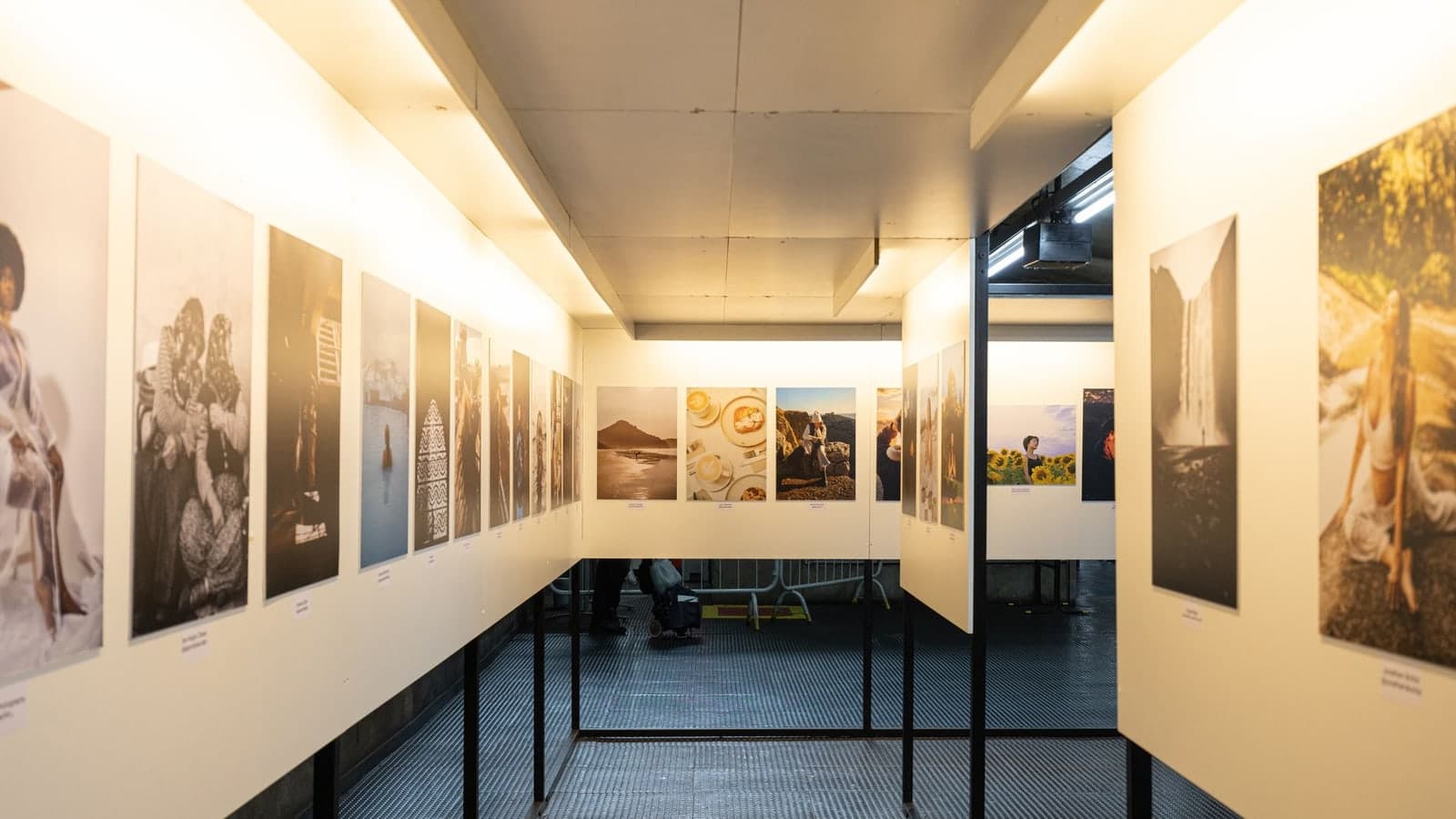
What can visitors expect from Marie-Paule Martin’s free exhibition in Beauraing?
Marie-Paule Martin is exhibiting oil paintings at the Office du Tourisme de Beauraing until 2 September 2026, with free admission daily from 08:30 to 12:00 and 13:00 to 17:00.
The free exhibition gives residents and visitors a low-barrier encounter with a regional artist while illustrating how smaller Walloon destinations use tourism offices as accessible cultural spaces. It can also anchor a day trip built around Beauraing’s walks, landscape and visitor services.
is showing her oil paintings at the from 21 August to 2 September 2026, and visitors can enter free of charge each day from 08:30 to 12:00 and from 13:00 to 17:00. The practical point is simple: go to Rue de Rochefort 38 in central , allow for the lunchtime closure, and contact the tourism office before travelling if you need language or accessibility assistance.
The exhibition presents a painter from whose work centres on colour, texture, light and spontaneous inspiration. In the artist’s account published by the Office du Tourisme, Martin says she studied at the and the École des Arts d’ and is continuing her training at the . She works in oils, a medium she values for its depth and richness of colour, and describes her paintings as moving between reverie and spontaneity.
That description offers visitors a useful way into the exhibition without prescribing what they should see. These are works intended to communicate through atmosphere and emotion rather than through a tightly documented narrative. No complete catalogue, number of works or sales information was published with the event announcement, so anyone interested in buying a painting or discussing a particular piece should ask the tourism office or the artist rather than assume that every work is available.
## How to plan a visit
The Office du Tourisme is at Rue de Rochefort 38, 5570 . Beauraing’s municipal directory lists the telephone number as +32 (0)82 71 11 40 and identifies the same weekday hours as the exhibition notice. The official exhibition page nevertheless says the paintings are visible every day during the stated period. Because municipal information notes that weekend and public-holiday opening can depend on the high season, visitors making a special weekend journey would be wise to telephone first.
The exhibition is inside a working tourist-information office rather than a conventional museum. That makes it easy to combine a short cultural visit with practical planning: ’s official tourism portal says the office supplies local and regional information, walking and road maps, postcards and souvenirs, and also offers bicycle rentals. The same portal identifies the venue as having officially recognised Access-i facilities or activities, but visitors with a specific mobility, visual, hearing or cognitive requirement should consult the detailed Access-i information or call ahead; a general certification is not a guarantee that every individual need can be met in precisely the same way.
French is the principal administrative and visitor language in this Walloon commune. lists French as the office’s reception language, while the tourism office publishes parts of its online agenda in French, Dutch and English. Dutch-speaking or English-speaking visitors can therefore consult translated event listings, but should not assume that multilingual assistance will always be available at the desk. A short written question, a translation app or an advance email to [email protected] may help. In Dutch municipal terminology, an office du tourisme is broadly comparable to a toerismekantoor or VVV-kantoor; itself officially operates in French.
## More than wall decoration
Hosting Martin’s paintings at the tourism office continues an established local practice. ’s municipal publications have previously advertised rotating displays by regional artists in the same premises, generally with free admission during office hours. The format gives artists an approachable public setting and allows visitors who came for maps or travel advice to encounter local creative work without buying a museum ticket.
There is an inevitable trade-off. A tourism office offers visibility and informality, but it cannot necessarily provide the curatorial interpretation, controlled lighting or uninterrupted viewing environment of a dedicated gallery. For a small city, however, the dual use of public-facing space lowers the threshold between everyday services and cultural participation. Martin explicitly presents exhibiting as an opportunity to share her enjoyment of painting and meet the public, which suits that setting particularly well.
The wider destination adds another layer. places in , near Dinant, and highlights its countryside, forests, viewpoints, parks and sanctuary. The city also lies within the UNESCO Global Geopark Famenne-Ardenne. None of that should overshadow the paintings: this is first a compact local art exhibition. Yet it explains why a tourist office can function as a useful cultural doorway for residents, expatriates exploring and travellers passing through .
Visitors need no registration or Belgian administrative form for the exhibition, and the organiser has announced no admission charge. The most sensible itinerary is to arrive outside the 12:00–13:00 closure, view the works, then ask the office about a walk, cycle route or another event in the commune. After Martin’s exhibition closes on 2 September, the tourism office’s published agenda moves on to other local activities and later exhibitions. What remains unknown is whether Martin’s show will travel elsewhere or whether any related artist meeting will be added; the official agenda and the Office du Tourisme remain the best places to check.
Impact
Regional — The exhibition adds a small, free cultural attraction to Beauraing’s late-summer programme and gives a regional artist exposure in a public-facing venue used by residents and tourists.
Local — For Beauraing, the exhibition adds a free indoor cultural stop to the commune’s late-summer programme and brings visitors into the local tourism office. That gives Marie-Paule Martin public exposure in a venue serving both residents and tourists while allowing visitors to combine the show with information about walks, landscapes and other activities nearby. The impact is limited in scale and duration: the exhibition closes on 2 September 2026 and is available only during the office’s published daytime hours.
What it means for you
Visitors can see the exhibition free of charge through 2 September 2026 at the Office du Tourisme, Rue de Rochefort 38, 5570 Beauraing. Published opening periods are 08:30–12:00 and 13:00–17:00 daily, so avoid arriving during the midday closure and allow for the final admission date. French is the listed reception language, although tourism agendas are available online in Dutch and English. No advance ticket or admission budget is indicated. Anyone travelling from Brussels or elsewhere should check the tourism office’s latest notice before departure.
Opposing perspectives
- Artists and local cultural organisers
A free display in a busy tourism office can introduce regional art to people who might not enter a formal gallery, while giving an artist direct contact with residents and visitors in an approachable public setting.
- Visitors seeking a museum-style experience
A working information office may offer less interpretation, quieter viewing space and curatorial infrastructure than a gallery or museum. Visitors should approach this as an informal exhibition integrated into a visitor-service venue.
Who, where and what
Key people, places and terms in this story
Belgian region containing Beauraing and the exhibition venue.
Brussels municipality associated with one of Martin’s cited art schools.
Province in which Beauraing is located.
Ardennes-born oil painter whose work is featured in the exhibition.
Walloon municipality in Namur province hosting the exhibition.
Show the full library (15)
Ardennes-born oil painter whose work is featured in the exhibition.
Walloon municipality in Namur province hosting the exhibition.
Belgian region containing Beauraing and the exhibition venue.
Province in which Beauraing is located.
Brussels municipality associated with one of Martin’s cited art schools.
Region identified as Marie-Paule Martin’s place of origin and part of the exhibition’s regional framing.
Walloon city associated with Martin’s continuing art studies.
Free oil-painting exhibition running in Beauraing from 21 August to 2 September 2026.
Local tourism office hosting the free exhibition and providing visitor services.
Municipal authority whose directory lists the tourism office.
Walloon tourism platform listing the Office du Tourisme de Beauraing.
News outlet reporting on Marie-Paule Martin’s exhibition.
Namur arts institution cited in Martin’s published educational biography.
Ixelles arts school cited in Martin’s published educational biography.
Huy arts institution where Martin’s biography says she continued her studies.
Sources & evidence
- View sourceLa DH Les Sports+Primaryprimary· dhnet.be· 23 August 2026Retrieved 26 August 2026· 40 days ago· Dated
- View sourceOffice du Tourisme de Beauraing — exhibition noticeofficial· beauraingtourisme.beRetrieved 26 August 2026
- View sourceVille de Beauraing — Office du Tourisme directoryofficial· beauraing.beRetrieved 26 August 2026
- View sourceVISITWallonia — Office du Tourisme de Beauraingofficial· visitwallonia.beRetrieved 26 August 2026
Related topics
Related to this story
Pulse Insight — This topic connects to 10 associations and 3 funding programmes through the Wallonia ecosystem.
Live connections from the Belgium Impulse ecosystem — not recommendations.
This briefing was prepared with AI assistance and reviewed by a Belgium Impulse editor before publication. methodology.