Must you now book ahead to visit Europe’s most popular natural sites?
For the 2026 summer season, the Calanques National Park and Île-de-Bréhat are again controlling access to vulnerable French beauty spots through free bookings or transport quotas. Travellers should check the site operator—not merely a map or travel platform—before setting out.
Travellers can arrive at a trailhead or ferry terminal and be refused even when the wider park or island remains open. Checking official access rules before paying for transport or accommodation prevents wasted journeys, while respecting quotas helps reduce erosion, congestion and pressure on residents.
For the 2026 summer season, managers of the Calanque de near Marseille and the municipality of Île-de-Bréhat in Brittany have again limited peak-period access, making advance planning part of a day in nature. The practical takeaway is simple: before visiting a celebrated beach, island or trail, find the official operator’s website, check whether a dated booking or ferry ticket is required, and look again shortly before departure for fire, weather or conservation closures.
## What must visitors reserve?
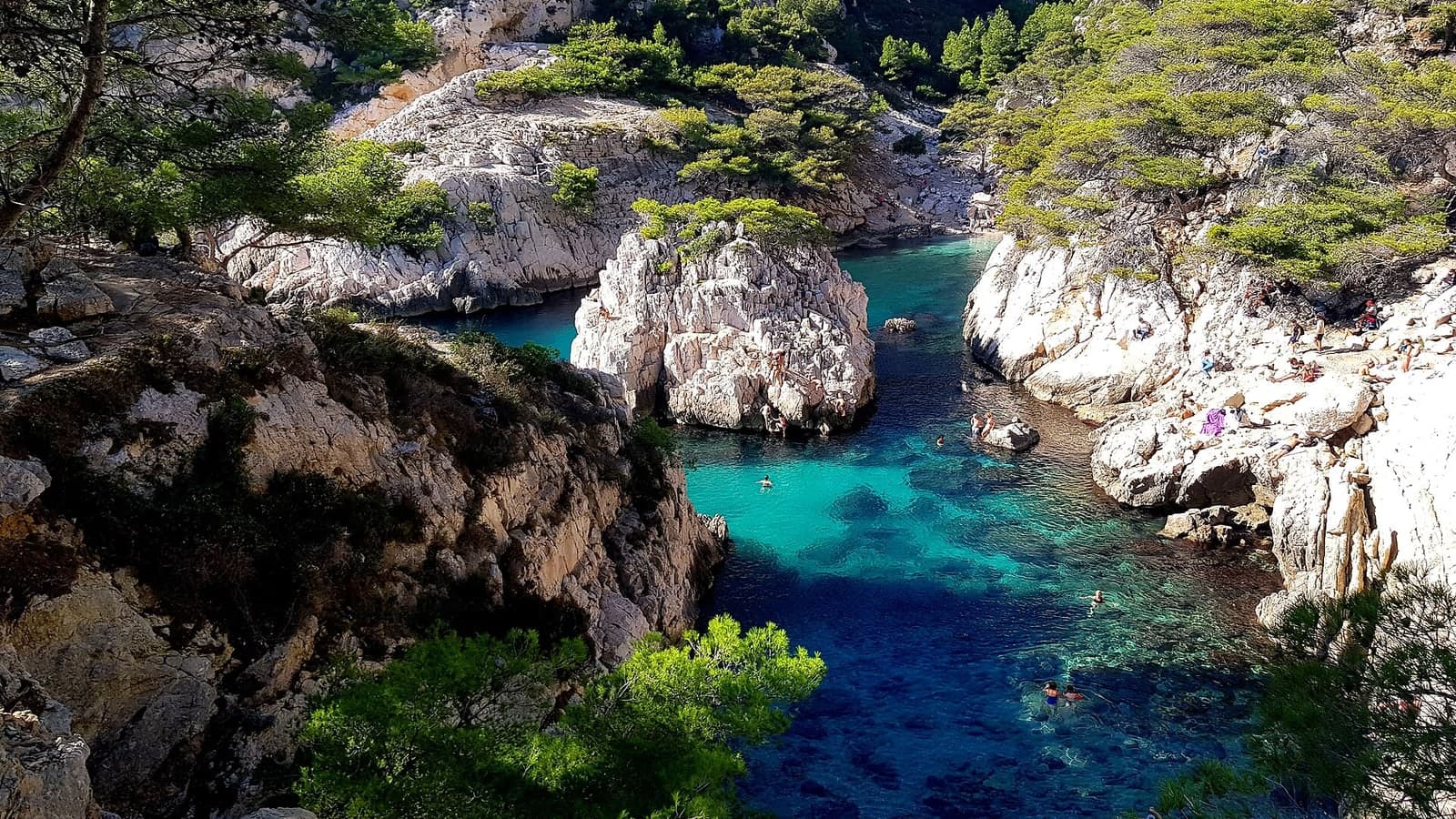
At and the neighbouring Pierres Tombées, the Parc national des Calanques requires a free reservation on selected weekends and throughout the busiest part of summer 2026. According to the park’s official timetable, controlled access applies on 20 and 21 June, daily from 27 June to 30 August, and on the weekends of 5–6 and 12–13 September.
Bookings open at 09:00 three days before a visit and close at 18:00 on the preceding day, subject to availability. One booking may cover up to five people, while children under three do not require one. The confirmation email must be presented on arrival. The park also limits how many times one person may book during the controlled season.
The system is not a tourist surcharge. It is a free access permit intended to reduce trampling and soil erosion at a small, steep cove where the park says summer attendance has previously reached about 2,500 people a day. Repeated footfall displaces soil towards the beach, exposes mature pine roots and prevents young plants from establishing. The experiment began in 2022 and has been extended through 2027 while scientists monitor whether the habitat recovers.
A reservation does not override safety restrictions. During high fire danger, the authorities can close the forest massif and cancel every permit for that day. The Parc national des Calanques advises visitors to consult its website or the Mes Calanques application from 18:00 on the evening before their walk. Anyone travelling from Belgium should therefore avoid building a non-refundable itinerary around access to one cove.
Bréhat uses a different mechanism. The island remains inhabited and open throughout the year, but its commune caps peak visitor flows by controlling passenger transport. The official tourism service says the 2026 management period runs from 27 July to 21 August; ferry operator describes a maximum of 4,700 day visitors from 28 July to 22 August. The slight difference in published dates is a reason to verify the applicable ferry and municipal rules when booking rather than relying on a secondary travel article.
In practice, day-trippers should reserve a return crossing from Pointe de l’Arcouest. The transport companies must operate within the island’s quota, so a ferry reservation is the most reliable way to secure access. Residents, workers and certain public services have historically been treated separately from ordinary excursionists under the municipal system.
## Why is nature becoming bookable?
These measures transfer a familiar museum practice to landscapes whose capacity is physical rather than architectural. A narrow path, eroding cove or small island cannot absorb unlimited numbers merely because entry has traditionally been open. Social-media visibility, concentrated holiday dates and easy day-trip transport can send thousands of people to the same viewpoint within a few hours.
The Calanques park’s 2022 activity report illustrates both the effectiveness and limits of rationing. It recorded 400 reservation places per controlled day, often claimed in less than an hour, while an average of about 250 booked visitors actually attended. The result was lower pressure on the site, but unused permits also show the fairness problem: free reservations can be hoarded by people who later change their plans.
Site managers and conservation bodies argue that quotas protect habitats while preserving some public access. Many travellers also gain a quieter and safer experience. By contrast, spontaneous visitors and tourism businesses may see reservation systems as a barrier to landscapes that were previously accessible without administration. People with flexible working hours, fast internet access or familiarity with the local language can also have an advantage when scarce slots open.
That tension explains why there is no single European model. controls entry to a tightly defined shore zone; Bréhat regulates the ferries that deliver most day visitors. Other places may close paths temporarily, restrict cars, require guided access or redirect visitors rather than introduce individual permits. The important distinction is between a booking platform designed for convenience and an access authorisation imposed for conservation or safety.
## A Belgian traveller’s three-step check
First, identify the competent authority. In that may be a parc national, mairie or commune; in Belgium it may be a commune in French, a gemeente in Dutch, or a regional nature administration. Search for the destination’s official domain and avoid assuming that a listing on Google Maps, AllTrails or a hotel platform confirms access.
Second, read the conditions in the original language when possible. provides an English version, but operational alerts may first appear in French. Belgian visitors accustomed to Dutch-language municipal information should look for terms such as réservation obligatoire, accès réglementé, fermeture, risque incendie and quota. Save the confirmation offline because mobile coverage can be weak in natural areas.
Third, recheck conditions the evening before departure. Belgium’s advises Belgian travellers to carry a valid identity card or passport for and notes that mobile coverage can be unreliable outside urban areas. Its France travel page is useful for general preparation, but it does not replace instructions issued by a park or municipality.
Belgium is not yet applying one nationwide reservation model to natural areas. Access rules are regional and site-specific. In , the Service public de Wallonie and its Département de la Nature et des Forêts can restrict parts of the reserve for conservation or safety. Walloon rules divide routes into access categories, and temporary closures may also be announced through official environmental portals and signs on the ground. Visitors should therefore consult Wallonia’s environmental portal or rather than asking only the local commune/gemeente.
The reservation trend is likely to remain selective rather than universal. At , monitoring continues through the current five-year arrangement ending in 2027. Bréhat and the Brittany Region are meanwhile gathering experience that can inform future transport arrangements. The next questions are whether ecological recovery can be measured, whether no-shows can be reduced, and whether access remains fair for residents, late planners and people who struggle with digital systems. For travellers, the durable lesson is that a free landscape may still require a ticket—and that the official access page now belongs beside weather and transport checks in every trip plan.
Impact
Regional — For Wallonia, the comparison is instructive rather than a direct policy change. The SPW already uses mapped access categories and temporary restrictions in the Hautes Fagnes, demonstrating that Belgian nature access can also change according to conservation and safety conditions.
Local — The Hautes Fagnes provide the closest Walloon comparison, although the French measures do not change Belgian rules. Visitors there must follow site-specific mapped access categories and any temporary restrictions imposed for conservation or safety. A reservation displayed on a general tourism platform does not replace checking current SPW rules. People planning walks in this protected area should therefore verify official access conditions shortly before departure, particularly when circumstances could trigger temporary limits.
International — This is a practical cross-border travel issue for Belgium-based visitors heading to France, not an EU-wide access policy. The Calanques and Bréhat systems are set locally and differ in how they control attendance. Belgian travellers should consult each official destination operator alongside FPS Foreign Affairs travel information for France. A booking for accommodation, rail travel or a ferry connection does not itself guarantee access to a controlled natural zone, and no common European reservation system applies.
What it means for you
If visiting Sugiton on controlled dates, request the free permit from 09:00 three days before the visit and no later than 18:00 the previous day. The 2026 controls cover 27 June to 30 August plus selected weekends in June and September. Recheck fire-risk notices because a closure can invalidate the booking. For Île-de-Bréhat in late July or August, check the official ferry and visitor-management information before paying for onward travel; the published ceiling is 4,700 day visitors. For Walloon trips, consult current SPW site rules rather than assuming French procedures apply.
Opposing perspectives
- Protected-area managers and conservation bodies
Managers present advance permits and quotas as targeted tools that keep some access possible while reducing trampling, erosion, congestion and pressure on small infrastructures. They can also collect attendance data and create calmer visiting conditions.
- Spontaneous visitors and outdoor-access advocates
Visitors who value unplanned access may regard digital permits as an administrative barrier to nature. Scarce slots can favour people with flexible schedules, reliable internet and knowledge of the booking language, while no-shows leave nominal capacity unused.
- Tourism operators and island businesses
Operators may benefit from predictable flows and a better visitor experience, but hard limits can constrain peak-day revenue and complicate transport. Bréhat’s model makes ferry companies central to enforcement, giving timetable and ticket availability unusual importance.
Who, where and what
Key people, places and terms in this story
Destination country containing both controlled natural sites discussed in the article.
Belgian region used as a comparison for regional and site-specific nature-access rules.
Walloon protected area where access may vary according to conservation and safety conditions.
Natural zone in Calanques National Park requiring free personal reservations on specified 2026 dates.
French island managing peak-season day-trip attendance largely through ferry capacity.
Show the full library (11)
Natural zone in Calanques National Park requiring free personal reservations on specified 2026 dates.
French island managing peak-season day-trip attendance largely through ferry capacity.
Destination country containing both controlled natural sites discussed in the article.
Belgian region used as a comparison for regional and site-specific nature-access rules.
Walloon protected area where access may vary according to conservation and safety conditions.
French national park operating the free reservation system for controlled access to Sugiton.
Walloon public administration responsible for mapped access categories and temporary restrictions at regional nature sites.
Belgian federal authority publishing practical travel information for France.
Official Walloon legal database hosting the circulation rules applicable to the Hautes Fagnes.
Walloon tourism service providing an online portal for booking stays and tourism activities.
Official practical-information source for transport and visitor management on Île-de-Bréhat.
Sources & evidence
- View sourceSoSoirPrimaryprimary· sosoir.lesoir.beRetrieved 31 August 2026
- View sourceParc national des Calanques — Réservation Sugitonofficial· calanques-parcnational.frRetrieved 31 August 2026
- View sourceParc national des Calanques — 2022 activity reportofficial· calanques-parcnational.frRetrieved 31 August 2026
- View sourceSur Mer Bréhat — Practical informationcorroborating· surmerbrehat.comRetrieved 31 August 2026
Related topics
Related to this story
Live connections from the Belgium Impulse ecosystem — not recommendations.
This briefing was prepared with AI assistance and reviewed by a Belgium Impulse editor before publication. methodology.