What do Excelsior’s four European medallists reveal about Brussels athletics?
The City of Brussels scheduled a public reception at City Hall on 26 August for four Royal Excelsior athletes who won one silver and three bronze medals for Belgium at the European Athletics Championships in Birmingham.
All four Belgian medals at the European Championships were connected to one Brussels club, highlighting how local facilities, coaching and volunteer structures can produce results at continental level while raising questions about access to elite selection.
The scheduled a public reception at City Hall on Wednesday, 26 August, for four Royal Excelsior Sports Club athletes who returned from the European Athletics Championships in with one silver and three bronze medals for . The gathering was announced for 17:00 in the Gothic Hall and opened to supporters, although no official post-event account confirming attendance or proceedings was publicly available when this article was prepared.
The four athletes cover an unusually broad stretch of the sport. won silver in the women’s triple jump, took bronze over 100 metres, earned bronze in the 10,000 metres, and received bronze as part of ’s men’s 4x100-metre relay team. All belong to Excelsior, which trains at the on the .
That concentration matters more than the ceremonial setting. finished the championships with four medals in total, meaning every Belgian medallist was connected to the same club. For residents, athletes and families in the capital, the result offers a visible example of how municipal facilities, club coaching and volunteer work can feed into elite European competition. It also gives the city a sporting identity distinct from Brussels’ better-known role as Belgium’s capital and the seat of major EU institutions.
Florence Frelinx, the ’ first alderwoman responsible for sport, described one silver and three bronzes from athletes of a city-based club as “exceptional” and “an immense source of pride”. In the city’s framing, the honours belong not only to the competitors but also to Excelsior’s coaches, volunteers and administrators. BRUZZ reported that Frelinx’s office confirmed the reception and invited the wider athletics public to attend.
The performances themselves justify the attention. ’s official Belgian results list records Nkansa’s bronze-medal time as a personal best of 11.06 seconds. The Memorial Van Damme organisers note that this left her only two hundredths of a second short of Kim Gevaert’s Belgian record and made her ’s first European 100-metre medallist since Gevaert won gold in 2006. Nkansa is due to return to the same for the Diamond League final in early September.
Guisse produced the championship’s sharpest institutional subplot. ’ original selection process did not include her, according to Belgian reporting, before an expanded team brought her to . She then jumped 14.46 metres in the final and won silver. The result supports the federation’s eventual decision, but it also reopens a legitimate debate about qualifying standards: strict criteria control costs and demand consistency, while a broader selection can give late-developing athletes the chance to outperform rankings and forecasts.
Van Lent’s bronze over 10,000 metres showed a different route to the podium, built around endurance rather than explosive speed, while Kasmi’s relay medal underlined the collective precision required in the 4x100 metres. Together, the four results make Excelsior’s achievement more than a cluster produced by one specialist training group. The club also entered the summer as four-time defending champion of ’s Super League interclub competition, according to BX1.
The broader European picture remains sporting rather than institutional. brought together national teams from across Europe under European Athletics; the European Union itself neither organises the championships nor selects ’s team. enters the story as a municipality supporting a local club, not as shorthand for the EU. The reception nevertheless illustrates how international results are converted into local recognition, public role models and arguments for sustained grassroots investment.
Two readings can therefore coexist. City officials understandably present the medals as proof of a successful sporting community. Athletes and observers focused on Guisse’s late inclusion may instead see evidence that selection systems can miss competitive potential. The next tests will come quickly: the medallists’ performances at subsequent meetings, the debate over Belgian selection policy, and whether Excelsior can turn one exceptional championship into lasting participation and development at Heysel.
Impact
Regional — The result strengthens Excelsior’s position in Brussels sport and gives the City a concrete case for promoting athletics and supporting club infrastructure at Heysel.
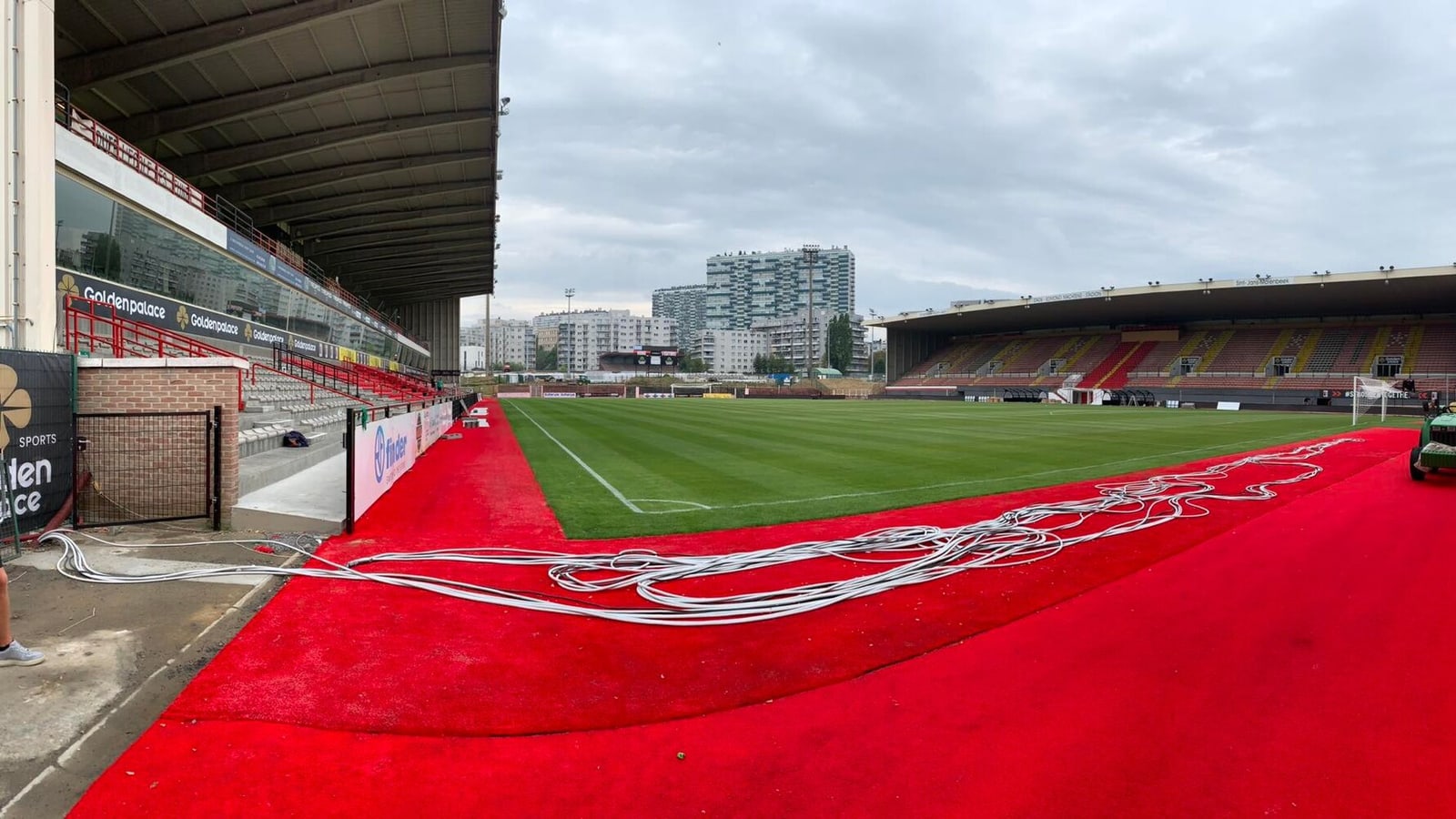
Local — The results give the City of Brussels and Royal Excelsior a prominent local example of elite performance emerging from the athletics infrastructure around the King Baudouin Stadium on the Heysel plateau. The City scheduled a reception at Brussels City Hall on 26 August 2026 to recognise the four athletes. For local clubs, coaches and prospective athletes, the medal haul increases Excelsior’s visibility across sprinting, distance running, jumping and relay competition, although the article provides no new municipal funding or facility commitment.
International — The medals were earned while representing Belgium at the European Athletics Championships in Birmingham, giving the story a clear cross-border sporting dimension. The four Excelsior athletes competed against leading European opposition in individual and relay events, with Belgium recording one silver and three bronze medals. The result strengthens the international profile of a Brussels-based club, but the article identifies no consequence for EU institutions, European policy or cross-border funding beyond elite European competition.
What it means for you
The City Hall reception was scheduled for 26 August 2026, so readers looking for photographs, speeches or confirmation that it took place should check subsequent City of Brussels or local-media updates. Anyone interested in joining or following the club can use Royal Excelsior’s base at the King Baudouin Stadium as the relevant local reference point. Athletics followers can also track the athletes through Belgian federation competition information. The supplied article gives no admission arrangements, ticket price or access details for the reception, so readers should not assume public entry without confirmation.
Opposing perspectives
- City of Brussels and Excelsior community
Florence Frelinx and the City frame the four medals as a collective Brussels achievement, crediting not only the athletes but also the coaches, volunteers and administrators sustained by a city-supported club structure.
- Athletes questioning restrictive selection
The circumstances of Saliyya Guisse’s late inclusion support a different emphasis: selection criteria and budget discipline may exclude athletes capable of outperforming forecasts. Her silver medal gives that constituency a concrete argument for greater flexibility.
Who, where and what
Key people, places and terms in this story
City where Royal Excelsior is based and the athletes were due to be honoured.
Country represented by the four medallists.
Excelsior athlete who won European triple-jump silver with 14.46 metres.
Excelsior sprinter who won 100-metre bronze in a personal-best 11.06 seconds.
Excelsior distance runner who won bronze in the women’s 10,000 metres.
Show the full library (15)
Excelsior athlete who won European triple-jump silver with 14.46 metres.
Excelsior sprinter who won 100-metre bronze in a personal-best 11.06 seconds.
Excelsior distance runner who won bronze in the women’s 10,000 metres.
Excelsior athlete who earned bronze with Belgium’s men’s 4x100-metre relay team.
City where Royal Excelsior is based and the athletes were due to be honoured.
Country represented by the four medallists.
Venue selected for the 26 August 2026 reception.
Stadium serving as Royal Excelsior’s base.
Brussels area where the King Baudouin Stadium and Excelsior’s base are located.
Host city of the 2026 European Athletics Championships.
Continental championship at which the four Excelsior athletes won medals for Belgium.
Brussels athletics club to which all four Belgian medallists belong.
Municipal authority that scheduled the reception for the four medallists.
Belgian athletics body associated with national selection criteria and championship participation.
Flemish athletics federation providing championship information.
Sources & evidence
- View sourceBX1Primaryprimary· bx1.be· 21 August 2026Retrieved 26 August 2026· 42 days ago· Dated
- View sourceBRUZZcorroborating· bruzz.be· 23 August 2026Retrieved 26 August 2026· 40 days ago· Dated
- View sourceAtletiek Vlaanderenofficial· atletiek.be· 10 August 2026Retrieved 26 August 2026· 53 days ago· Dated
- View sourceLigue Belge Francophone d’Athlétismeofficial· lbfa.be· 30 July 2026Retrieved 26 August 2026· 64 days ago· Dated
Related topics
Related to this story
Pulse Insight — This topic connects to 10 associations and 1 funding programme through the Brussels ecosystem.
Live connections from the Belgium Impulse ecosystem — not recommendations.
This briefing was prepared with AI assistance and reviewed by a Belgium Impulse editor before publication. methodology.