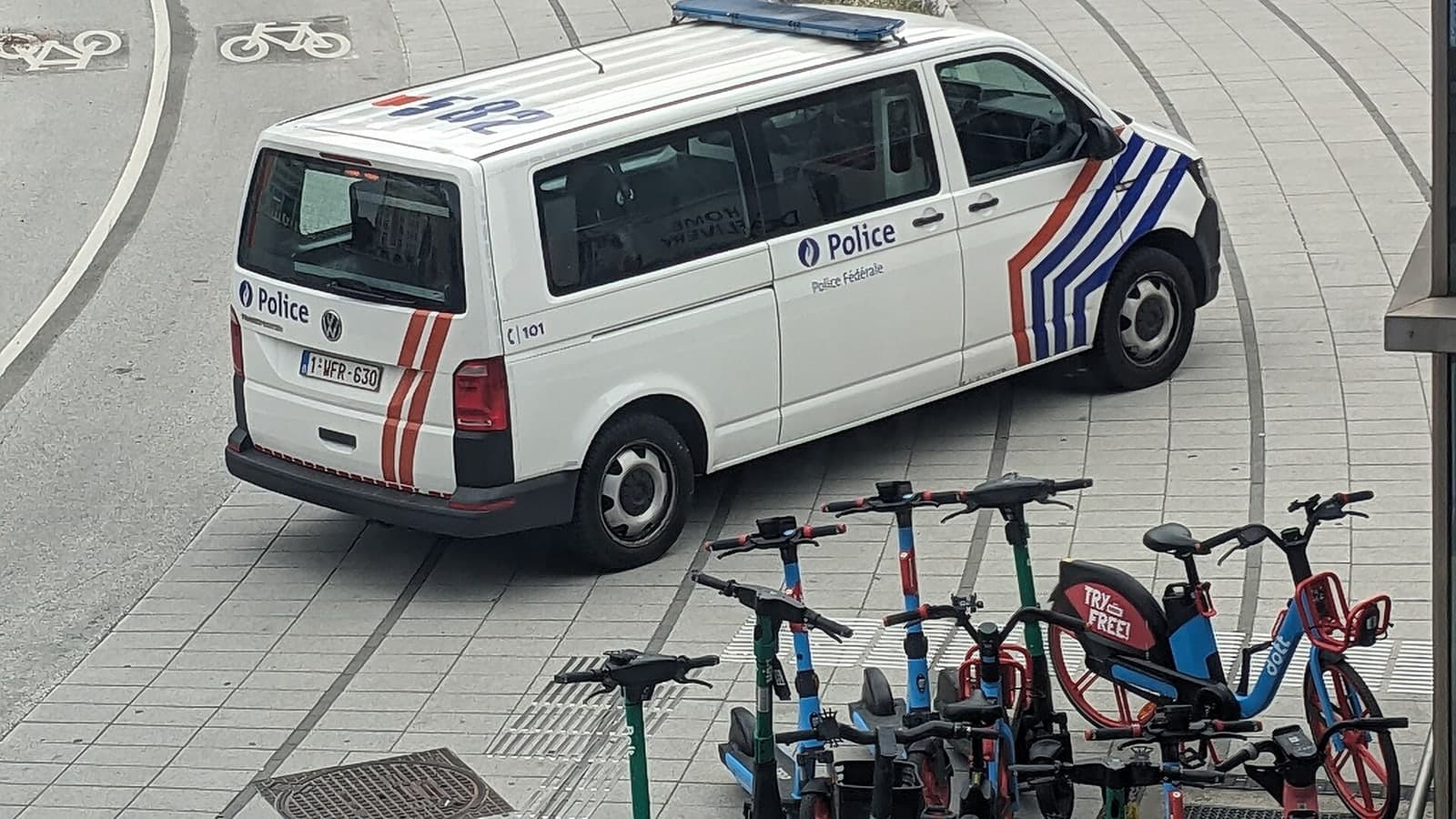
Brussels deploys 50 extra officers under unified command after drug-related shootings
Belgian authorities have placed Brussels’ six police zones under unified operational command and deployed about 50 additional federal officers after a series of shootings linked by officials to the drug trade.
Residents, workers and visitors in affected neighbourhoods face an immediate public-safety threat. The response also tests whether Brussels’ fragmented police structure can coordinate effectively before the six zones formally merge in 2028.
Updated 26 August 2026 at 17:30 CEST — . Belgian Interior Minister announced on Wednesday that an additional federal police platoon of about 50 officers will deploy in Brussels, while the capital’s mayors placed all six local police zones under a single operational command. BX1 reported that the measures took immediate effect following several days of shootings and an attack on a police station.
The reinforced deployment will concentrate on identified hotspots, particularly during evenings and nights. According to BX1, federal special units will increase their presence, integrated anti-drug operations known as FIPA actions will continue, and the federal judicial police will receive further structural reinforcement. The exact number and deployment date of the additional investigators have not yet been published.
The mayors also ordered the capital’s 170 Special Assistance Unit operators to work under the unified “Gold” command. BX1 reported that dispatch services from the six zones will be brought together at and that the ARGOS video-surveillance and number-plate recognition service is to gain round-the-clock capacity. The decisions precede the planned merger of in 2028, previously reported by BRUZZ.
The intervention follows a sequence of shootings in , and Molenbeek. The Times, citing Belga, counted six incidents within several days, including gunfire in Saint-Gilles on three consecutive days. Quintin described the situation as a “national emergency”, saying the use of military-grade weapons and the targeting of a police station required authorities to mobilise additional resources.
One day earlier, the mayors of , and had demanded a federal action plan. BRUZZ reported that Jean Spinette, Fabrice Cumps and Charles Spapens left Tuesday’s meeting with Quintin without a firm promise of new resources. Wednesday’s deployment provides an immediate policing response, although the mayors continue to seek more capacity for the federal judicial police to dismantle the networks behind the violence.
Justice Minister said organised drug crime crosses administrative boundaries and requires policing, prosecution, prevention and stronger neighbourhood services. The regional security council convened by Minister-President Boris Dilliès was due to assess the response on Wednesday evening. Its decisions, the duration of the extra deployment and measurable operational targets remain outstanding.
Impact
Regional — The strongest operational impact falls on Saint-Gilles, Anderlecht, Forest and other identified hotspots, where residents will see more evening and night patrols and a greater concentration of specialised units.
Local — Saint-Gilles, Anderlecht, Forest and other identified hotspots will receive the most visible operational reinforcement. Residents and late-night workers can expect more evening and night patrols, with specialised units concentrated where the shootings and drug-related risks are considered most acute. Consolidating dispatching at safe.brussels is intended to improve coordination across commune and police-zone boundaries. The reinforcement is temporary, but authorities have not said when it will end, so the duration of the increased police presence remains uncertain.
What it means for you
People living, working or travelling at night in Saint-Gilles, Anderlecht, Forest and other affected areas should expect a heavier police presence and possible local operational disruption during interventions. In an immediate emergency or if gunfire is heard, call 112 and follow police instructions rather than approaching the scene. The measures do not introduce a new charge, permit requirement or legal obligation for residents. No end date has been announced for the roughly 50-officer reinforcement. The next structural date to watch is 2028, when the six-zone police merger is planned to take effect.
Opposing perspectives
- Federal government position
Interior Minister Bernard Quintin says federal authorities have already reinforced Brussels and that the renewed violence shows police pressure on drug networks must continue. He argues that federal, regional and local authorities must all use their existing powers.
- Southern Brussels mayors
The mayors of Saint-Gilles, Anderlecht and Forest say the scale of the violence exceeds the capacity of individual municipalities. They want a national plan and lasting reinforcement for local police, federal investigators, prosecutors and related services.
- Justice and prevention approach
Justice Minister Annelies Verlinden says policing and prosecution are essential but insufficient on their own. Her stated approach also requires prevention, education, social support, administrative enforcement and action against criminal recruitment.
Who, where and what
Key people, places and terms in this story
Official controlling the federal reinforcement deployed to Brussels.
Justice minister whose office issued an official response concerning the recent shootings and continuing drug violence in Brussels.
Belgian capital where the shootings occurred and the coordinated police operation is being deployed.
Brussels commune identified as one of the hotspots receiving concentrated policing.
Brussels commune identified as one of the hotspots receiving concentrated policing.
Show the full library (14)
Official controlling the federal reinforcement deployed to Brussels.
Justice minister whose office issued an official response concerning the recent shootings and continuing drug violence in Brussels.
Belgian capital where the shootings occurred and the coordinated police operation is being deployed.
Brussels commune identified as one of the hotspots receiving concentrated policing.
Brussels commune identified as one of the hotspots receiving concentrated policing.
Brussels commune identified as one of the hotspots receiving concentrated policing.
Unified strategic command structure established for the police response.
Planned 2028 reform that will formally combine the six existing police zones.
Authorities implementing the coordinated response to the shooting wave.
Separate local police organisations placed under one Gold operational command for the response.
Police service providing an additional platoon of about 50 officers.
Local political authorities directing the capital’s six police zones.
Brussels regional security body supporting coordination, information sharing and consolidated dispatching.
Brussels specialist police units whose 170 operators will come under the unified command.
Sources & evidence
- View sourceBX1Primaryprimary· bx1.be· 26 August 2026Retrieved 26 August 2026· 37 days ago· Dated
- View sourceBRUZZcorroborating· bruzz.be· 25 August 2026Retrieved 26 August 2026· 38 days ago· Dated
- View sourceThe Brussels Timescorroborating· brusselstimes.com· 25 August 2026Retrieved 26 August 2026· 38 days ago· Dated
- View sourceOffice of Justice Minister Annelies Verlindenofficial· verlinden.belgium.be· 23 August 2026Retrieved 26 August 2026· 40 days ago· Dated
Related topics
Related to this story
Pulse Insight — This topic connects to 10 associations and 1 funding programme through the Brussels ecosystem.
Live connections from the Belgium Impulse ecosystem — not recommendations.
This briefing was prepared with AI assistance and reviewed by a Belgium Impulse editor before publication. methodology.