Can banner protests in Liège and Verviers reignite Belgium’s teachers’ revolt?
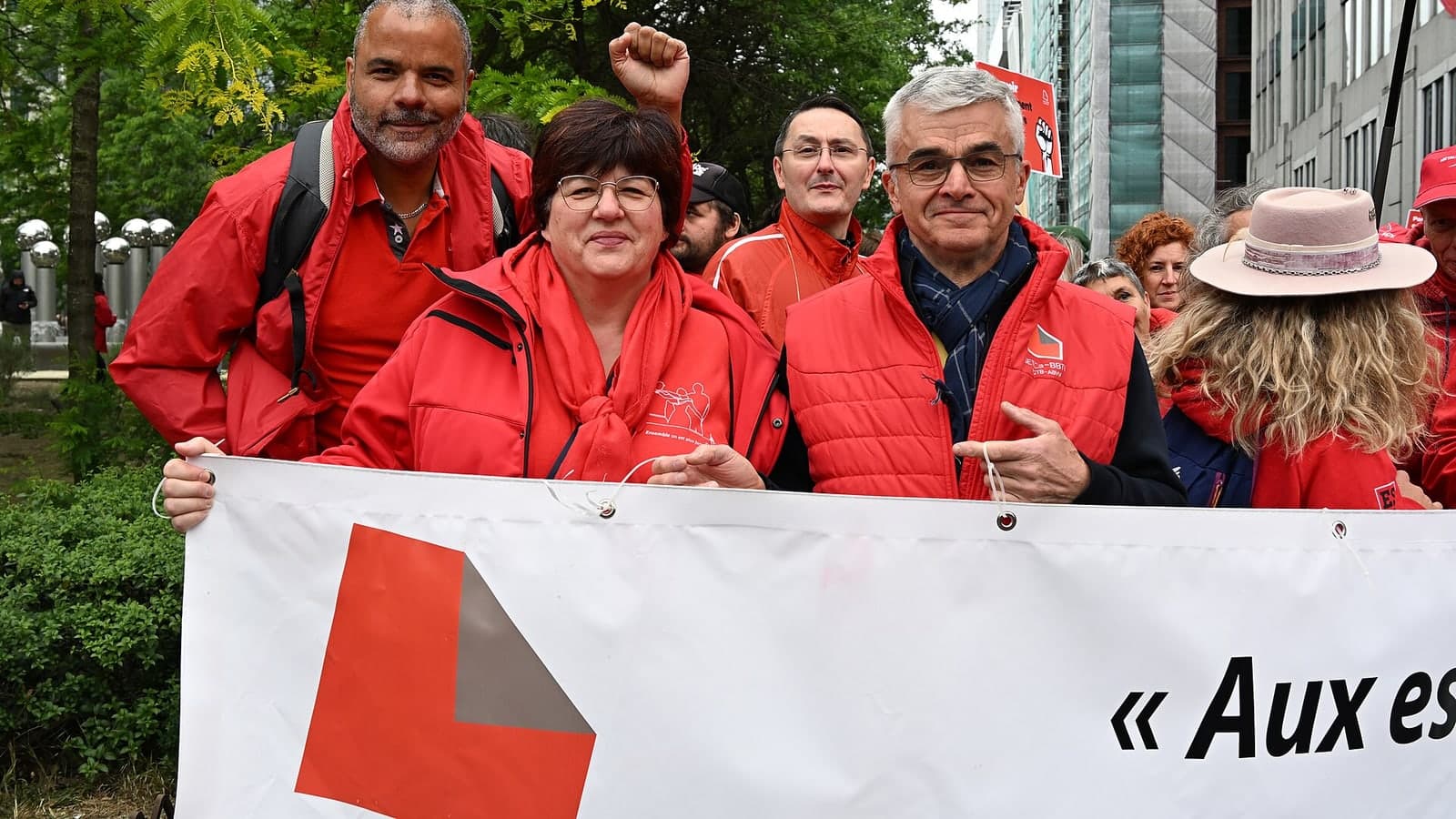
Teachers and union representatives hung protest banners in Liège and Verviers on 19 August, warning the French-speaking Community government that opposition to its education reforms had continued through the summer.
The reforms affect teacher workloads, staffing calculations and career conditions from the beginning of the 2026-27 school year. Their implementation may influence class organisation, recruitment, staff retention and the risk of further disruption for pupils and families.
Teachers and representatives of the , and unions hung large protest banners in and on Wednesday 19 August, five days before French-speaking Belgium’s new school year, confirming that their dispute with the had survived the summer break. The banners told Education Minister and Minister-President that education workers were “still here, still angry”; no settlement was announced before pupils began returning on 24 August.
This is a Belgian institutional conflict with an immediate local effect. The —not the federal government, the Walloon Region or the European Union—sets the relevant policy for French-language schools in and . Families, teachers and school managers therefore enter the 2026-27 year with reforms already moving from parliamentary debate into timetables, staffing decisions and classrooms.
Regional broadcaster QU4TRE reported that banners appeared at prominent approaches and crossings in , including the Saint-Léonard bridge, the Sainte-Marie tunnel exit, La Belle Liégeoise footbridge and Val-Benoît. members also handed out leaflets on the Saucy footbridge, according to reporting carried by La Libre Belgique and La Dernière Heure. The action extended to , making the message visible across the Liège–Verviers education community rather than at a single school or union office.
The most contentious measure increases the classroom load of upper-secondary teachers from 20 to 22 periods. In its own budget statement, the MR– government presented that change as an effort to harmonise workloads, deploy resources more effectively and place more teachers in classrooms amid staff shortages. It also said its wider package was needed to control the Fédération’s finances, warning that debt could rise from €12.8 billion in 2024 to €21 billion in 2029 without corrective action.
The unions read the same measure very differently. Protesters told QU4TRE that two additional teaching periods would remove jobs because schools could cover the same timetable with fewer staff. They also object to restrictions on end-of-career arrangements, including a reported 24-month limit, and portray the package as an imposed deterioration in working conditions rather than an answer to shortages. That distinction matters: one side treats the reform as redistribution of scarce teaching capacity, while the other argues that heavier workloads and weaker career protections will make recruitment and retention harder.
The disagreement has already moved beyond slogans. The adopted a transitional measure concerning the increased workload on 16 July, after receiving a Council of State opinion and examining amendments. Parliamentary records from June also show repeated questions about possible job losses, temporary teachers, staff reassignment, pensions and the practical organisation of the new school year. Opposition parties described the reform process as rushed; the governing parties maintained that structural action was unavoidable.
The broader story is about whether a financially constrained education authority can increase classroom capacity without deepening the profession’s loss of confidence. French-speaking Belgian schools have spent years implementing the Pact for Excellence and adapting to changing curricula, inclusion requirements and teacher shortages. Reopening settled compromises while demanding additional classroom time has therefore become as much a dispute about consultation and professional recognition as about two periods on a timetable.
There is no substantive EU policy role in this confrontation. matters here as part of the French-speaking education system and as the seat of the Community institutions, not because it hosts the European Commission or NATO. The consequences remain chiefly Belgian: uncertain staffing for schools, possible disruption for families and renewed pressure on Glatigny and Degryse to demonstrate that the reform can work in practice.
The banners alone do not establish how broad the mobilisation will become. No independently verified participation total was published for the 19 August action, and the government had not announced a fresh concession in the sources reviewed. The next test will come through union meetings, any formally confirmed strike or demonstration plans, and the first staffing evidence from schools operating under the new rules. What happens in classrooms after 24 August will carry more weight than either side’s summer messaging.
Impact
Regional — Liège and Verviers became visible centres of a Community-wide education conflict. Schools across French-speaking Wallonia and Brussels, however, are exposed to the same policy changes.
Local — Liège and Verviers are the visible local centres of this protest phase, with banners installed in both cities on 19 August. Teachers, school managers, pupils and families there may encounter renewed mobilisation as schools reopen and the workload changes take effect. The policies are not limited to these cities, however: French-language schools elsewhere in Wallonia and Brussels face the same Community-level reforms. Local consequences will depend on how individual schools organise classes, calculate staffing requirements and fill teaching posts.
What it means for you
Parents and pupils in French-language education should monitor notices from their school from the reopening period beginning 24 August, particularly for changes to timetables, class organisation or industrial action. Teachers in upper-secondary education should check how the increase from 20 to 22 classroom periods and the transitional measure adopted on 16 July apply to their assignment. Prospective teachers and current staff considering a move should compare vacancies and workload terms carefully. No specific strike date, closure timetable or direct household cost is identified in the article.
Opposing perspectives
- CSC, SETCa and CGSP education unions
The unions frame the two-period increase and tighter end-of-career rules as imposed deterioration. Their representatives argue that schools will require fewer posts to cover existing timetables and that heavier workloads could worsen recruitment, retention and professional exhaustion.
- MR–Les Engagés Community government
The government describes the workload change as “harmonising” teaching obligations and using available resources more effectively. It says structural measures are necessary to put more teachers before classes, address shortages and prevent the Fédération’s debt burden from accelerating.
Who, where and what
Key people, places and terms in this story
Walloon city where teachers and union representatives installed protest banners on 19 August 2026.
Education minister in the government of the Fédération Wallonie-Bruxelles.
Region containing Liège and Verviers and many of the French-language schools affected by the reforms.
Region whose French-language schools are also subject to the Community’s education policies.
Walloon city where teachers and union representatives installed protest banners on 19 August 2026.
Show the full library (15)
Education minister in the government of the Fédération Wallonie-Bruxelles.
Leader of the government of the Fédération Wallonie-Bruxelles.
Walloon city where teachers and union representatives installed protest banners on 19 August 2026.
Walloon city where teachers and union representatives installed protest banners on 19 August 2026.
Region containing Liège and Verviers and many of the French-language schools affected by the reforms.
Region whose French-language schools are also subject to the Community’s education policies.
French-speaking Community authority responsible for French-language education in Wallonia and Brussels.
Constitutional name of the Fédération Wallonie-Bruxelles.
Party in the governing coalition responsible for the contested education reforms.
Party in the governing coalition responsible for the contested education reforms.
Trade-union organisation whose education representatives participated in the banner action.
Trade-union organisation whose education representatives participated in the banner action.
Trade-union organisation whose education representatives participated in the banner action.
Community government implementing the education reforms opposed by teachers and unions.
Community legislature that adopted the transitional workload measure on 16 July 2026.
Sources & evidence
- View sourceLa Dernière HeurePrimaryprimary· dhnet.be· 19 August 2026Retrieved 24 August 2026· 44 days ago· Dated
- View sourceLa Libre Belgiquecorroborating· lalibre.be· 19 August 2026Retrieved 24 August 2026· 44 days ago· Dated
- View sourceQU4TREcorroborating· qu4tre.be· 19 August 2026Retrieved 24 August 2026· 44 days ago· Dated
- View sourceGovernment of the Fédération Wallonie-Bruxellesofficial· gouvernement.cfwb.be· 10 October 2025Retrieved 24 August 2026· 357 days ago· Dated
Related topics
Related to this story
Pulse Insight — This topic connects to 10 associations and 3 funding programmes through the Wallonia ecosystem.
Live connections from the Belgium Impulse ecosystem — not recommendations.
This briefing was prepared with AI assistance and reviewed by a Belgium Impulse editor before publication. methodology.