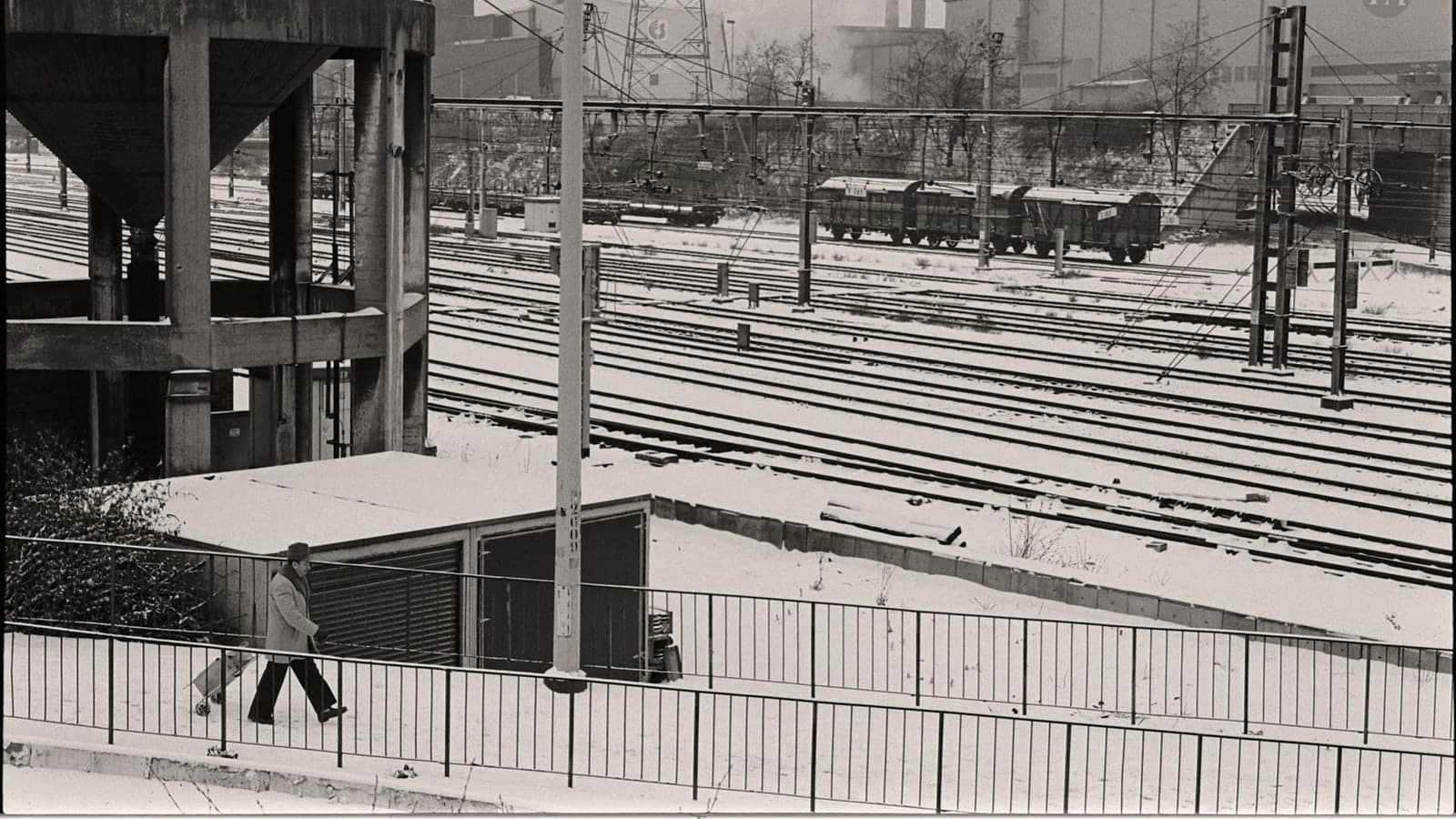
What can students study in Charleroi in 2026-27?
La Dernière Heure published a practical guide on 4 August mapping Charleroi’s varied higher-education offer ahead of the 2026-27 academic year. Official catalogues confirm that Belgian universities, university colleges and adult-education institutions provide programmes across the city, although applicants must check where each year of a course is taught.
A credible local study offer can widen access for students unable to relocate or commute daily and can support adults combining education with work. Applicants nevertheless need programme-level information because institutions, schedules, qualifications and teaching sites differ.
published a practical guide on 4 August to the higher-education options available in , bringing together choices offered by Belgian universities, university colleges and adult-education institutions as prospective students prepare for 2026-27. The confirmed picture is broader than Charleroi’s old image as a city without a conventional university base: students can now begin or complete studies in fields ranging from computing and engineering to health, management and the social sciences.
For people living in and the surrounding municipalities, that breadth matters because studying locally can reduce commuting, housing and relocation pressures. It also gives working adults access to evening or adapted timetables. Yet the practical question is not simply whether a subject appears in a regional guide. Applicants need to establish which institution awards the qualification, where teaching takes place and whether later years require travel to another campus.
The official 2026 catalogue provides the clearest institutional overview. It says has been present in the city for more than 45 years, accommodates nearly 1,200 students in daytime and off-hours formats, and offers more than 25 university programmes, including courses organised jointly with the . The same catalogue lists the Haute École Provinciale de – and three higher adult-education schools among the institutions using the Zénobe Gramme site.
separately identifies the , , , , , the and the European Biotech Campus among the territory’s providers. Its overview covers chemistry, industrial engineering, computing, education, health, agronomy, drones, graphic techniques and urban development. This is therefore not one university offering a full catalogue under a single roof, but a network assembled from institutions with different admissions systems, calendars and teaching locations.
’s official list, refreshed on 1 July, illustrates both the opportunity and the need to read the detail. For 2026-27 it lists two bachelor’s programmes in —computer science and digital technologies for information and communication—alongside management master’s degrees on adapted schedules and several university certificates. A programme’s presence in Charleroi should not be taken to mean that every component or every year is necessarily delivered there.
The diversity of higher education in the Pays Noir also includes routes designed for people returning to study. says the city’s adult-education network serves about 3,000 learners and offers more than 150 courses through eight municipal establishments, although those figures cover a wider range than degree-level education alone. The distinction between a bachelor’s degree, master’s degree, university certificate and professional or adult-education qualification remains important for admission, recognition and progression.
There are two legitimate ways to read the expansion. and its institutional partners present cooperation as a way to build critical mass in a city where no university historically established its principal seat. Prospective students, by contrast, need a consumer’s view: a long list of providers is useful only when programme continuity, timetables, costs, student support and transport between sites are transparent. These positions are complementary, but they measure success differently—one by regional provision, the other by whether an individual can complete a workable course.
The broader story is ’s gradual shift from an industrial centre that exported many students to other cities towards a distributed university and skills hub linked to the centre, and the wider metropolitan area. The , created under the French Community’s 2013 higher-education reorganisation, coordinates institutions across and currently groups three universities, three university colleges, three arts colleges and 22 adult-education establishments across the province.
There is no meaningful EU-policy event behind the August guide, and no response from EU institutions is required: education organisation remains principally a Belgian community responsibility. The European connection is practical rather than political, through recognised qualifications, research links and mobility opportunities available via participating institutions.
Applicants should now compare the guide with each provider’s official 2026-27 programme page, verify admissions and enrolment deadlines, and ask explicitly where every year and laboratory session will take place. What remains unknown from the guide alone is how many students will enrol this autumn and whether the expanding network will translate into higher completion rates. Those figures, rather than the length of the catalogue, will offer the strongest test of ’s higher-education strategy.
Impact
Regional — The offer strengthens Charleroi’s role as a higher-education centre for southern Hainaut and may connect more local learners to health, digital, engineering and management sectors already present in the region.
Local — The distributed offer gives Charleroi and southern Hainaut residents more opportunities to study locally, including in health, digital, engineering and management-related fields connected to the regional economy. CampusUCharleroi, Gosselies and other teaching locations collectively strengthen the city’s position as a higher-education centre. The network may particularly benefit learners who cannot relocate or commute daily, as well as working adults, although its practical value depends on whether the full programme, required year and suitable timetable are actually available at a nearby site.
What it means for you
If you are considering study in Charleroi for 2026-27, use the guide as a starting point and then check the relevant institution’s official programme catalogue. Confirm where every year of the course is taught, whether classes are daytime or compatible with work, the qualification awarded and the applicable admission requirements. Do not assume that a programme associated with an institution is delivered entirely in Charleroi. Compare CampusUCharleroi, UCLouvain, ULB, HELHa, Condorcet, the Université Ouverte and other adult-education providers before applying, and request programme-level confirmation directly from the institution where details differ.
Opposing perspectives
- CampusUCharleroi and institutional partners
CampusUCharleroi, UMONS, ULB, UCLouvain, Condorcet and their partners frame cooperation as a strength: several institutions can pool teaching, research and facilities to provide a broader offer in a city without the principal seat of a comprehensive university.
- Prospective students and working adults
Applicants need to judge the network course by course. Their priorities are whether a qualification can be completed locally, whether timetables fit work or family commitments, what it costs and whether laboratories or later study years require travel elsewhere.
Who, where and what
Key people, places and terms in this story
City whose higher-education options for 2026-27 are mapped in the article.
Province containing Charleroi and the institutions coordinated through the Pôle hainuyer.
Belgian region in which Charleroi and its higher-education network are located.
Belgian newspaper that published the practical study guide on 4 August 2026.
Charleroi locality containing higher-education teaching sites.
Show the full library (15)
City whose higher-education options for 2026-27 are mapped in the article.
Charleroi locality containing higher-education teaching sites.
Province containing Charleroi and the institutions coordinated through the Pôle hainuyer.
Belgian region in which Charleroi and its higher-education network are located.
Sub-regional area whose learners may benefit from Charleroi’s local study offer.
Belgian newspaper that published the practical study guide on 4 August 2026.
Charleroi higher-education hub and source of the 2026 programme catalogue.
University reported to host nearly 1,200 students and offer more than 25 university programmes in Charleroi.
University listing two Charleroi bachelor’s programmes for 2026-27, plus management master’s degrees and certificates.
University operating within Charleroi’s distributed higher-education network.
University college providing higher-education options in the Charleroi network.
University college represented in Charleroi’s higher-education offer.
Institution supporting adult and continuing education in Charleroi.
Regional body listing universities, university colleges and adult-education providers across numerous disciplines.
Higher-education grouping encompassing universities, university colleges, arts colleges and adult-education establishments across Hainaut.
Sources & evidence
- View sourceLa Dernière HeurePrimaryprimary· dhnet.be· 4 August 2026Retrieved 29 August 2026· 59 days ago· Dated
- View sourceCampusUCharleroi — 2026 higher-education catalogueofficial· campusucharleroi.beRetrieved 29 August 2026
- View sourceCharleroi Métropole — Hautes écoles et Universitésofficial· charleroi-metropole.beRetrieved 29 August 2026
- View sourceUCLouvain — Programmes in Charleroi, 2026-27official· uclouvain.be· 1 July 2026Retrieved 29 August 2026· 93 days ago· Dated
Related topics
Related to this story
Pulse Insight — This topic connects to 10 associations and 3 funding programmes through the Wallonia ecosystem.
Live connections from the Belgium Impulse ecosystem — not recommendations.
This briefing was prepared with AI assistance and reviewed by a Belgium Impulse editor before publication. methodology.