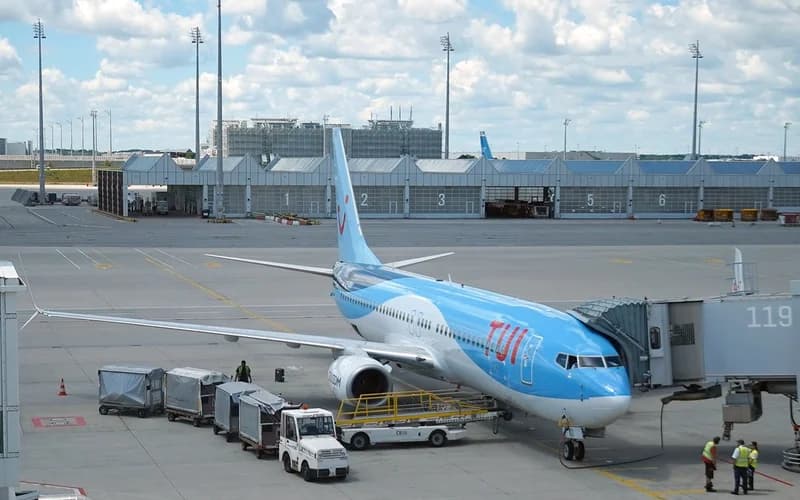
Can Antwerp Airport survive after TUI leaves its scheduled-flight business behind?
TUI fly will end its four-route Antwerp operation by 25 March 2027, removing the airport’s last major commercial carrier and intensifying scrutiny of its reliance on business aviation, private jets and public support.
TUI’s exit removes Antwerp’s main direct holiday-flight offer and a large reported share of the airport’s commercial income. Travellers may incur additional ground-transport costs, while Flemish taxpayers face a sharper question about financing an airport increasingly centred on business, training and private aviation.
announced on 7 July that it will stop flying from by 25 March 2027, withdrawing four Mediterranean routes after 12 years and leaving the small airport without a major commercial airline. The confirmed decision turns a long-running argument about subsidies and private jets into an immediate business problem: Flemish MPs said TUI generated more than €3 million, or roughly two-thirds, of the airport’s own annual revenue.
The retreat will unfold in stages. TUI’s services to Palma de Mallorca and Tenerife end in autumn 2026, while Alicante and Málaga remain for the winter. The airline’s customer information lists 24 and 25 March 2027 as the final dates for the remaining routes. TUI will concentrate its Belgian operation at Brussels Airport and Ostend, where it can deploy a wider range of aircraft and use its fleet more flexibly.
That operational constraint matters. ’s short runway limits the aircraft that can use it commercially. TUI has operated Embraer E195-E2 regional jets there, while its larger Boeing aircraft can be used at Brussels and Ostend. Flemish Mobility Minister Annick De Ridder told parliament that TUI was consolidating around a Boeing fleet and moving away from the Embraers used at Antwerp. TUI has said the reorganisation will not cause job losses and that the planned reduction of Flemish airport subsidies was not the reason for its departure.
Passengers still have time to use the remaining services, but the practical consequence is clear: from spring 2027, -area holidaymakers will generally need to travel to Brussels, Ostend or an airport across the Dutch border unless another airline enters the market. For a household, that can mean a longer trip, extra rail or parking costs and less convenient departure times. It does not necessarily mean higher airfares, because the larger airports also offer much broader competition and route choice.
For , the calculation is more severe. The airport recorded 240,541 passengers in 2025, up 15.2% from 208,845 in 2024, according to its own statistics. That recovery still left traffic 21.5% below the 306,330 passengers handled in 2019. TUI’s exit therefore removes the main scheduled-flight engine before passenger numbers have returned to their pre-pandemic high.
The airport is operated by , part of the French infrastructure group , while the owns and finances essential infrastructure through a separate public structure. This division was intended to combine commercial management with public ownership of the runway and related assets. In practice, the airport remains heavily dependent on government money. Its 2024 accounts showed a net loss of about €658,000, accumulated losses of €2.3 million and €5.4 million in operating subsidies and public compensation, figures reported by Het Nieuwsblad from the company’s filings.
During the ’s debate on 8 July, opposition MPs said the airport received about €5 million a year while generating a similar amount itself, with TUI accounting for more than €3 million. Those figures were raised by parliamentarians rather than presented as a newly audited government calculation, but they illustrate the size of the revenue hole management must address.
says it will seek new airlines while expanding business aviation, flight training, humanitarian movements and other specialist operations. Its 2025 total of 32,930 aircraft movements was virtually unchanged from 32,979 in 2024 even as passenger traffic increased, showing that scheduled passengers represent only one part of activity on the airfield. The airport’s published charges also distinguish among commercial, general-aviation and training users.
Finding a replacement carrier will be difficult. A new operator would need suitable smaller aircraft, a route with sufficient local demand and fares capable of covering costs at a restricted airport close to the much larger Brussels hub. ’s federal departure tax adds another consideration. The government plans to apply a standard €10 charge to every departing passenger from 2027. That raises the levy on European flights beyond 500 kilometres from €2 to €10, while short flights already faced the €10 rate. The tax is modest compared with the full price of most tickets, but on a thin regional route even a small increase can complicate an airline’s margins and pricing. Flemish ministers have acknowledged that no specific impact assessment was available.
The wider dispute is not simply about whether should have an airport. Supporters, including De Ridder and the airport operator, see a niche facility serving companies, training organisations, emergency or humanitarian missions and a port city with international business links. Antwerp-Bruges Port is one of Europe’s largest industrial and logistics clusters, although no public evidence establishes that the airport is indispensable to the port’s activity.
Groen, PVDA and other opponents argue that the public value becomes much harder to defend when ordinary scheduled services disappear and business aircraft or private jets form a larger share of the remaining operation. Residents’ organisations also point to noise, emissions and the opportunity cost of reserving a large site inside a densely built urban area. Parliamentary critics have used a calculation of roughly €1,300 in operating support per private-jet flight, but that division is politically illustrative rather than a complete cost allocation: subsidies also support infrastructure and activities other than private aviation.
The central policy choice now rests with the . It is negotiating a new framework for its regional airports and says they should operate more efficiently with less public support. Before March 2027, ministers and will need to show whether a credible airline can replace TUI, whether higher business-aviation charges can close part of the gap, and what level of subsidy is justified by functions that the market will not finance alone. Until those figures are published, ’s transformation into a mainly specialist and private-aviation facility is a strong possibility, not yet a settled outcome.
Impact
Regional — The direct impact falls on Antwerp and surrounding municipalities: passengers lose a nearby departure point, airport-linked businesses face reduced scheduled traffic, and residents may see a change in the mix rather than necessarily the total number of aircraft movements.
Local — Antwerp and nearby municipalities will lose their closest scheduled holiday-flight option when TUI leaves Deurne in March 2027. Travellers who used the airport will need to compare departures elsewhere and account for extra ground-transport time and cost. Businesses tied specifically to scheduled passenger traffic face reduced activity. For nearby residents, the change may alter the balance between passenger services, business aviation, private jets and training flights, although it does not by itself establish that total aircraft movements will fall.
What it means for you
Travellers considering departures from Antwerp should treat 25 March 2027 as the end date for TUI’s four remaining routes and compare alternative airports before booking travel beyond then. Include rail, driving, parking and transfer costs when comparing fares. From 2027, Belgium plans a uniform €10 aircraft-boarding tax; for many European flights longer than 500 kilometres, that replaces the current €2 rate. Flemish taxpayers and local businesses should watch forthcoming government and operator decisions on funding, services and the airport’s post-TUI operating model.
Opposing perspectives
- Flemish government and airport management
Mobility Minister Annick De Ridder and LEM Antwerpen view the airport as a specialist economic asset that can combine airline services with business aviation, training and public-interest missions. They argue that fleet consolidation, rather than a judgment on Antwerp’s wider usefulness, drove TUI’s decision.
- Groen, PVDA and other subsidy opponents
Opposition parties argue that continued public support becomes harder to justify once the principal commercial airline leaves. They say a larger relative role for private jets weakens the airport’s public-service case and want the government to reconsider subsidies or the site’s future use.
- Residents and environmental campaigners
Groups around Deurne, Mortsel and neighbouring districts focus on noise, local emissions, safety and the opportunity cost of a large airfield in a densely populated area. They question whether specialist and private flights generate benefits proportionate to those local burdens.
Who, where and what
Key people, places and terms in this story
City served by the regional airport and the main area affected by the loss of scheduled routes.
Country planning a uniform €10 aircraft-boarding tax from 2027.
Antwerp district where Antwerp Airport is located.
Government facing decisions about continued public support for Antwerp Airport.
Legislature where MPs scrutinised TUI’s revenue contribution and the airport’s future.
Show the full library (12)
City served by the regional airport and the main area affected by the loss of scheduled routes.
Antwerp district where Antwerp Airport is located.
Country planning a uniform €10 aircraft-boarding tax from 2027.
Belgian departure levy planned to become a uniform €10 charge in 2027.
Government facing decisions about continued public support for Antwerp Airport.
Legislature where MPs scrutinised TUI’s revenue contribution and the airport’s future.
Regional airport in Deurne that will lose its principal scheduled passenger carrier in March 2027.
Airline ending its four remaining Antwerp routes by 25 March 2027 after 12 years of operations.
Company responsible for Antwerp Airport’s commercial operations.
Airport operator linked to LEM Antwerpen.
Owner and supporter of essential airport infrastructure.
Federal authority responsible for information on Belgium’s aircraft-boarding tax.
Sources & evidence
- View sourceHet NieuwsbladPrimaryprimary· nieuwsblad.be· 8 July 2026Retrieved 26 August 2026· 86 days ago· Dated
- View sourceThe Brussels Timescorroborating· brusselstimes.com· 7 July 2026Retrieved 26 August 2026· 87 days ago· Dated
- View sourceFlemish Parliament plenary recordofficial· vlaamsparlement.be· 8 July 2026Retrieved 26 August 2026· 86 days ago· Dated
- View sourceAntwerp Airport traffic statisticsofficial· luchthaven-antwerpen.comRetrieved 26 August 2026
Related topics
Related to this story
Pulse Insight — This topic connects to 10 associations and 2 funding programmes through the Flanders ecosystem.
Live connections from the Belgium Impulse ecosystem — not recommendations.
This briefing was prepared with AI assistance and reviewed by a Belgium Impulse editor before publication. methodology.