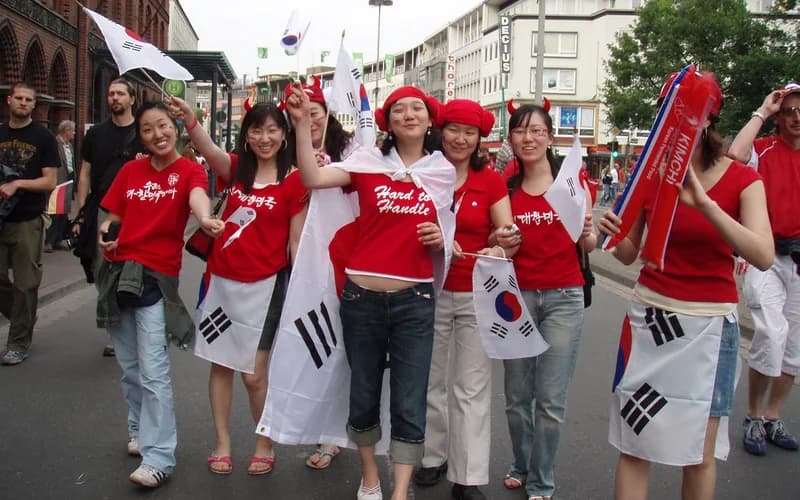
What did the foreign press make of Belgium’s narrow World Cup defeat by Spain?
Foreign newspapers praised Belgium’s resistance but focused on Senne Lammens’ decisive error after Thibaut Courtois was injured as Spain eliminated the Red Devils 2-1 in the World Cup quarter-final in Inglewood on 10 July 2026.
Belgium’s elimination closed a credible World Cup campaign while reopening the central sporting question surrounding the Red Devils: whether a team moving beyond its golden generation can again convert elite individual talent into sustained success in the final rounds of a major tournament.
Foreign newspapers praised ’s disciplined resistance but identified substitute goalkeeper ’ late error as the decisive moment after beat the 2-1 in the World Cup quarter-final in , California, on 10 July 2026. scored in the 88th minute after Lammens spilled Pau Cubarsí’s long-range attempt, sending Spain into the semi-finals and ending Belgium’s best World Cup campaign since its third-place finish in 2018.
The result was painful precisely because had made the contest far closer than many foreign previews expected. Fabián Ruiz put ahead after half an hour, but equalised in the 41st minute from Timothy Castagne’s cross. According to Opta, that goal ended Spain’s run of 649 minutes without conceding at a World Cup. Belgium had become the first side to score against ’s team during the 2026 tournament.
The balance changed when first-choice goalkeeper suffered an injury in the second half. The Associated Press reported that the Real Madrid goalkeeper received treatment during the hydration break and was visibly emotional when head coach replaced him in the 71st minute. Lammens, the Manchester United goalkeeper, entered for his first World Cup appearance. Seventeen minutes later, he failed to hold Cubarsí’s shot and Merino converted the rebound with his second touch after coming off the Spanish bench.
That sequence dominated the international coverage. France’s L’Équipe framed Courtois’ injury as the turning point and described ’s performance as a brave effort against the pre-match favourite, according to the press survey published by VoetbalPrimeur.be. The French newspaper was nevertheless severe about the goalkeeping mistake, judging that it settled a match Belgium had kept competitive far longer than expected.
Germany’s Bild placed greater emphasis on ’s dramatic qualification but also presented the outcome as especially bitter for . Its account linked the late goal to two disruptions: Courtois’ enforced departure and captain Youri Tielemans’ injury during the warm-up, which required Hans Vanaken to enter the starting team at short notice. This frame treated the defeat less as evidence of a large sporting gulf than as the cumulative cost of injuries at the worst possible time.
The Spanish sports daily Marca offered the most striking reassessment. As summarised by VoetbalPrimeur.be, it argued that an evening expected to resemble a comfortable Spanish passage had instead become a trap. Marca credited with restricting ’s attacking routes and highlighted Jérémy Doku’s direct running. Its central story was still Merino’s latest intervention as a decisive substitute, but its praise for Belgium undercut any suggestion that Spain had simply swept aside an overmatched opponent.
The Dutch public broadcaster NOS used a harsher individual frame, putting Lammens’ mistake at the centre of its headline. Yet it also stressed the goalkeeper’s difficult circumstances: he was introduced cold, deep into a World Cup quarter-final, after replacing one of the most experienced goalkeepers in international football. The distinction matters. The error was decisive, but reducing the whole match to one player’s intervention obscures the pressure had accumulated and the disruption caused by Courtois’ injury.
The numbers support both readings. Opta recorded 17 Spanish shots and 2.08 expected goals, against five attempts and 0.37 expected goals for . therefore created substantially more overall. Belgium, however, defended compactly, threatened on transitions and remained level until the closing minutes. Garcia said after the match that his side had competed on equal terms and had no reason to be ashamed, while defender Brandon Mechele said Belgium had shown how it could hurt Spain. Those assessments reflect competitive pride, although the underlying chance data point to Spanish superiority rather than an even attacking contest.
The wider judgement of this Belgian generation is more complicated than one quarter-final. The spent years near the top of the FIFA ranking and fielded leading players across Europe, yet their much-discussed golden generation never reached a major final. Its high point was third place at the 2018 World Cup; elimination by eventual champions Italy followed at Euro 2020, before the team went out in the group stage in Qatar in 2022. That history explains the foreign observation that had not fully lived up to its reputation over the past decade.
But the label can also conceal change. Garcia’s 2026 side combined remaining senior figures such as Courtois and Romelu Lukaku with players including De Ketelaere, Doku and Lammens. Reaching the quarter-finals, scoring the first goal conceded at the tournament and staying in the match until the 88th minute provided evidence of renewal, even if it did not erase the familiar problem: again left a major tournament without defeating an elite European opponent in the decisive rounds.
There was a historical echo. ’s last World Cup knockout victory over a fellow European nation before this tournament’s later stages had long been associated with the 1986 campaign, when the eliminated on penalties in the quarter-finals and reached their first semi-final. Opta noted that Belgium has now lost its last four World Cup knockout ties against UEFA opposition since that victory. Spain, by contrast, reached the semi-finals for the first time since winning the 2010 tournament and subsequently went on to win the 2026 title.
This remains primarily a football story, not a matter of federal or regional political competence. The governs the national team independently of ’s federal and regional governments, although the remain one of the few institutions able to command a genuinely nationwide audience across language communities. Flemish, Francophone and international coverage converged unusually closely after this defeat: Belgium had performed credibly, had created more, and one late goalkeeping error supplied the cruel ending.
The next questions concern continuity. The Belgian association and Garcia must assess Courtois’ fitness, the role of the remaining veterans and whether the younger core can turn a respectable transition into a serious challenge at Euro 2028. Lammens’ response at club and international level will also be watched closely. One mistake ended this campaign, but the more consequential judgement will be whether ’s quarter-final run marked a final afterglow of the old generation or the beginning of a more sustainable one.
Impact
Regional — The national team draws audiences across Flanders, Wallonia and Brussels, but no Belgian region has governmental competence over team selection or tournament management. Those matters belong to the Royal Belgian Football Association and the sporting staff.
International — The result ended Belgium’s participation in the internationally staged 2026 World Cup and sent Spain into the next round. It also shaped cross-border perceptions of the Red Devils: foreign newspapers largely presented Belgium as a resilient side whose campaign ended through a decisive goalkeeping error rather than a lack of competitiveness. There is no direct EU institutional consequence, but the match affected the international sporting reputation of Belgium’s national team and renewed comparisons between Belgium and the reigning European champion.
What it means for you
Belgian supporters should plan on no further Red Devils matches at the 2026 World Cup following the 10 July quarter-final elimination; Spain advances instead. Anyone following Belgium’s post-tournament plans should watch official Royal Belgian Football Association communications for an assessment of Thibaut Courtois’s injury and subsequent squad decisions, as no recovery timetable is provided here. The result creates no direct legal, financial or administrative action for residents, and the available reporting does not establish any ticket, travel or refund consequences.
Opposing perspectives
- Spanish and French press: Belgium exceeded expectations
Marca and L’Équipe framed Belgium as a more difficult opponent than anticipated. They credited the Red Devils with restricting Spain, threatening through Jérémy Doku and remaining competitive until Courtois’ injury and Merino’s late intervention.
- Dutch press: the substitute goalkeeper decided the tie
NOS placed Senne Lammens’ error at the centre of the outcome, describing his unexpected World Cup debut as disastrous. That frame treats one failed save as the immediate cause while acknowledging that he entered only because Courtois was injured.
- Belgian camp: pride in competing with the eventual champion
Head coach Rudi Garcia and defender Brandon Mechele argued that Belgium had shown it could trouble Spain and should be proud of its tournament. Their assessment stresses resilience and renewal rather than another failure to fulfil the reputation built over the previous decade.
- Statistical frame: Spain created the stronger chances
Opta’s figures complicate the claim that the teams were fully equal: Spain produced 17 shots and 2.08 expected goals, while Belgium managed five shots and 0.37. Belgium defended effectively, but Spain held the larger attacking advantage.
Who, where and what
Key people, places and terms in this story
Country represented by the Red Devils in the World Cup quarter-final.
Belgian region where the national team attracts an audience.
Belgian region where the national team attracts an audience.
Belgian region where the national team attracts an audience.
European champion that defeated Belgium 2-1 and advanced from the quarter-final.
Show the full library (15)
Belgium coach during the tournament.
Spain coach during the tournament.
Belgium scorer who ended Spain’s 649-minute World Cup run without conceding.
Belgium goalkeeper replaced through injury in the 71st minute.
Replacement Belgium goalkeeper whose late error preceded Spain’s winning goal.
Spain player who scored the winning goal from a rebound in the 88th minute.
Country represented by the Red Devils in the World Cup quarter-final.
European champion that defeated Belgium 2-1 and advanced from the quarter-final.
Belgian region where the national team attracts an audience.
Belgian region where the national team attracts an audience.
Belgian region where the national team attracts an audience.
City where Spain played Belgium on 10 July 2026.
International football tournament in which Belgium was eliminated in the quarter-final.
Belgium’s men’s national football team.
Institution responsible for Belgium’s national-team management and sporting operations.
Sources & evidence
- View sourceDe MorgenPrimaryprimary· demorgen.be· 11 July 2026Retrieved 25 August 2026· 83 days ago· Dated
- View sourceAssociated Presscorroborating· apnews.com· 10 July 2026Retrieved 25 August 2026· 84 days ago· Dated
- View sourceUEFAofficial· uefa.com· 20 July 2026Retrieved 25 August 2026· 74 days ago· Dated
- View sourceOpta Analystcorroborating· theanalyst.com· 10 July 2026Retrieved 25 August 2026· 84 days ago· Dated
Related topics
Related to this story
Live connections from the Belgium Impulse ecosystem — not recommendations.
This briefing was prepared with AI assistance and reviewed by a Belgium Impulse editor before publication. methodology.