Hautes Fagnes fire under control after burning around 3,000 hectares
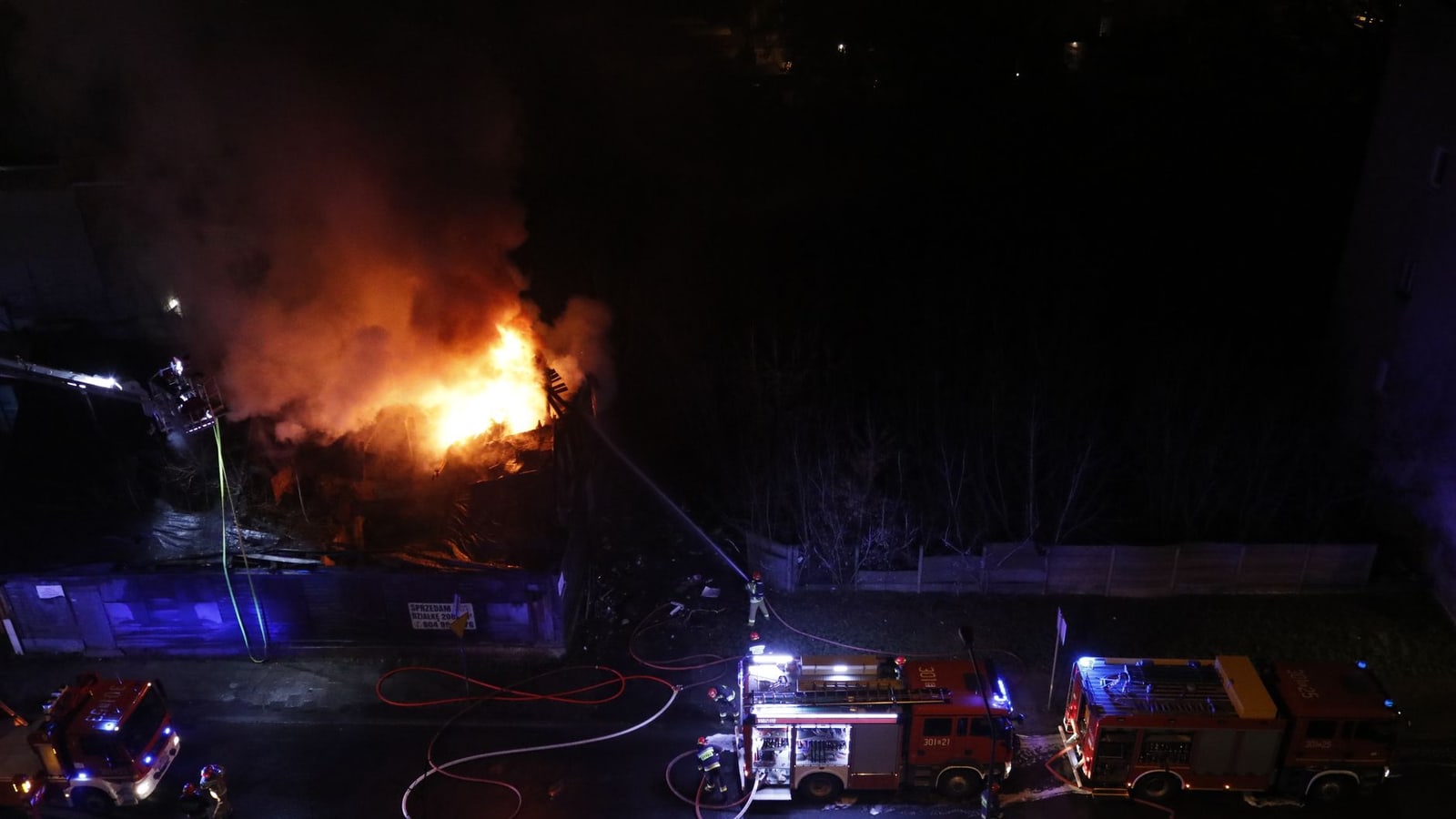
Walloon authorities say the Hautes Fagnes wildfire is under control after burning around 3,000 hectares, although underground hotspots and public-access restrictions remain.
The blaze was Belgium’s largest documented wildfire and affected a nationally important reserve whose peatlands support biodiversity, retain water and store carbon. Persistent underground combustion also means the emergency does not end when open flames disappear.
Updated 27 August 2026 — Walloon authorities said on 24 August that the wildfire which started near at about 13:00 on 14 August was under control across the , after burning around 3,000 hectares. The said crews were still tackling difficult sectors in the north and east, where fire can persist below the surface in peat soils.
The provincial governor’s office said firefighters from and remained involved alongside , the forces and police. Flanders had earlier declared itself ready to provide assistance, while an eastern Flemish Brabant emergency zone sent nine firefighters, two wildfire vehicles and a tanker on 16 August. The operation became a nationwide response rather than a solely Walloon deployment.
reported on 19 August that about 500 people were then mobilised. Its Panther firefighting vehicles worked from accessible roads to cool the ground and prevent the fire reaching neighbouring woodland. According to Defence, changing winds, poor access and burning peat made the operation unusually difficult because visible flames could disappear while heat remained underground.
Belgium also activated the . The European Commission’s representation in Belgium said Sweden supplied two firefighting aircraft, while the Netherlands, Norway and Germany provided helicopters. That international support extended the response into areas ground teams could not safely reach.
Residents evacuated from Sourbrodt, Küchelscheid and Leykaul had all returned home by 19 August, according to the . Its latest published assessment found no concerning carbon-monoxide concentrations in surrounding communities, while drinking-water checks remained compliant. Authorities nevertheless warned that smoke can recur and that damaged trees, concealed hotspots and old munitions still make the burned area dangerous.
Roads reopened on 25 August with reduced speed limits near the fire zone, but forest and nature-reserve restrictions remain in force. The next phase is a detailed ecological assessment and a continuing investigation into the cause. Until the ground is secure, officials are asking visitors to respect closures and leave the affected landscape to emergency and environmental teams.
Impact
Regional — Eastern Wallonia faced evacuations, road closures, disrupted tourism and restrictions across forests and nature reserves. Crews and equipment from Flanders and Brussels reinforced the Walloon response.
Local — Baelen and the wider eastern Walloon area around the Hautes Fagnes experienced precautionary evacuations, road closures, tourism disruption and restrictions affecting forests and nature reserves. Residents who were evacuated had returned home by 19 August, but visitors should not interpret containment as unrestricted reopening. Underground peat hotspots can persist after open flames disappear, so local authorities may maintain or adjust access controls while crews monitor the affected zone. Emergency reinforcements arrived from elsewhere in Belgium, including Flanders and Brussels.
International — Belgium received aircraft and helicopters through European assistance, making the fire a concrete activation of EU-level disaster cooperation. Support coordinated through the EU Civil Protection Mechanism supplemented Belgian resources during a large domestic emergency. For EU policy readers, the operation illustrates how shared European firefighting capacity, including rescEU, can be deployed when a participating country requests reinforcement. The consequences remain operational rather than cross-border: the article identifies European assistance to Belgium but does not report that the fire itself crossed a national frontier.
What it means for you
Residents and visitors should continue following official Walloon and Province of Liège instructions before entering forests, reserves or roads around the Hautes Fagnes and Baelen. Do not assume that “under control” means the affected area is fully extinguished or open: underground peat hotspots and access restrictions remain. Anyone planning hiking, cycling or other tourism in eastern Wallonia should check current closures and be prepared to change routes. Evacuees had returned home by 19 August, so the immediate displacement phase has ended, but monitoring and local restrictions may continue without a fixed end date stated in the article.
Who, where and what
Key people, places and terms in this story
Eastern Belgian plateau and nature reserve area affected by the wildfire.
Belgian region leading the response and imposing regional access restrictions.
Belgian region whose crews and equipment reinforced the response.
Belgian region whose emergency crews helped reinforce firefighting operations.
Walloon commune near which the fire began on 14 August 2026.
Show the full library (15)
Eastern Belgian plateau and nature reserve area affected by the wildfire.
Walloon commune near which the fire began on 14 August 2026.
Belgian region leading the response and imposing regional access restrictions.
Belgian region whose crews and equipment reinforced the response.
Belgian region whose emergency crews helped reinforce firefighting operations.
Province containing the affected area and whose governor issued official information.
Wildfire that began on 14 August 2026 and affected around 3,000 hectares.
European framework through which international emergency assistance was coordinated.
EU shared emergency-response capacity connected to European firefighting assistance.
Regional authority reporting on the fire and response.
Walloon environmental authority providing official information on the Hautes Fagnes fire.
Provincial authority providing official emergency information.
Federal defence service that deployed support to firefighting operations.
Belgian federal emergency service involved in the response.
EU representation reporting on European assistance provided to Belgium.
Sources & evidence
- View sourceWalloon GovernmentPrimaryofficial· wallonie.be· 14 August 2026Retrieved 27 August 2026· 49 days ago· Dated
- View sourceEnvironment in Walloniaofficial· environnement.wallonie.be· 19 August 2026Retrieved 27 August 2026· 44 days ago· Dated
- View sourceGovernor of the Province of Liègeofficial· gouverneur.provincedeliege.be· 18 August 2026Retrieved 27 August 2026· 45 days ago· Dated
- View sourceBelgian Defenceofficial· mil.be· 19 August 2026Retrieved 27 August 2026· 44 days ago· Dated
Related topics
Related to this story
Pulse Insight — This topic connects to 10 associations and 3 funding programmes through the Wallonia ecosystem.
Live connections from the Belgium Impulse ecosystem — not recommendations.
This briefing was prepared with AI assistance and reviewed by a Belgium Impulse editor before publication. methodology.