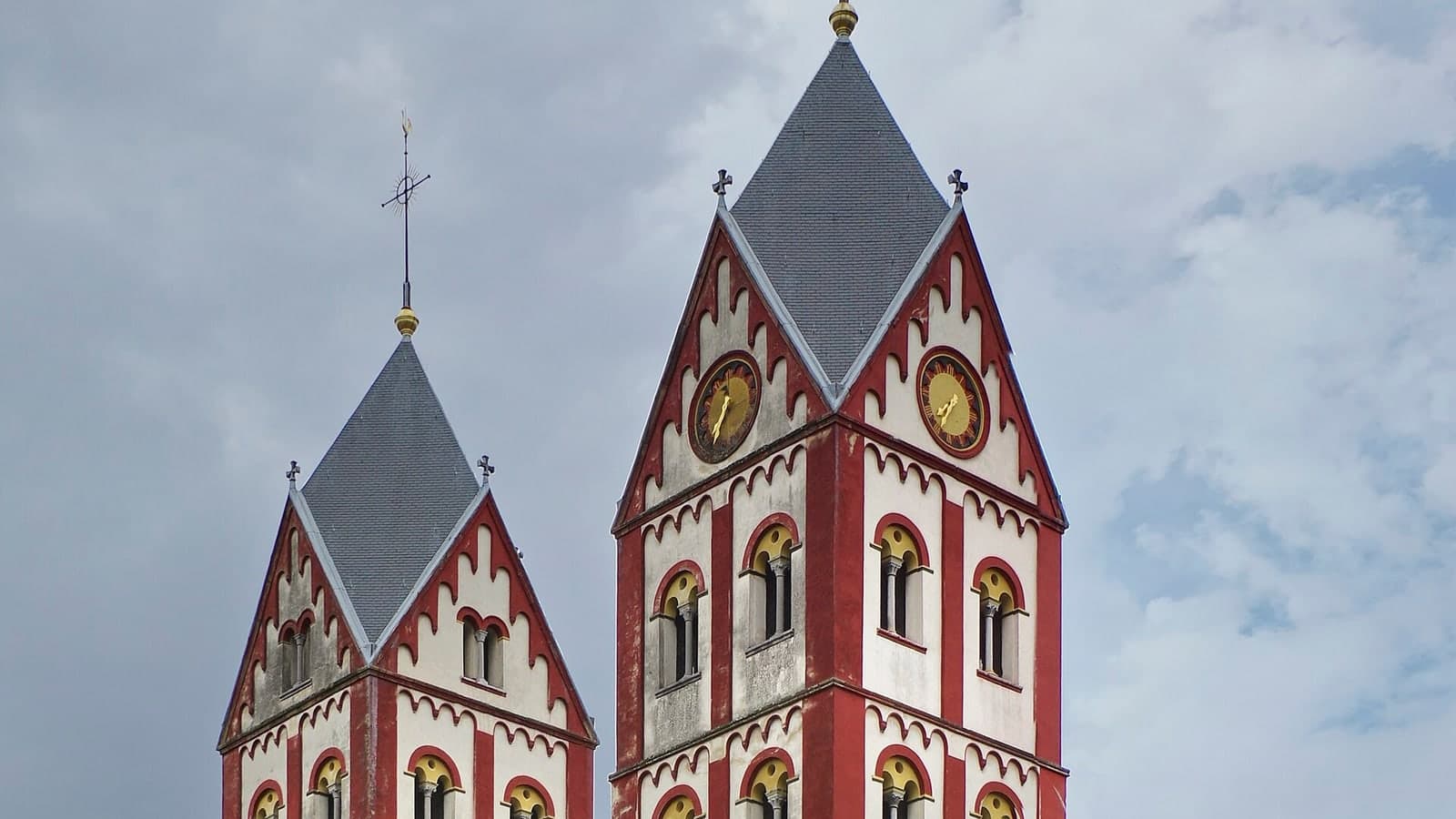
Liège or Eupen: what can visitor patterns really tell you about where to spend?
La DH reported on 28 August 2026 that tourism in Liège province shows contrasting visitor patterns, with Americans associated with spending in Liège and Germans with Eupen. Travellers should treat that shorthand as an itinerary clue, not a rule: choose Liège for an urban food-and-culture break and Eupen for a multilingual gateway to the eastern cantons.
Visitors and expatriates can build a better trip by recognising that Liège province is not one uniform destination. Liège offers the density and spending opportunities of a regional capital, while Eupen provides a multilingual base for nature and cross-border travel. Tourism operators also need reliable market data before tailoring services around national profiles.
reported on 28 August 2026 that tourism in reveals contrasting visitor patterns, presenting Americans as spenders in and Germans as a prominent market around . The practical takeaway is simpler and more useful than the nationality labels: base yourself in Liège for restaurants, museums and city life; choose Eupen for walks, cycling and easy access to the Hautes Fagnes and the German border. Visitors can also combine the two by train rather than treating them as competing destinations.
The distinction makes geographical sense. is the province’s large urban centre, with the Carré, the historic slopes of the Citadelle, the Grand Curtius museum and the riverside district around La Boverie all within a relatively compact area. Its visitor economy naturally offers more places to spend on meals, cultural admission, shopping and hotels. , roughly 40 kilometres to the east, works differently: it is a small city and the capital of Belgium’s , as well as a starting point for excursions towards the Weser dam, the Hautes Fagnes and the wider region.
The reported contrast should not, however, be read as evidence that every American visitor is a high spender or every German traveller is heading only for . Public tourism statistics normally classify guests by country of residence and count arrivals or overnight stays; they do not necessarily connect each nationality to purchases made in an individual commune. , Belgium’s federal statistical office, says its accommodation survey measures arrivals and nights by visitors’ country of residence and includes leisure, conferences and professional travel. That is useful for identifying markets, but it is not the same thing as tracking every restaurant bill or retail transaction.
The broader figures nevertheless show why foreign visitors matter. recorded 46.14 million nights in Belgian tourist accommodation during 2025, including 9.87 million in . Residents of Germany accounted for 576,029 Walloon nights and residents of the United States for 74,428. The Netherlands remained by far Wallonia’s largest foreign market, with almost 2.25 million nights. Those regional totals do not prove the city-level spending claim, but they put it in proportion: Americans are a relatively small Walloon market, while nearby European countries supply much of the region’s repeat business.
### How to choose your base
For a short urban stay, offers the broader evening economy. Start around Place du Marché and the Hors-Château district, visit the Grand Curtius or La Boverie, and leave room for boulets à la liégeoise and a genuine Liège waffle. The journey planner is the most reliable place to check rail times, while TEC handles local buses. Liège-Guillemins is outside the historic centre, so allow time for a connecting bus, local train or walk.
suits travellers who want a quieter centre and ready access to nature. , at Rathausplatz 14, supplies regional guides and marked-walk maps; the official listing says staff can assist in German, French, Dutch and English. That multilingual offer matters because Eupen is not merely a French-speaking Walloon town near Germany. It belongs to the Deutschsprachige Gemeinschaft, Belgium’s , and municipal administration and much public signage are in German. Asking for a Speisekarte rather than a carte is entirely normal, although many hospitality workers can switch languages.
The language boundary can surprise newcomers. city is officially French-speaking, so place names and municipal information generally appear in French. is officially German-speaking, while nearby Malmedy and Waimes are French-speaking communes even though tourism bodies often market the wider area together as the eastern cantons. English is common in visitor-facing businesses but is not guaranteed, particularly in small establishments. Keeping the French words réservation and addition, or the German Reservierung and Rechnung, on your phone is a sensible precaution.
### What the eastern market reveals
The German presence around is structural rather than seasonal novelty. The city lies close to Aachen, and language, family ties and short driving distances lower the barrier to repeat visits. Official figures released by the for 2024 recorded more than 973,000 nights and 385,000 arrivals in the destination covering the eastern cantons, including Malmedy and Waimes. The agency estimated tourism receipts above €100 million and reported that foreign tourism had increased, although total arrivals and nights slipped slightly from the record year of 2023.
This is also a lesson in how contains several visitor economies under one administrative roof. The comprises 84 communes, including 75 French-speaking and nine German-speaking municipalities. Urban , spa tourism around Spa, motor-racing weekends near Francorchamps and outdoor holidays in attract different guests with different budgets and travel habits. A single provincial average therefore conceals more than it explains.
For expatriates living elsewhere in Belgium, the area is unusually manageable without a car. is connected to Brussels and Leuven by frequent intercity trains, while local rail services continue towards Verviers, and Welkenraedt. Remote trailheads in the Hautes Fagnes require more planning: check TEC connections and the official or route pages before departure, especially on Sundays or outside school holidays. Belgium’s French- and Dutch-speaking school calendars have not always coincided since the Fédération Wallonie-Bruxelles reformed its calendar, a difference explicitly advises readers to consider when comparing monthly tourism figures.
The next useful evidence would be a published methodology behind the city-level spending comparison: the period measured, the payment or survey data used, whether day visitors were included and whether nationality actually means residence. Until those details are public, the finding works best as a portrait of two complementary destinations. sells the energy and choice of a regional capital; sells proximity, landscape and a distinctly German-speaking Belgian experience. Visitors do not need to pick a national stereotype—and a two-centre weekend may reveal more than either label can.
Impact
Regional — The pattern illustrates how one Walloon province supports several tourism models: city breaks in Liège, heritage and wellness around the wider province, and German-speaking outdoor tourism in the eastern cantons. Spending distributed across these areas supports accommodation, horeca, retail, culture and transport.
Local — Liège and Eupen support distinct parts of the provincial visitor economy. A Liège city break directs spending towards urban accommodation, horeca, retail and cultural venues. Eupen serves as a multilingual base for the nine German-speaking communes and the wider eastern cantons, supporting local lodging, outdoor tourism and cross-border itineraries. Because the province contains both French- and German-speaking areas, local operators may need different language services and visitor offers rather than one province-wide approach.
International — The clearest cross-border dimension is Eupen’s connection to German visitors and its role as a gateway to Belgium’s eastern cantons. German residents generated substantially more overnight stays in Wallonia than US residents in 2025, although the regional total does not establish where each stay occurred. Eupen’s four-language tourist service also makes it practical for international residents and visitors. For EU staff and Brussels expatriates, the area offers a multilingual Belgian trip with an explicitly cross-border travel orientation.
What it means for you
For a short break, choose Liège if you want an urban concentration of food, retail and cultural options; choose Eupen if multilingual visitor support, nature or an eastern-cantons itinerary matters more. Check SNCB/NMBS and TEC journey options before booking, particularly when combining destinations. Tourist Info Eupen can assist in German, French, Dutch or English. Do not use nationality-based averages as a spending forecast: the cited 2025 figures cover Wallonia overall, not individual behaviour in either city. Compare accommodation, transport and planned activities for your dates before deciding where your budget goes further.
Opposing perspectives
- Destination marketers and local businesses
Tourism professionals can use origin-market patterns to adapt language, advertising and products. Liège businesses may reasonably promote urban dining and culture to long-haul guests, while Eupen operators can build on the accessibility and familiarity valued by nearby German travellers.
- Statisticians and cautious travellers
Country-of-residence data describe groups, not individual preferences, and accommodation nights do not automatically measure local spending. Without a published methodology, the American-versus-German contrast should guide questions and itinerary ideas rather than become a firm behavioural conclusion.
Who, where and what
Key people, places and terms in this story
Statbel is Belgium’s statistical office. It matters in these excerpts as a source for official national data on population, prices, road accidents and casualties, and EU-harmonised gender pay gap figures.
Walloon province containing Liège, Eupen and several distinct tourism markets.
Provincial capital presented as an urban food-and-culture destination associated with American visitor spending.
Belgian region for which Statbel recorded 9,873,094 tourist nights in 2025.
German-speaking city presented as a multilingual gateway to the eastern cantons.
Show the full library (15)
Walloon province containing Liège, Eupen and several distinct tourism markets.
Provincial capital presented as an urban food-and-culture destination associated with American visitor spending.
German-speaking city presented as a multilingual gateway to the eastern cantons.
Belgian region for which Statbel recorded 9,873,094 tourist nights in 2025.
East Belgium destination associated with German-speaking and outdoor tourism.
Statbel is Belgium’s statistical office. It matters in these excerpts as a source for official national data on population, prices, road accidents and casualties, and EU-harmonised gender pay gap figures.
Belgian news outlet that reported the contrasting visitor patterns on 28 August 2026.
Provincial authority whose statistics describe the territory’s 84 communes.
Municipal institution for the urban destination discussed in the article.
Municipal institution for Eupen.
Belgian federated community encompassing the province’s nine German-speaking communes.
Regional tourism platform listing Tourist Info Eupen and its language services.
Tourism body that published 2024 arrival and overnight-stay statistics for the German-speaking Community.
Visitor information service operating in German, French, Dutch and English.
Belgian national rail operator relevant to travel planning for Liège and Eupen.
Sources & evidence
- View sourceLa DHPrimaryprimary· dhnet.be· 28 August 2026Retrieved 28 August 2026· 35 days ago· Dated
- View sourceStatbel — Horeca, tourisme et hôtellerieofficial· statbel.fgov.be· 23 July 2026Retrieved 28 August 2026· 71 days ago· Dated
- View sourceEast Belgium Tourism Agency — 2024 tourism statisticsofficial· pro.ostbelgien.eu· 25 July 2025Retrieved 28 August 2026· 434 days ago· Dated
- View sourceVISITWallonia — Tourist Info Eupenofficial· visitwallonia.beRetrieved 28 August 2026
Related topics
Related to this story
Pulse Insight — This topic connects to 10 associations and 3 funding programmes through the Wallonia ecosystem.
Live connections from the Belgium Impulse ecosystem — not recommendations.
This briefing was prepared with AI assistance and reviewed by a Belgium Impulse editor before publication. methodology.